
Stop Fuel Theft in Fleets Without Slowing Ops
You know the moment: the weekly fuel number lands on your desk, and it does not match what operations swears happened on the ground. Nobody “stole” anything, nothing looks forced, and yet the tank level says otherwise. For fleet managers and controllers, that gap is not a mystery – it is a control problem.
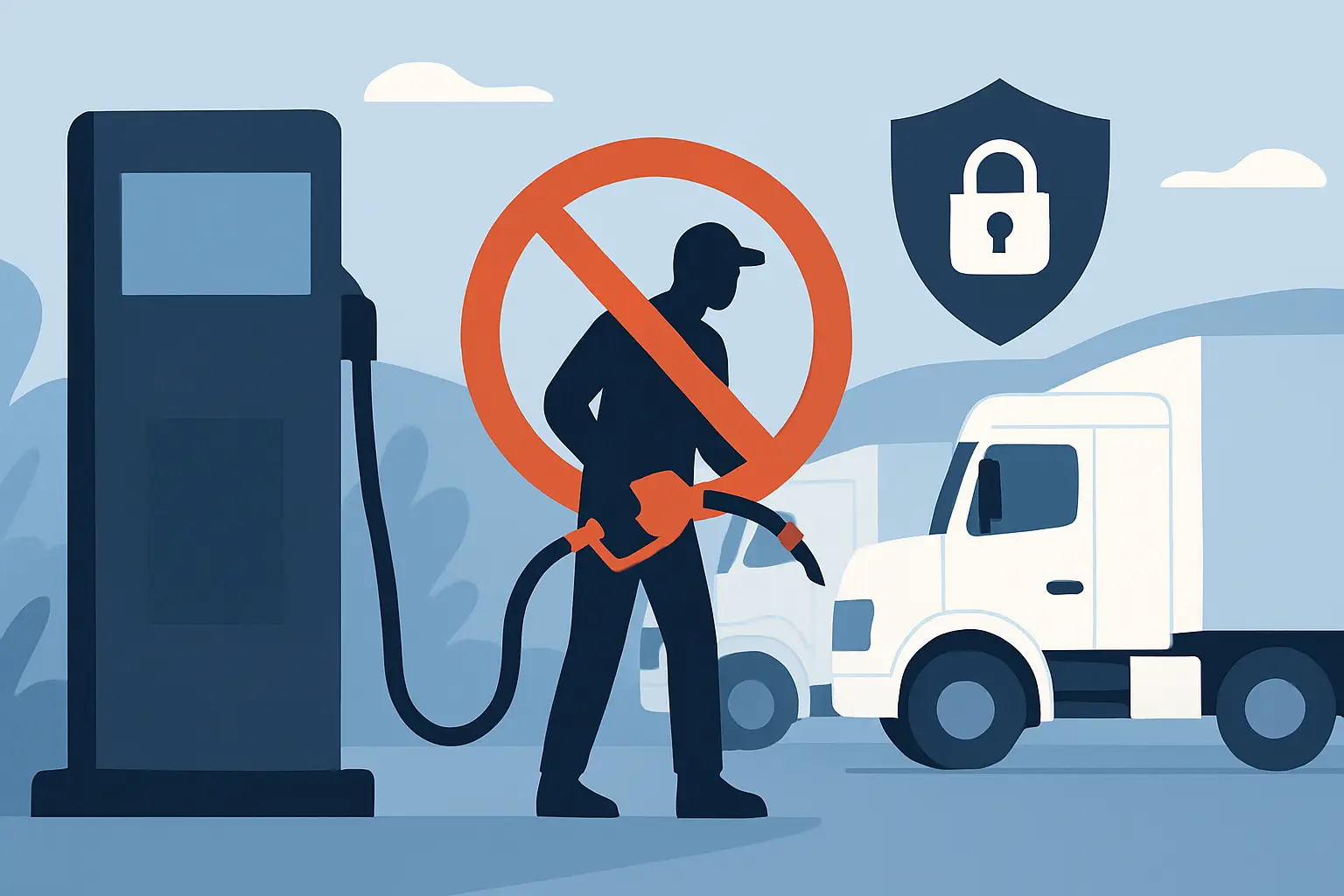
Fuel theft prevention for fleets is not a single gadget or a one-off policy. It is a system of barriers that makes theft inconvenient, traceable, and risky, while keeping legitimate dispensing fast. The best programmes do two things at once: they prevent unauthorised access and they create audit-grade evidence for every litre that leaves your tank.
Why fuel theft keeps happening in fleet environments
Fuel is a uniquely easy asset to steal. It is high value, universally usable, and often stored in places where supervision is intermittent – depots, yards, remote worksites, mobile bowsers, airport aprons, or temporary sites. Even when you have CCTV, most theft is not a masked intruder with bolt cutters. It is routine leakage that hides inside normal activity.
That leakage usually shows up as one of three patterns. First, unauthorised dispensing after hours or during low-visibility periods. Second, “grey” dispensing where fuel is taken for a non-fleet vehicle or a mate’s jerry can, but looks like a normal fill event. Third, poor record-keeping that creates the perfect cover story – if you cannot prove who dispensed what, you cannot separate genuine variance from deliberate loss.
There is also a trade-off fleets often inherit: the more you prioritise speed at the pump, the more you tend to relax controls. Keys get shared. PINs get passed around. Manual logbooks get backfilled on a Friday. The result is predictable: your operation stays moving, but accountability disappears.
What “good” looks like in fuel theft prevention for fleets
A strong prevention approach is security-first, but it should feel operationally normal for drivers and yard staff. You are aiming for a few non-negotiables.
You want positive identification – not “someone had the key”, but “this person dispensed this amount at this time on this asset”. You want real-time transaction capture, because delayed data invites editing, missing entries, and arguments. You want quick authorisation changes, because fleets are dynamic: staff turnover, agency labour, seasonal activity, and subcontractors all create access risk. And you want reconciliation that is simple enough to do routinely, not heroically.
If you take nothing else from this: theft thrives wherever dispensing is anonymous.
Start at the pump: access control beats detective work
Most fleets spend too much time trying to investigate losses and not enough time preventing them. Access control is the foundation because it stops the easiest theft paths immediately.
If your pump can be activated with a shared key, a universal fob, or an always-on switch, you have built-in anonymity. Anyone with physical access can dispense, and your only “record” is a fuel level drop.
A modern alternative is smartphone-based authorisation with cloud-connected logging. Instead of a pedestal system with specialised components, the pump is effectively “locked up” until an authorised user requests access, and the system records the dispense event automatically. This is where solutions like FluidSecure, delivered in Canada by Manage Every Drop Inc, are positioned: ruggedised hardware at the pump, user identity in an app, and transaction data captured to the cloud without relying on paper logs.
The practical point is not the brand – it is the control model. When access is tied to a named person and recorded instantly, theft becomes harder to hide. And when permissions can be granted or revoked quickly, you reduce the risk window that follows staff changes.
Avoid the “shared credential” trap
A PIN that everyone knows is not a control, it is theatre. So is a key stored in the office “for convenience”. If you cannot confidently say that each driver has their own credential and that it is not shared, your audit trail will collapse the first time you need it.
It depends how your fleet works: a small depot might get away with a simpler process, but multi-site operations and mobile refuelling nearly always require centralised permission management. If you are managing mobile fuel lorries or bowsers, individual authentication matters even more because the asset itself moves into lower-supervision environments.
Make every dispense event auditable, not arguable
Even with good access control, you still need transaction detail that answers basic questions quickly: who, when, where, what volume, and ideally which vehicle or asset.
When fleets rely on handwritten logs, the operational reality is messy. People forget. Sheets get wet or lost. Supervisors chase signatures. And by the time finance reviews anything, the moment to intervene is gone.
Auditable transactions change the rhythm of control. Instead of monthly surprises, you get daily visibility. You can spot unusual patterns such as repeated small fills, off-hour activity, or a driver consistently drawing more fuel than peers on similar routes.
This is also where you can be fair. Not every discrepancy is theft. Weather, temperature variation, calibration drift, and delivery shorting can all affect tank readings. But when you have precise dispense records, you can separate “system variance” from “human behaviour” quickly.
Reconciliation: the discipline that actually reduces loss
Reconciliation sounds like back-office work, but it is one of the strongest theft deterrents you can implement. The reason is simple: when staff know that dispensing is routinely matched against inventory movement, opportunistic theft becomes a poor bet.
A workable reconciliation cycle usually includes dip readings or tank telemetry, delivery documentation, and dispense transaction totals. The goal is not perfection to the millilitre. The goal is to reduce the unexamined grey zone where losses accumulate.
If you manage multiple sites, standardise the cadence. Weekly reconciliation might be enough for low-volume depots, while high-volume operations often need daily checks. The “it depends” factor is your exposure: remote locations, mobile fuel lorries, and 24-hour yards generally justify tighter review because supervision is naturally lower.
Design the yard to remove easy opportunities
Security is not only digital. Physical layout matters, and it often delivers fast wins without frustrating drivers.
Good lighting around tanks and dispensing points reduces the cover that enables after-hours siphoning. Clear sightlines from active work areas help, even if you do not add extra staff. Strategic placement of barriers can prevent non-fleet vehicles from getting close enough to a nozzle. And if you use mobile fuelling, park bowsers in controlled areas when not in use, with clear rules for key or credential custody.
CCTV can help, but only if it is treated as evidence, not comfort. If footage is poor quality, not time-synchronised, or rarely reviewed, it will not change behaviour. CCTV is most effective when it complements access logs, because you can correlate an event to a person and time without scrubbing hours of video.
Train for accountability, not suspicion
The fastest way to create pushback is to roll out controls as if you do not trust your drivers. The fastest way to reduce loss is to communicate that fuel is a controlled asset, and that the business is building a fair system that protects everyone.
Set expectations in plain language: dispensing must be authorised, credentials must not be shared, and unusual events must be reported immediately. Then make it easy to comply. If the process is slow or unreliable, staff will route around it.
A good training approach also covers the “why”: fuel shrink impacts budgets, maintenance schedules, and sometimes jobs. It can also affect safety and environmental responsibility – spills and untracked handling are not just financial issues.
Watch for the behavioural signals that indicate theft risk
You do not need to become an investigator, but you should know what to look for in your data and routines. Recurring off-hour dispensing, repeated “top-ups” that do not match route patterns, and sudden consumption changes after staffing shifts are all worth a closer look.
Be careful with assumptions. Seasonal route changes, idling due to congestion, PTO use, and vehicle faults can all increase consumption legitimately. This is where combining fuel controls with broader fleet insight helps: utilisation, route planning, and maintenance history can explain what raw fuel totals cannot.
The cost question: prevention that pays for itself
Fuel theft prevention for fleets is easiest to justify when you frame it as avoided loss plus saved admin time. Theft reduction is the headline, but manual reconciliation also has a cost: supervisors chasing logs, finance disputing invoices, and managers spending hours trying to reconstruct what happened.
There is a practical trade-off here. Highly customised, hardware-heavy systems can deliver control but bring maintenance overhead and slower deployment. Modern, cloud-connected authorisation can reduce complexity and speed up rollout, especially across multiple locations and mobile assets. Your best option depends on how quickly you need coverage, how distributed your sites are, and how much internal resource you have to maintain specialised equipment.
The north star is consistent: if you can secure dispensing, identify the user, and produce real-time, tamper-resistant records, you will reduce shrink and make fuel spend predictable again.
A helpful closing thought: when you build controls that make the right behaviour the easiest behaviour, you do not just stop theft – you create a fuel operation that runs calmer, cleaner, and with far fewer surprises.


Post a comment