
Why Fleets Need Cloud Fuel Logging
A missing 80 litres here, an unsigned paper log there, a driver still able to draw fuel after leaving the business – this is how fuel loss often starts. Not with one dramatic failure, but with everyday gaps in control. For fleet operators, airports, municipal depots and mobile fuel units, those gaps are expensive.
A cloud fuel transaction logging system closes them at the source. Instead of relying on handwritten entries, shared PINs or end-of-week spreadsheet chasing, it records each dispense event as it happens, ties that event to an authorised user, and makes the transaction visible from anywhere. That shift matters because fuel is not just a consumable line item. It is one of the most exposed and least forgiven operating costs on the balance sheet.
What a cloud fuel transaction logging system actually does
At its core, a cloud fuel transaction logging system controls access to fuel and creates an auditable record of every transaction. That sounds simple, but the practical value is much bigger. The system decides who can dispense, when they can dispense, what asset they are fuelling, and how that transaction is recorded and stored.
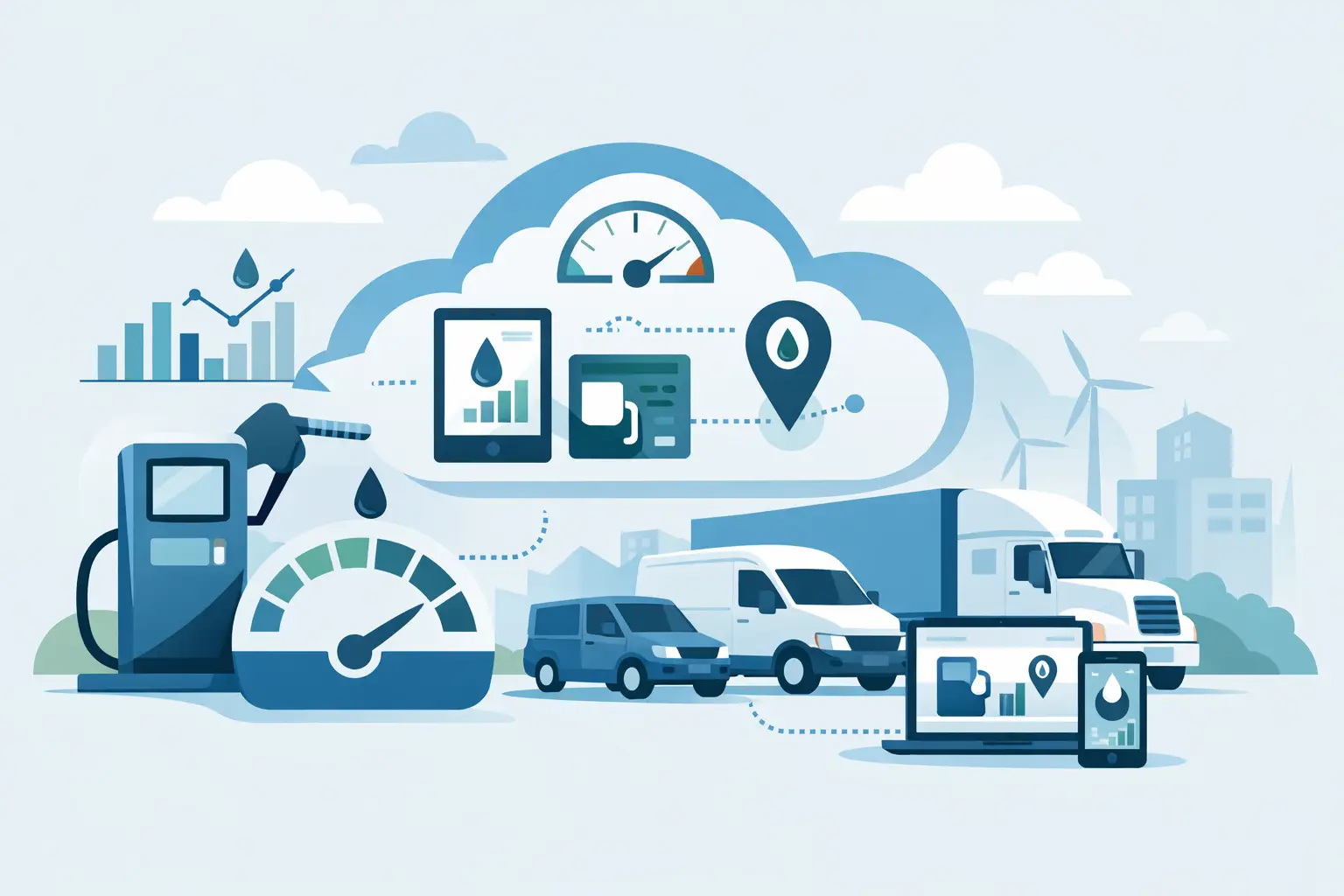
In a well-designed setup, the process begins before the nozzle is lifted. The user is authenticated, the equipment verifies permission, and only then is the pump activated. Once dispensing starts, the system captures the key details automatically – user identity, time, location, product, volume and the associated vehicle or asset where applicable. Those records are then pushed to the cloud, giving managers and finance teams near real-time visibility rather than delayed, manual reporting.
This is why cloud matters. A standalone system at one depot may record data locally, but cloud connectivity changes the operational model. It allows central oversight across multiple sites, immediate permission changes, standardised reporting and faster exception management. If someone should no longer have access, that access can be removed quickly. If a site shows unusual consumption, the issue can be investigated without waiting for a site visit or month-end close.
Why older fuel control methods keep creating avoidable loss
Many operators still manage fuel with a mix of keys, cards, gate access, paper logs and local controllers. Each piece may seem workable on its own, yet the combination often produces blind spots. A paper sheet can tell you that fuel was dispensed, but not whether the record is accurate. A keypad can limit access, but shared codes weaken accountability. A legacy pedestal system may capture transactions, but installation, maintenance and hardware complexity can make expansion costly.
The real problem is not just inconvenience. It is the gap between dispensing and proof. If the business cannot confidently show who took fuel, for which asset, at what time and in what quantity, it is left reconciling assumptions rather than facts.
That becomes especially painful in multi-site fleets and mobile operations. A lorry fleet with one depot has one set of challenges. A business running several yards, remote tanks or mobile fuel bowsers has another. The more locations and users involved, the more expensive weak controls become. Cloud-based transaction logging reduces that exposure because it treats each dispense event as a controlled, documented transaction rather than an informal activity.
How cloud fuel transaction logging improves control at the pump
The strongest systems do not start with reporting. They start with prevention. If access control is weak, reporting simply tells you what went wrong after the fact. If authorisation is tied to an identified user and enforced at the pump, many losses never happen in the first place.
That is where smartphone-authorised and cloud-connected systems have changed expectations. Instead of issuing more keys, replacing more cards or maintaining bulky site hardware, operators can manage permissions centrally and document every dispense automatically. This lowers dependence on site-specific infrastructure while making accountability much harder to bypass.
For operations teams, the gain is immediate. They can see transactions across fixed and mobile sites, compare expected use against actual draw, and spot anomalies before they grow. For finance and procurement, reconciliation becomes far less manual. For maintenance leaders, accurate fuelling records support cleaner asset histories. For senior management, there is a clear chain of custody around fuel usage.
The operational benefits are bigger than theft prevention
Fuel theft and shrinkage often dominate the conversation, and rightly so. But a cloud fuel transaction logging system earns its keep in quieter ways as well.
One of the most valuable is administrative time saved. If site staff are still collecting meter readings, chasing missing signatures or correcting incomplete logs, the business is paying for a control process that still does not guarantee accuracy. Automatic cloud records reduce that burden and make audit preparation far less disruptive.
Another benefit is consistency across locations. Businesses that grow through new depots, contracts or acquisitions often inherit a patchwork of fuelling methods. Standardising access control and transaction logging across those sites creates cleaner data and simpler governance. It also shortens training time, because operators are not learning a different fuelling process at each location.
There is also a compliance and environmental angle. When dispensing records are reliable and easy to retrieve, it becomes easier to investigate exceptions, answer internal queries and demonstrate responsible control over stored fuels and fluids. That does not remove every compliance burden, but it does give the business a stronger evidential trail.
What decision-makers should look for in a cloud fuel transaction logging system
Not every system marketed as cloud-based delivers the same level of control. Some focus heavily on reporting but offer weak user authentication. Others provide access control but rely on cumbersome hardware or fragmented software. For most fleets, the right choice depends on operating model, site mix and tolerance for maintenance overhead.
A good starting point is to ask how the system handles user identity. If credentials can be easily shared, accountability suffers. Then look at how quickly permissions can be granted or removed. In businesses with staff turnover, contractors or changing shift patterns, delayed access changes create risk.
After that, consider deployment and support. Traditional pedestal-heavy setups may still suit some large, established sites, particularly where there is already sunk infrastructure. But many operators want a lower-maintenance alternative that can be installed faster, scaled more easily and managed centrally. For them, a modern cloud-connected system often delivers a better total cost profile over time.
Reporting also deserves scrutiny. The dashboard should not just store transactions. It should make them useful. Site-by-site views, product usage trends, user activity and exception visibility all matter. If finance teams still need to rebuild the story in spreadsheets, the system is not doing enough.
Where this approach works best
The fit is especially strong for organisations that dispense fuel or fluids from on-site tanks, unattended pumps or mobile units. Fleets with multiple yards gain centralised control. Airports and airside operations benefit from tighter access management and clearer transaction histories. Mobile fuel operations can bring the same level of accountability to remote dispensing that fixed sites expect at the depot.
Smaller operators also stand to gain. In fact, they often feel losses more sharply because every unauthorised dispense affects margin. A cloud-based system can give them enterprise-grade control without the cost and complexity that once put fuel management technology out of reach.
For operators comparing options, this is where a solution like the one offered by Manage Every Drop can stand apart – smartphone-authorised access, cloud-synchronised transactions, lower hardware complexity and support built around long-term accountability rather than a one-off install.
Why the change is happening now
Fleet businesses are under pressure from every side: fuel price volatility, tighter margins, audit demands, labour constraints and the need to run leaner without losing control. That is why old fuelling processes are being questioned more seriously. If a business can track vehicles by telematics, plan routes digitally and manage maintenance electronically, it makes little sense to leave fuel dispensing half-manual.
A cloud fuel transaction logging system is not a luxury layer on top of operations. For many fleets, it is becoming the baseline for protecting stock, proving usage and reducing reconciliation effort. The exact setup will depend on site conditions, connectivity and operational complexity. But the direction is clear. Control at the pump now needs to be immediate, traceable and centralised.
If fuel is one of your highest recurring costs, it deserves more than a padlock and a paper logbook. It deserves a system that records every litre with the same seriousness you apply to every other critical asset.


Post a comment