
Fuel Usage by Vehicle Reporting That Works
A fleet can lose thousands in fuel without anyone spotting a dramatic event. More often, the problem hides in plain sight – a few unexplained fills, inconsistent mileage, idle assets still drawing fuel, or manual logs that never quite match the tank level. That is why fuel usage by vehicle reporting matters. When every litre is tied to a specific vehicle, driver and dispense event, fuel stops being a vague overhead and becomes something you can control.
For fleet managers, operations teams and finance leaders, this is not just a reporting exercise. It is a practical way to reduce shrinkage, tighten accountability and make better day-to-day decisions. Good reporting shows what was dispensed, to which asset, by whom, where and when. Great reporting also helps you understand whether that usage makes operational sense.
What fuel usage by vehicle reporting should actually tell you
A basic report can show litres dispensed against a registration number or asset ID. That is useful, but it is rarely enough to manage cost or risk properly. In real operations, you need context around every transaction.
Strong fuel usage by vehicle reporting should connect dispense data to the vehicle, authorised user, date, time, location and product type. If you operate mixed fleets, that level of detail matters even more. A diesel van, a generator, a plant asset and a mobile fuel bowser do not follow the same usage pattern, so they should not be measured as if they do.
The report should also help you compare expected use against actual use. If one vehicle consistently consumes more fuel than similar assets on comparable work, there may be a maintenance issue, a routing problem, excessive idling or unauthorised use. If a vehicle receives fuel while shown as off-duty, parked or decommissioned, you have a control issue to investigate.
In other words, the value is not in collecting transactions for their own sake. The value is in creating an auditable trail that supports action.
Why manual logs break down
Many fleets still rely on handwritten sheets, card receipts or spreadsheet-based reconciliation. That approach can function at very small scale, but it becomes unreliable quickly once you add multiple drivers, multiple sites or mobile fuelling.
The issue is not only administrative effort. Manual systems create gaps. People forget to record odometer readings. Asset IDs are entered inconsistently. Receipts go missing. A driver may fuel the wrong unit and no one notices until month-end. By then, the opportunity to correct behaviour or stop loss has already passed.
There is also a security problem. If a pump can be used without real-time authorisation and a precise digital record, you are depending on process discipline alone. For high-volume sites or remote locations, that is a weak position. Fuel is valuable, portable and easy to misuse if controls are loose.
That is why more operators are moving to cloud-connected dispensing controls that authorise users at the pump and create a transaction record automatically. The operational benefit is immediate: less paperwork, fewer delays in reconciliation and a cleaner chain of accountability.
What good reporting looks like in practice
The best reporting is clear enough for daily operations and detailed enough for audit and finance. It should not force your team to build the truth from several disconnected systems.
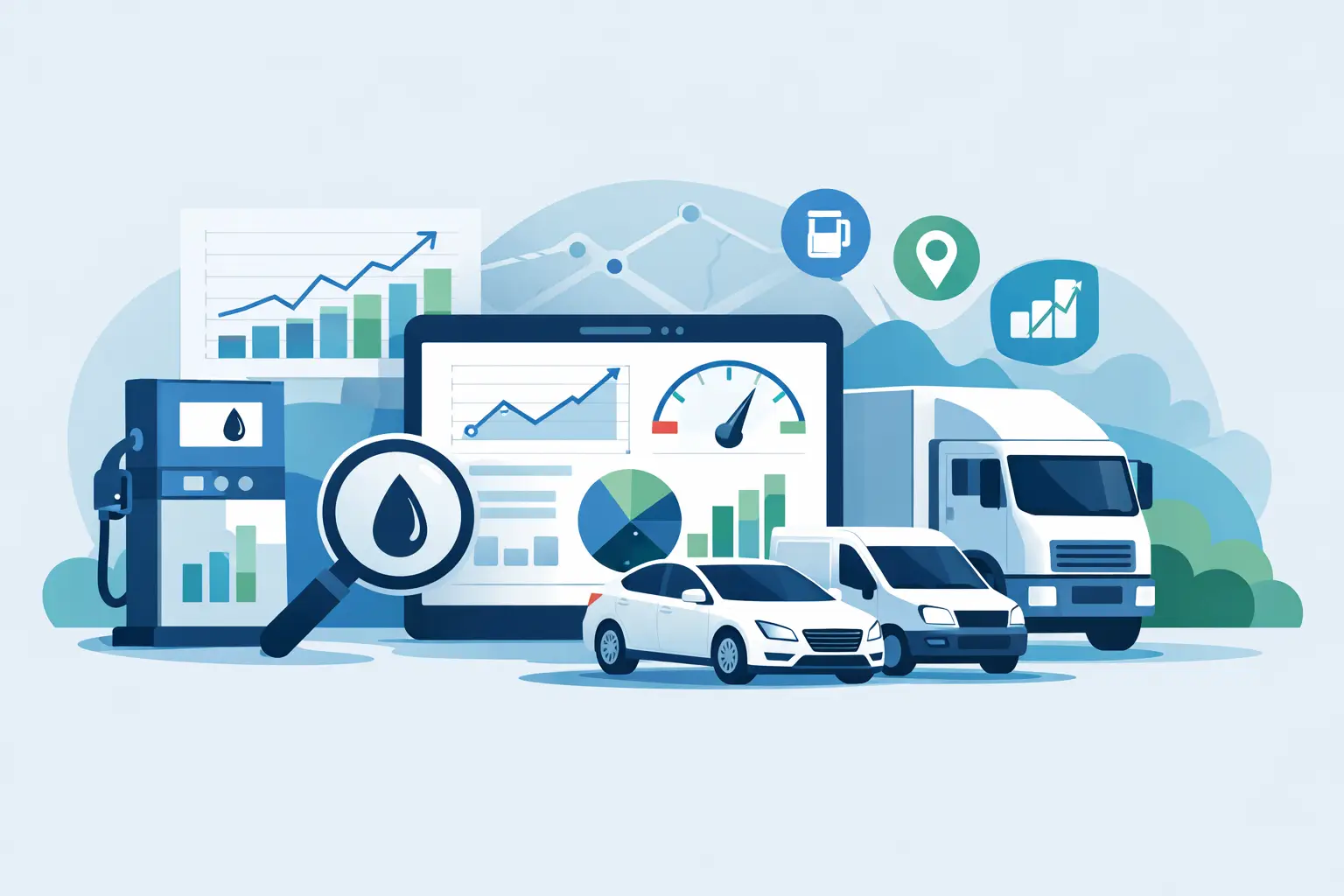
A practical setup will show each vehicle’s fuel activity over time, including total litres, transaction frequency and exceptions. It should be easy to filter by asset, site, department, driver or date range. If you run fixed tanks and mobile refuelling, those transactions should sit in one reporting environment rather than in separate silos.
Good reporting also flags anomalies instead of expecting your team to hunt for them manually. Examples include unusually high consumption, fuelling outside allowed hours, repeated top-ups within short periods, or dispensing by users who should no longer have access. These are not fringe features. They are part of making reports operationally useful.
For finance and compliance teams, auditability is equally important. You need confidence that a report reflects what actually happened, not what someone remembered later. Time-stamped cloud records are far stronger than paper notes when you need to reconcile fuel inventory, review exceptions or demonstrate internal control.
The link between reporting and fuel loss reduction
Fuel theft and shrinkage are often discussed as separate issues, but from a management perspective they share the same weakness: poor visibility. If you cannot see fuel usage by vehicle with reliable transaction detail, you cannot distinguish normal consumption from abnormal activity.
That does not mean every exception is theft. Sometimes the explanation is straightforward. A vehicle may have been reassigned, routed differently or used for extended idling during site work. A maintenance fault can also increase consumption. The point is that reporting gives you a starting point grounded in evidence rather than guesswork.
Once each dispense is tied to a user and asset, behaviour tends to improve on its own. Authorised access reduces casual misuse. Real-time records reduce disputes. Managers can challenge anomalies with confidence because the data is specific, not approximate.
This is where secure pump control and reporting work best together. Access control prevents unauthorised dispensing at the source, while vehicle-level reporting shows whether authorised dispensing is commercially and operationally justified.
How to use fuel usage by vehicle reporting to improve fleet decisions
Reporting should support more than fuel reconciliation. Used properly, it improves broader fleet management.
Vehicle performance is one example. If one unit consumes materially more fuel than comparable assets, that can trigger a maintenance inspection before the issue grows into downtime. For older fleets, this can help you decide whether to repair, reassign or replace an asset.
Utilisation is another. Some organisations discover they are fuelling vehicles that contribute little useful work. Others find a small number of heavily used assets carrying too much of the load. Vehicle-based reporting brings those patterns into view and supports better allocation decisions.
There is also a driver management angle. Consumption data can reveal poor habits such as excessive idling, route inefficiency or aggressive driving. It should be handled carefully, because data without context can mislead. A driver on urban stop-start work will not compare neatly with one doing long motorway runs. Still, when reports are interpreted properly, they support targeted coaching rather than broad assumptions.
What to look for in a reporting system
If you are assessing systems, look beyond dashboard appearance. The real question is whether the reporting is secure, automatic and detailed enough to stand up under operational pressure.
Start with authorisation. A system should ensure that only approved users can dispense, and that permissions can be changed instantly when staff roles change. That matters across both fixed sites and mobile operations.
Next, consider data quality. Transactions should be captured automatically at the point of dispense, not keyed in later. The more manual handling involved, the more likely your report will contain errors or omissions.
Then look at accessibility. Managers need current information, not a delayed monthly picture. Cloud-based reporting is especially valuable for multi-site fleets because it gives decision-makers one view across locations without waiting for local paperwork to catch up.
Finally, consider total cost of ownership. Some legacy systems bring high hardware complexity and maintenance burden. A modern approach should strengthen control without creating another technical headache for your team. That is one reason many operators move towards smartphone-authorised, cloud-connected systems such as those supported by Manage Every Drop.
Reporting is only useful if your team trusts it
One overlooked issue is credibility. If your drivers, site managers or finance team do not trust the report, they will work around it. That usually happens when records are incomplete, exceptions are frequent, or the system cannot reflect real operating conditions.
Trust comes from consistency. The same rules should apply across sites. Asset naming should be standardised. Access permissions should be actively managed. Reports should be simple enough for frontline teams to understand and detailed enough for back-office reconciliation.
It also helps to set realistic expectations. Reporting will not solve every fuel issue on day one. It will, however, show you where control is weak, where behaviour needs attention and where process changes will have the biggest payoff. For most fleets, that visibility alone is worth a great deal.
When fuel usage by vehicle reporting is done properly, every dispense tells a clear story. You know who took the fuel, which asset received it, whether the transaction was authorised and how it fits the wider operating picture. That level of accountability protects stock, sharpens decision-making and gives your team something better than estimates to work from. If fuel is one of your largest controllable costs, that is not an optional extra – it is the standard to aim for.


Post a comment