
Best Mobile Fuelling Safety Checklist for Fleets
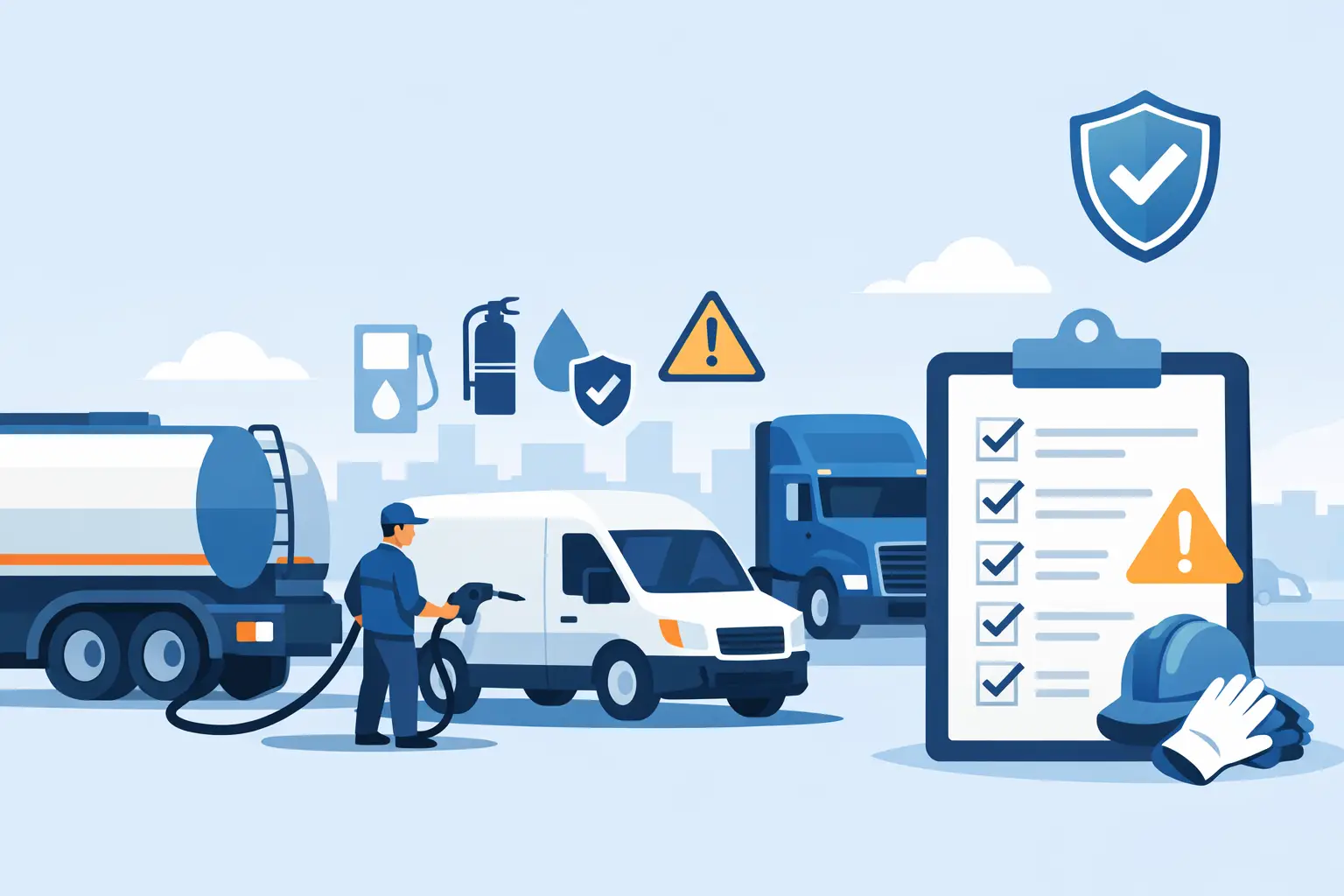
A mobile fuel vehicle can complete dozens of critical transactions before the depot office opens. That speed is useful only when every dispense is controlled. The best mobile fuelling safety checklist gives operators a repeatable way to protect people, equipment, fuel stock and the environment, while giving managers a transaction record they can trust.
Mobile fuelling carries risks that fixed sites can manage more easily. The vehicle moves between surfaces, weather conditions, assets and work zones. Hoses are handled repeatedly. Drivers may be working alone or under pressure to return vehicles to service. A sound checklist turns those changing conditions into clear stop-or-go decisions.
What a mobile fuelling checklist must control
A useful checklist is not a paperwork exercise completed after the fact. It should guide the operator before, during and after every fuelling activity, with a clear escalation path when something is wrong. It also needs to connect safety controls with accountability. If nobody can confirm who dispensed fuel, into which asset, at what time and in what quantity, a fleet has both a safety gap and a reconciliation gap.
The best approach separates checks into three moments: preparing the mobile unit, controlling the dispense, and securing the vehicle and records afterwards. Managers should keep the process short enough for consistent use but detailed enough to identify defective equipment, unauthorised activity and spill risks.
Best mobile fuelling safety checklist: before leaving
Before the mobile fuel vehicle enters a route or work site, the operator should inspect the vehicle, its safety equipment and the planned job. This is where preventable defects are found before they become roadside incidents.
Use the following checks at the start of each shift:
- Confirm the driver is authorised, trained for the vehicle and fit for duty. Check that required licences, site inductions and emergency contacts are current.
- Inspect the vehicle for visible leaks, damaged pipework, loose fittings, worn hose covers and signs of impact around tanks, pumps and cabinets.
- Test the emergency stop, bonding or earthing equipment where required, pump controls, nozzle shut-off and hose reel operation. Remove the unit from service if a critical control does not work.
- Verify that fire extinguishers, spill kits, absorbents, drain covers, warning signs and personal protective equipment are present, accessible and within inspection dates.
- Check fuel grades, tank levels and compartment identification. A wrong-product delivery can disable assets, create expensive clean-up work and compromise customer confidence.
- Review the route, site restrictions, weather and planned fuelling locations. Avoid congested areas, slopes, ignition sources and drains wherever practical.
- Confirm the day’s authorised assets and operators through the fuel management system. Do not rely on memory, hand-written vehicle lists or an open pump.
These checks should be recorded, not simply assumed. A digital pre-use inspection with time, user and vehicle identity gives supervisors evidence that the vehicle was safe to operate at the start of the shift. It also helps maintenance teams spot repeated hose, nozzle or pump issues before failure causes downtime.
Stop work when the conditions are wrong
Operators need explicit authority to pause the job. A damaged hose, an active fuel leak, missing spill equipment, a faulty emergency stop or an unsafe fuelling area is not a minor defect to work around. It is a reason to isolate the equipment, notify the responsible manager and arrange repair or recovery.
The same applies to behaviour around the fuelling zone. Smoking, hot works, idling vehicles where prohibited, unsecured members of the public or a driver who cannot safely position the vehicle should stop the dispense. Productivity matters, but no delivery schedule justifies releasing fuel into an uncontrolled area.
Safe controls during every dispense
At the asset, the operator should establish a controlled fuelling zone before touching the nozzle. Park on stable ground where possible, apply the parking brake, assess traffic movement and keep ignition sources away. Use cones or other site controls where the location and risk assessment call for them.
Verify the asset before fuel flows. Check the registration, fleet number or approved asset ID, select the correct fuel grade and inspect the fill point for damage or contamination. This is the point where an authorisation system earns its place: it can prevent a pump from running until an approved user identifies themselves and selects an approved vehicle or asset.
During fuelling, stay with the nozzle. Do not wedge it open, leave it unattended or attempt to multitask. Watch for overfill, unusual flow behaviour, vapour, seepage at the fill point and changes in hose condition. Maintain communication with the asset operator where relevant, especially at busy depots, airports, construction sites or roadside locations.
Static control requirements depend on the fuel type, equipment design, local rules and the site risk assessment. Operators should follow their company procedure for bonding or earthing rather than improvising. The objective is consistent: prevent a source of ignition while flammable vapours may be present.
A real-time transaction record should capture the user, mobile unit, asset, fuel type, volume, date, time and location or route reference where available. That record is not separate from safety. It gives managers a way to investigate exceptions quickly, identify unusual consumption and prove what happened if a concern is raised.
Spill response: act first, report clearly
Every mobile fuelling operator should know the immediate spill procedure without searching for a manual. Stop the flow if it is safe to do so. Shut down the pump, use the emergency stop where necessary, keep people and ignition sources away, and prevent fuel from reaching drains, watercourses or soil.
Then contain the spill with the vehicle’s approved kit and notify the designated supervisor or emergency contact. The reporting threshold and external notification requirements vary by location, volume and environmental risk, so the company procedure must reflect the sites and jurisdictions where the fleet operates. Never wash fuel into a drain or attempt to hide a spill with water or loose material.
The report should include the location, estimated volume, fuel type, source, actions taken, photographs where safe, and whether any drain or watercourse could be affected. Clear reporting supports environmental compliance, but it also protects the operator. A prompt, factual record is far better than a vague account at the end of a long shift.
After fuelling: secure the vehicle and the data
The job is not complete when the nozzle clicks off. Remove the nozzle carefully, allow residual fuel to drain as designed, replace caps, inspect the area for drips and secure hoses, compartments and equipment. Before moving, confirm that no cone, spill equipment or person is in the vehicle’s path.
The operator should reconcile the dispense record before leaving the location when possible. If the system flags an incorrect asset, unexpected volume, failed authorisation or incomplete transaction, resolve or report it immediately. Small mismatches become costly when they sit in paper records for weeks.
At the end of the shift, inspect the vehicle again for leaks or damage, log defects and review remaining stock against dispensed volume. Variances may have legitimate causes, such as temperature effects, meter calibration or operational transfers. They still require visibility and a consistent investigation process. Unexplained loss should never be normalised as the cost of doing business.
Make the checklist easier to follow
Paper forms can work for a small operation, but they often create delays and weak accountability. Pages go missing, handwriting is unclear and managers cannot see a problem until the vehicle returns. Digital controls reduce that gap by tying inspection and dispense activity to a named person and a time-stamped record.
For fleets operating across multiple sites, mobile authorisation is particularly valuable. A supervisor can add or remove access without changing keys, codes or legacy pedestal hardware. Manage Every Drop uses secure, smartphone-authorised dispensing and cloud-based transaction records to help fleets control who can fuel, what they can fuel and how every litre is accounted for.
The right checklist should be reviewed after incidents, near misses, equipment changes and new site contracts. Ask operators where the process is unclear or impractical, then improve it without removing the controls that keep people safe. The best checklist is the one your team can follow every time, and your management team can verify when it matters.


Post a comment