



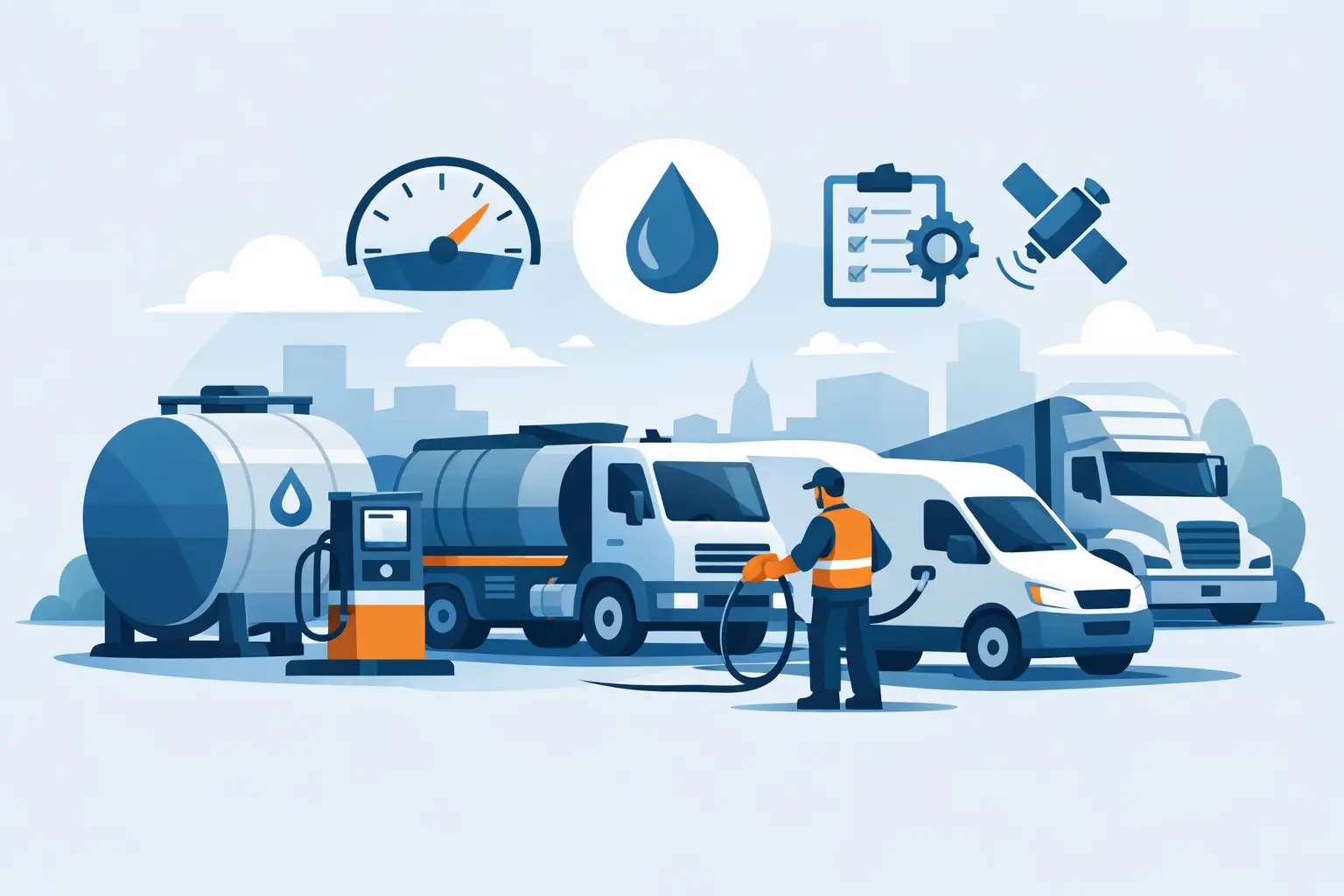
Onsite Diesel Control Guide for Fleet Operators
A diesel tank can look like a simple asset: fuel arrives, drivers fill up, vehicles leave. In practice, an unlocked pump and handwritten fuel sheet can create a costly blind spot. This onsite diesel control guide sets out a practical way to protect fuel, document every dispense and give operations teams an accurate view of stock without adding unnecessary work at the depot.
For fleet managers, maintenance leaders and controllers, the goal is not merely to record litres. It is to know who took fuel, which vehicle or asset received it, when it happened and whether the transaction makes operational sense. That level of accountability changes fuel from an assumed cost into a controlled one.
Start with the risks at your pump
Onsite diesel loss is not always dramatic theft. It can be a driver using the wrong vehicle ID, an unauthorised after-hours fill, fuel issued to equipment that was not scheduled to operate, or a handwritten entry that cannot be read or was never made. Small gaps become expensive when they repeat across shifts, sites and mobile fuel units.
Manual processes also delay the point at which a discrepancy becomes visible. By the time someone compares delivery paperwork, tank readings and driver logs at month-end, the evidence may be incomplete. A good control process brings those records together at the moment of dispensing, rather than asking finance or operations to rebuild the story later.
The first question is simple: can anyone dispense from the pump without proving who they are and why they need fuel? If the answer is yes, the site has a control gap, even when the team is trusted and the tank is fenced.
Build diesel control around identity
The strongest onsite diesel controls begin before the nozzle is lifted. Each permitted user should have a unique method of authorisation, tied to an identifiable person rather than a shared PIN, key or access card passed between shifts. Smartphone-based authorisation is particularly useful because permissions can be issued, amended or removed centrally without changing physical keys or visiting each location.
Identity alone is not enough. The system should also capture the vehicle, equipment item or mobile unit receiving fuel. Depending on how the fleet operates, that may mean a vehicle number, asset code, odometer reading, engine hours or a combination of those fields. The right requirement depends on the operation. A long-haul lorry fleet may rely heavily on mileage, while construction equipment or airport ground support equipment may need engine hours to identify abnormal consumption.
Keep the process practical. If operators are asked to enter too many fields in poor weather or during a busy shift, data quality will fall. Require the information that supports reconciliation and exception reporting, then make the authorisation process quick enough that people will use it every time.
Set permissions by role, site and shift
Not every authorised employee needs identical access. A driver may need to fuel a designated vehicle at one depot, while a workshop supervisor may need access to multiple tanks and fluids. A mobile fuel operator may need permissions that travel with the vehicle rather than the site.
Create permission groups that reflect real responsibilities. Restrict access by site, product, time window or asset where appropriate. Just as importantly, have a clear process for removing access immediately when someone changes role, leaves the business or loses a device. Delayed deauthorisation is a preventable exposure.
Make every transaction auditable
A secure dispensing system should create a transaction record automatically, not rely on someone remembering to complete a form. At minimum, each record should show the authorised user, date and time, location, product and quantity dispensed. Vehicle or asset identification and mileage or hours add the operational context needed to investigate unusual use.
Cloud-connected records give managers visibility while the fuel event is still relevant. They can review activity by site, user, vehicle or date range without waiting for paper sheets to arrive at head office. This is especially valuable for multi-site fleets and mobile dispensing, where local practices can otherwise drift from one location to another.
Auditability is also about consistency. If a transaction is edited, cancelled or corrected, retain the original event and the reason for the change. A clean audit trail protects the business during internal reviews, disputes and compliance checks. It also protects responsible employees by replacing suspicion with facts.
Reconcile three numbers, not one
Fuel control fails when teams only watch the tank gauge. Effective reconciliation compares three sources: fuel delivered, fuel dispensed and the measured stock remaining in the tank. Over time, those figures should align within a reasonable tolerance for temperature, meter accuracy and operational conditions.
Start each delivery with a documented opening balance. Record the supplier delivery quantity, then compare the expected closing balance against the physical tank level and the total authorised transactions. Investigate material variance promptly, not at the end of the quarter.
A variance does not automatically indicate theft. Meter calibration, tank dip practices, water contamination, product temperature and data-entry errors can all affect the result. The discipline is to define an acceptable tolerance, apply it consistently and investigate exceptions with evidence. Where the same variance pattern appears repeatedly, the process needs attention even if no single discrepancy looks large.
Use exceptions to focus management time
Good reporting does not mean reading every fuel transaction. It means flagging the activity that deserves a closer look. Useful exceptions include unusually large fills, repeated small fills, fuelling outside permitted hours, a vehicle exceeding expected consumption, a user attempting access after removal, or a delivery that does not reconcile with stock movement.
Set thresholds based on your own operating reality. A 200-litre transaction may be normal for one fleet and exceptional for another. Review the exceptions with the people closest to the work before drawing conclusions. There may be a legitimate route change, equipment failure or emergency deployment behind the data.
Secure the physical site as well as the data
Digital authorisation controls the pump, but physical safeguards still matter. Tanks, cabinets and fuel points should be protected from casual access, clearly labelled and inspected regularly. Lighting, CCTV where appropriate, controlled site entry and visible rules all reinforce the message that fuel is managed property, not an informal convenience.
Keep delivery and dispensing areas clean and safe. Spills, damaged hoses and poorly maintained nozzles are environmental and safety issues, but they also compromise stock accuracy. A routine inspection should cover hoses, meter condition, tank vents, locks, signage, leak indicators and the condition of any mobile fuel unit.
Document what to do when the normal process cannot be followed. If a device fails, connectivity is interrupted or a critical vehicle needs fuel outside a scheduled window, staff need an approved exception path. Emergency access should be limited, recorded and reviewed afterwards. An uncontrolled workaround can quickly become the new routine.
Standardise controls across fixed and mobile operations
Mobile fuel lorries create a different control challenge. The fuel point moves between yards, worksites and customer locations, but the need for identity, transaction records and reconciliation remains the same. Using one control method across fixed tanks and mobile units reduces training burden and gives management a common reporting standard.
This is where traditional pedestal-based systems can become costly and difficult to maintain. Separate hardware, local databases and site-by-site changes create administrative friction. A cloud-connected approach allows permissions and reporting rules to be managed centrally while maintaining a simple, rugged process at the pump.
Manage Every Drop helps operators apply this model through FluidSecure™, which locks dispensing behind smartphone authorisation and records each transaction in the cloud. The practical benefit is not technology for its own sake. It is faster accountability at the pump, lower hardware complexity and information that operations and finance can use without chasing paperwork.
Put ownership and review into the routine
A control system needs named owners. Operations should own user permissions and day-to-day exception review. Finance should own reconciliation standards and reporting cadence. Maintenance should own equipment condition and meter checks. These responsibilities can overlap, but they should never be assumed.
Review access permissions at planned intervals, especially after staffing changes. Review fuel variances weekly or at a frequency that matches volume and risk. Compare consumption against vehicle mileage, engine hours and route or duty type. When an issue is found, correct the process as well as the individual event. That may mean retraining, changing a threshold, repairing equipment or tightening an approval rule.
The best onsite diesel control is the one your team can follow every shift and your managers can trust every day. Start by securing the pump, then make each litre traceable from authorisation to reconciliation. Once every dispense has an owner and a record, fuel stops being a recurring question mark and becomes a controlled operational asset.


Post a comment