



How to Secure Bulk Fuel Tanks Against Loss
A bulk fuel tank can be full on paper and short in reality long before anyone notices. A few unauthorised fills, an unrecorded transfer or a small leak can turn into a material cost across a busy fleet. Knowing how to secure bulk fuel tanks means protecting more than the tank itself. It means controlling who can dispense, proving what was taken and spotting exceptions before they become routine loss.
For fleet operators, airports, depots and mobile fuelling teams, physical security is only one part of the answer. A padlock may deter opportunistic theft, but it cannot tell you which driver used the pump at 05:40, how many litres were issued or whether that transaction belongs to a vehicle in your fleet. Effective tank security combines site controls with identity-based access and a transaction record that stands up to scrutiny.
Secure bulk fuel tanks by controlling the dispense
The nozzle is the point that matters most. Fuel does not become a loss simply because it sits in a tank. It becomes a loss when it leaves without a valid, traceable purpose.
Traditional pump keys, shared PINs and handwritten fuel sheets create gaps. Keys get copied, codes get passed around, and paper records are often completed after the shift – if they are completed at all. Even well-run teams can struggle to reconcile stock when the dispensing process relies on memory and manual entry.
Instead, require a named, authorised person to authenticate before the pump can run. The authorisation should be linked to the individual and, where appropriate, to a vehicle, asset or job. This gives managers the ability to grant or remove access immediately, rather than waiting to recover a key or change a lock.
A smartphone-authorised system is particularly useful for dispersed operations. Drivers and operators already carry their mobile phones, while managers can control permissions centrally. The practical result is simple: no approved user, no fuel.
Match access permissions to operational need
Not every employee needs the same access. A maintenance technician may need diesel from one tank during workshop hours. A mobile fuelling operator may need access to several products and locations. A contractor may need time-limited permission for a specific project.
Set permissions around those real responsibilities. Restrict users by site, fuel type, pump and, if required, time of day. Review those permissions when staff change roles, leave the business or move between depots. Instant deauthorisation is one of the fastest ways to remove a common security exposure.
There is a trade-off: controls that are too complicated encourage workarounds. The best system is strict at the pump but simple for authorised staff to use. If a driver can authenticate in seconds and the transaction is captured automatically, accountability improves without slowing down the operation.
Build an audit trail for every litre
Physical controls deter theft. Transaction data identifies it, investigates it and helps prevent it from happening again.
Every dispense should create a record of who took the fuel, when it was taken, where it was dispensed, the product and the volume. Ideally, the record is available in real time rather than waiting for someone to collect paper dockets or download a device at the end of the week.
That information changes the conversation from “the tank appears low” to “this 180-litre dispense was made by this authorised user at this pump and assigned to this asset”. Finance teams can reconcile purchases, tank stock and consumption with far less manual effort. Operations managers can see whether fuel use aligns with mileage, engine hours, routes or expected demand.
Cloud-connected reporting is valuable for multi-site fleets because it creates one source of truth. A depot manager should not need to send photographs of a logbook to head office, and a controller should not need to chase several locations for month-end figures. The data should be visible, searchable and ready for review.
Investigate exceptions, not every transaction
Good fuel security does not mean spending hours checking normal activity. It means setting sensible exception rules and acting quickly when something falls outside them.
Look for unusually large fills, repeated small fills, fuelling outside normal operating hours, transactions against inactive assets and consumption that does not match distance travelled or equipment run time. A sudden difference between delivered volume, book stock and measured tank stock also needs attention.
An exception is not automatic proof of theft. A vehicle may have been reassigned, a lorry may have operated a longer route, or a generator may have been used during an emergency. But exceptions should have an owner and an explanation. Consistent review makes it much harder for unauthorised activity to hide in the noise of daily operations.
Protect the tank, pump and site
Digital authorisation is strongest when the physical installation is equally disciplined. Start with the basics: the tank, fill point, pump controls and dispensing area must be difficult to access without being seen.
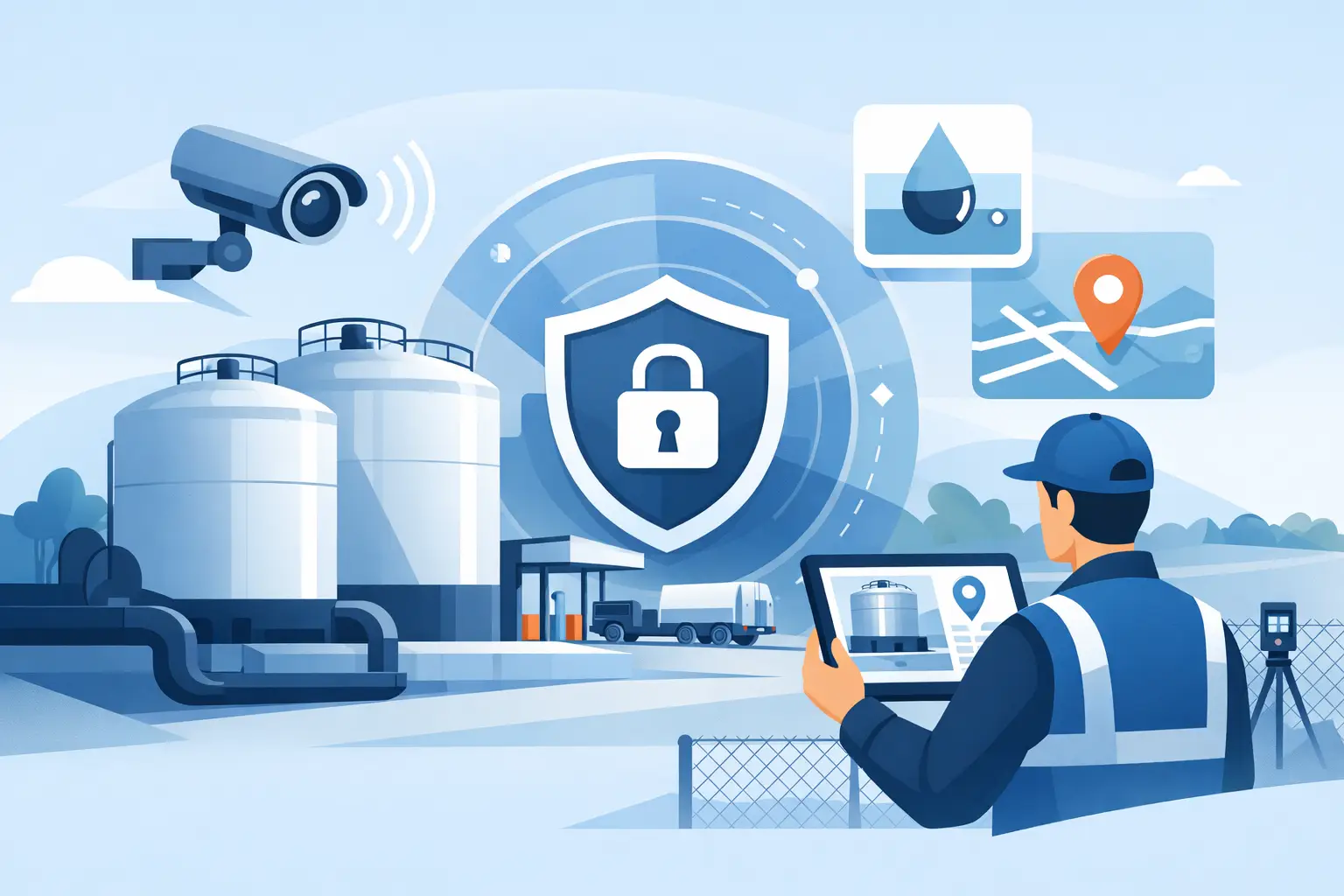
Use secure enclosures or locked cabinets for pump controls, protect fill caps against tampering and keep spare keys under controlled custody. Position lighting to cover the tank, nozzle and vehicle approach area. Cameras can provide an additional deterrent and support investigations, especially at unattended locations, but they should complement access control rather than replace it.
Where the site layout allows, place tanks inside a fenced compound and limit vehicle entry to designated routes. Clear sightlines matter. A tank hidden behind stored materials or parked equipment is easier to misuse and harder to inspect. For remote sites, consider whether access should be available only during scheduled operating periods.
Mobile fuel tanks and fuelling lorries need the same discipline. Lockable nozzle storage, secure hose routing and controlled access to pumping equipment reduce opportunity while the vehicle is parked. More importantly, the person operating the mobile pump should still be authenticated and every issue recorded. Mobility should not mean weaker accountability.
Measure inventory accurately and reconcile often
A secured pump does not solve a leaking tank, an inaccurate gauge or a delivery discrepancy. Inventory management remains essential.
Establish a routine that compares delivery tickets, recorded dispenses and physical tank readings. The right frequency depends on turnover and risk. A high-volume depot may need daily checks, while a lower-use site may be reviewed weekly. After any delivery, check that the received volume is credible against available ullage and the change in tank level.
Be realistic about measurement tolerances. Temperature, tank geometry and gauge accuracy can all affect readings. The aim is not to chase a few litres of normal variance; it is to identify repeatable or growing differences that point to a process problem, leak or loss.
If a variance appears, preserve the evidence before assuming the cause. Check recent delivery records, dispenser totals, authorised transaction data, tank readings and access activity. Inspect for damaged hoses, fittings, vents and signs of tampering. A documented process protects the business and avoids unfairly blaming staff for an equipment issue.
Make security part of daily fleet discipline
Fuel security fails when it is treated as an IT project or a facilities task. Drivers, supervisors, maintenance teams and finance all have a role. Drivers need to understand that they must never share access credentials. Supervisors need to review exceptions. Maintenance teams need to report damaged locks, hoses, seals and gauges promptly. Finance needs timely, reliable data for reconciliation.
Training should explain the reason behind the rules: accurate fuel records protect jobs, budgets, safety and the organisation’s environmental responsibilities. It should also define what staff should do when the system will not authorise a dispense. A clear escalation route prevents the temptation to bypass controls in the name of keeping vehicles moving.
Manage Every Drop’s FluidSecure™ approach addresses this operational reality by locking the pump until an approved user is authorised, then creating an auditable cloud transaction for the dispense. It replaces the weak link of shared keys and handwritten sheets with a controlled process that can scale from one tank to multiple fixed and mobile locations.
The most effective security programme is not the one with the most locks. It is the one that makes legitimate fuelling quick, unauthorised dispensing difficult and every litre easy to account for. Start by reviewing who can currently turn on each pump, then make sure every future dispense has a name, a purpose and a record.


Post a comment