
Best Mobile Tanker Management Tools Compared
A mobile tanker can deliver fuel exactly where operations need it, but it can also create a costly control gap. When fuel leaves the depot in a lorry-mounted tank, operators need to know who dispensed it, into which asset, how much was delivered, and whether the inventory balances. The best mobile tanker management tools turn every dispense into an authorised, time-stamped and auditable record rather than another line on a paper sheet.
For fleet managers, finance teams and operations directors, this is not simply a matter of improving reporting. It is about protecting a high-value inventory, reducing disputes, simplifying reconciliation and ensuring drivers can keep equipment working without uncontrolled access to fuel.
What the best mobile tanker management tools must control
The strongest systems do more than show where a tanker has travelled. GPS tracking can confirm that a vehicle arrived at a site, but it cannot prove that an authorised person dispensed 250 litres into the correct machine. Mobile tanker management needs to join physical access control with transaction data.
Start with dispensing authorisation. A driver, operator or customer should identify themselves before the pump is enabled, ideally through a smartphone, PIN, tag or another controlled credential. That identity should be checked against current permissions, so access can be granted or removed immediately when roles change. If a person is no longer approved to fuel equipment, they should not be able to operate the pump simply because they still possess a key.
Next, every transaction should capture the detail required for meaningful accountability. At a minimum, this includes the person dispensing, the asset or customer receiving the fuel, the product, volume, date, time and location. Odometer or hour-meter readings add further value where fuel use needs to be measured against distance travelled or working hours.
The final control is inventory visibility. A tanker is a moving store of fuel, so the system should help operators compare opening stock, dispensed volume, deliveries and remaining fuel. The goal is not to eliminate all variance instantly. Temperature, metering tolerances and operating conditions can affect readings. The goal is to identify material exceptions quickly enough to investigate them while the facts are still clear.
The core tools to look for in a mobile tanker system
Smartphone-based pump authorisation
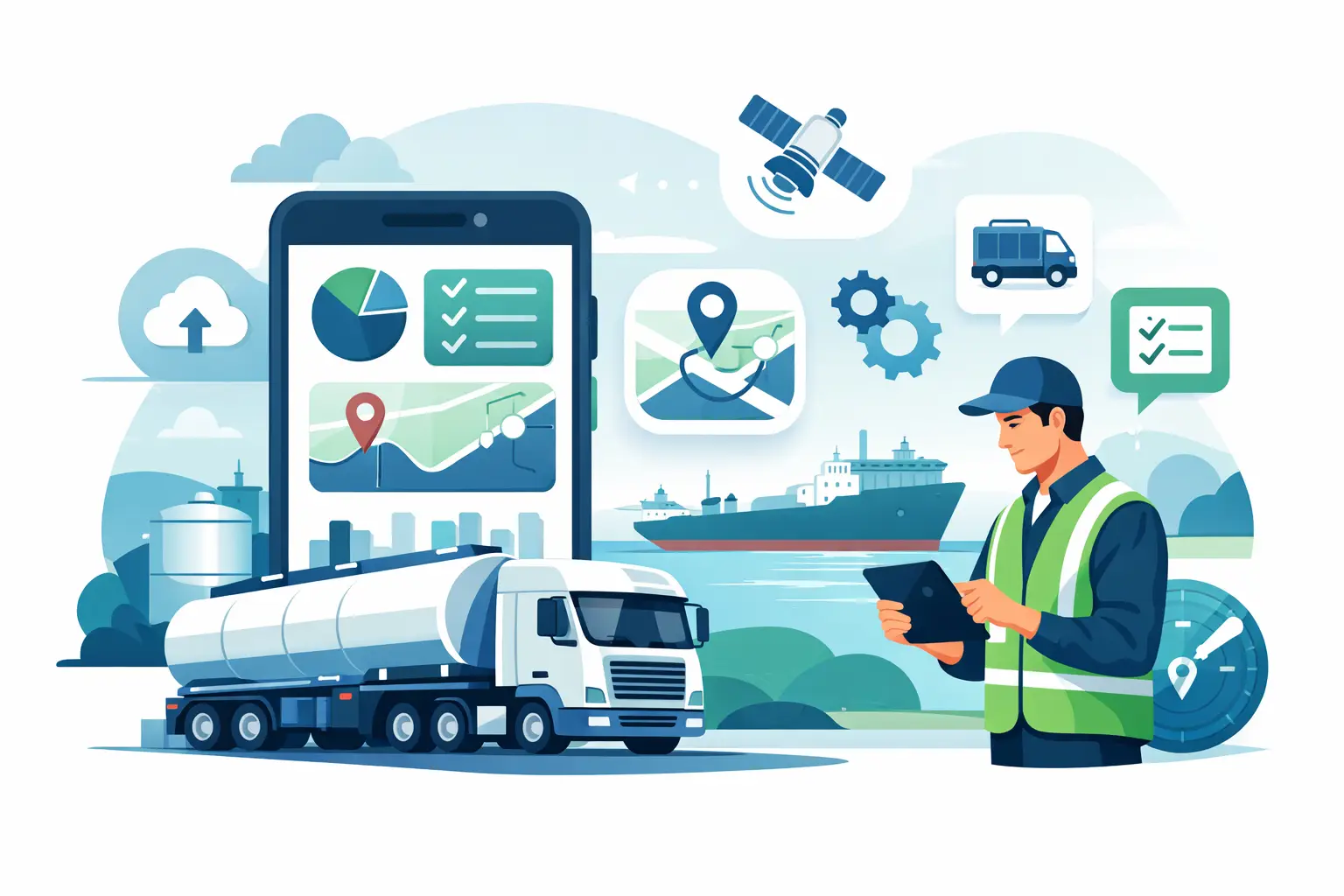
Traditional pedestal systems can be expensive to install and cumbersome to maintain on a mobile application. A smartphone-authorised solution can provide a more practical approach: the user requests access through an app, the system validates their permission, and the pump is enabled only for that authorised transaction.
This is especially useful for organisations with changing crews, multiple depots or remote jobs. Administrators can authorise and deauthorise users centrally rather than collecting keys, reissuing fobs or relying on informal handovers. The best approach balances security with speed. Drivers should not spend several minutes trying to access fuel during a time-sensitive callout, but convenience should never mean leaving a live pump available to anyone nearby.
Cloud-connected transaction logging
Paper tickets and spreadsheets create delays at precisely the point where oversight matters most. A cloud-connected tool records dispensing information as it happens and makes it visible from a central dashboard. Operations can see activity across multiple tankers and sites without waiting for paperwork to return to the office.
Live records also improve the quality of conversations when something does not reconcile. Instead of asking a driver to recall what happened several days earlier, managers can review the user, transaction time, volume and recipient asset. This makes the audit trail useful in practice, not merely available for a future inspection.
A sensible system should also manage periods of unreliable connectivity. Mobile tanker routes often include rural sites, ports, construction areas and industrial locations where signal is inconsistent. Ask suppliers exactly what happens when the device is offline, how transactions are stored, and when they synchronise. A system that works only with perfect coverage may introduce operational risk rather than remove it.
Asset and customer capture at the point of dispense
Fuel accountability weakens when the recipient is recorded as a vague description such as “yard equipment” or “site use”. The better tools require the operator to select, scan or otherwise identify the receiving vehicle, plant item or customer before dispensing.
This produces cleaner reporting and can expose unusual consumption patterns. A maintenance manager may see that one generator is consuming more fuel per operating hour than comparable units. A controller can separate chargeable customer deliveries from internal fleet use. The data becomes useful for decisions because it is tied to a specific asset rather than trapped in a general fuel total.
Tank level monitoring and variance reporting
Pump transactions are only one side of the equation. Tank level monitoring helps teams understand what remains in the mobile tanker before it reaches the next job. Used alongside delivery and dispense data, it provides a practical check on stock movement.
Do not expect a dashboard alone to solve every discrepancy. A poor meter, an incomplete delivery record or a process failure can all cause variance. What good reporting does is direct attention to the exceptions that need action. It gives managers a repeatable process: verify delivery quantity, check dispenses, inspect the equipment and speak with the people involved while the event is recent.
Route, vehicle and driver oversight
Telematics and route tools remain valuable, particularly when tankers serve several locations in a day. Location history supports customer service, route planning and proof that the vehicle attended the right site. Driver safety data can also help reduce risk where fuel vehicles operate in busy yards, airports or constrained industrial environments.
However, telematics should complement dispensing controls, not replace them. It can establish where the tanker was. Secure pump authorisation and transaction capture establish what was dispensed. The best mobile tanker management tools bring those two records together without forcing staff to reconcile several disconnected systems.
A practical way to compare mobile tanker management tools
When assessing suppliers, focus on the operating result rather than a long feature checklist. The right choice depends on the complexity of your routes, the number of products carried, your reporting requirements and how often permissions change.
| Requirement | What good looks like | Why it matters | | — | — | — | | Access control | Pump remains locked until an approved user is validated | Prevents unauthorised dispensing and casual access | | Transaction detail | User, asset, volume, product, time and location are recorded | Creates a defensible audit trail | | Central administration | Permissions and reporting are managed from one dashboard | Reduces admin across multiple tankers and sites | | Mobile suitability | Rugged hardware and a clear operator workflow | Supports real working conditions, not just office demonstrations | | Inventory reconciliation | Delivered, dispensed and remaining stock can be reviewed together | Flags loss, errors and recording gaps early | | Connectivity handling | Transactions are protected during poor signal and sync reliably | Keeps routes operating in remote areas |
Price should be assessed as total cost of ownership, not just hardware cost. A lower-priced system that needs frequent servicing, complicated installation or manual data handling can cost more over time than a straightforward cloud-connected setup. Equally, a highly specified platform may be excessive for a small operator with one tanker and a stable crew. The best fit is the one that delivers clear control without creating a burdensome process for drivers.
Questions worth asking before implementation
Before selecting a system, map the actual dispense process from start to finish. Who loads the tanker? Who can operate the pump? How is the recipient asset identified? Who reviews variance, and how quickly? These answers reveal whether the issue is a lack of technology, a weak process or both.
Ask suppliers to demonstrate the workflow using your conditions rather than an idealised example. See how a new driver is authorised, how a lost phone or credential is handled, how a transaction is corrected, and what appears in the report when an asset has been entered incorrectly. Also confirm who supports the installation, training and ongoing aftercare. A system is only as dependable as the response when a pump, device or user account needs attention.
For organisations that need one control standard across fixed tanks and mobile dispensing, Manage Every Drop combines FluidSecure™ smartphone authorisation, cloud transaction records and centralised reporting in a lower-maintenance alternative to legacy pedestal-based systems. That consistency matters when fuel moves between depot storage, mobile tankers and remote operations.
The right mobile tanker tool should make the correct action the easy action: an authorised person identifies the right asset, the pump records the dispense, and the office can account for the fuel without chasing paperwork. Start by measuring where your current process loses visibility. That is usually the clearest place to build stronger control.


Post a comment