



How to Audit Cloud Records for Fleet Fuel Use
A missing 200 litres rarely begins as an obvious theft event. It often begins with a handwritten log, a shared access card, a delayed stock reading, or a fuel transaction that cannot be tied to a person, vehicle or job. When you audit cloud records properly, those gaps become visible before they turn into recurring loss, inaccurate costing or an uncomfortable compliance question.
For fleet operators, fuel records are not simply an administrative trail. They are proof of who accessed an asset, what was dispensed, where it went and whether inventory movement matches operational reality. The right cloud record gives finance, operations and maintenance one dependable version of the truth.
Why audit cloud records for fuel dispensing?
Fuel is a high-value, mobile resource. Once it leaves a tank, its destination can be difficult to verify unless every dispense is captured at the point of issue. Traditional paper sheets and manually entered spreadsheets create delay, introduce transcription errors and make it too easy for exceptions to disappear into routine activity.
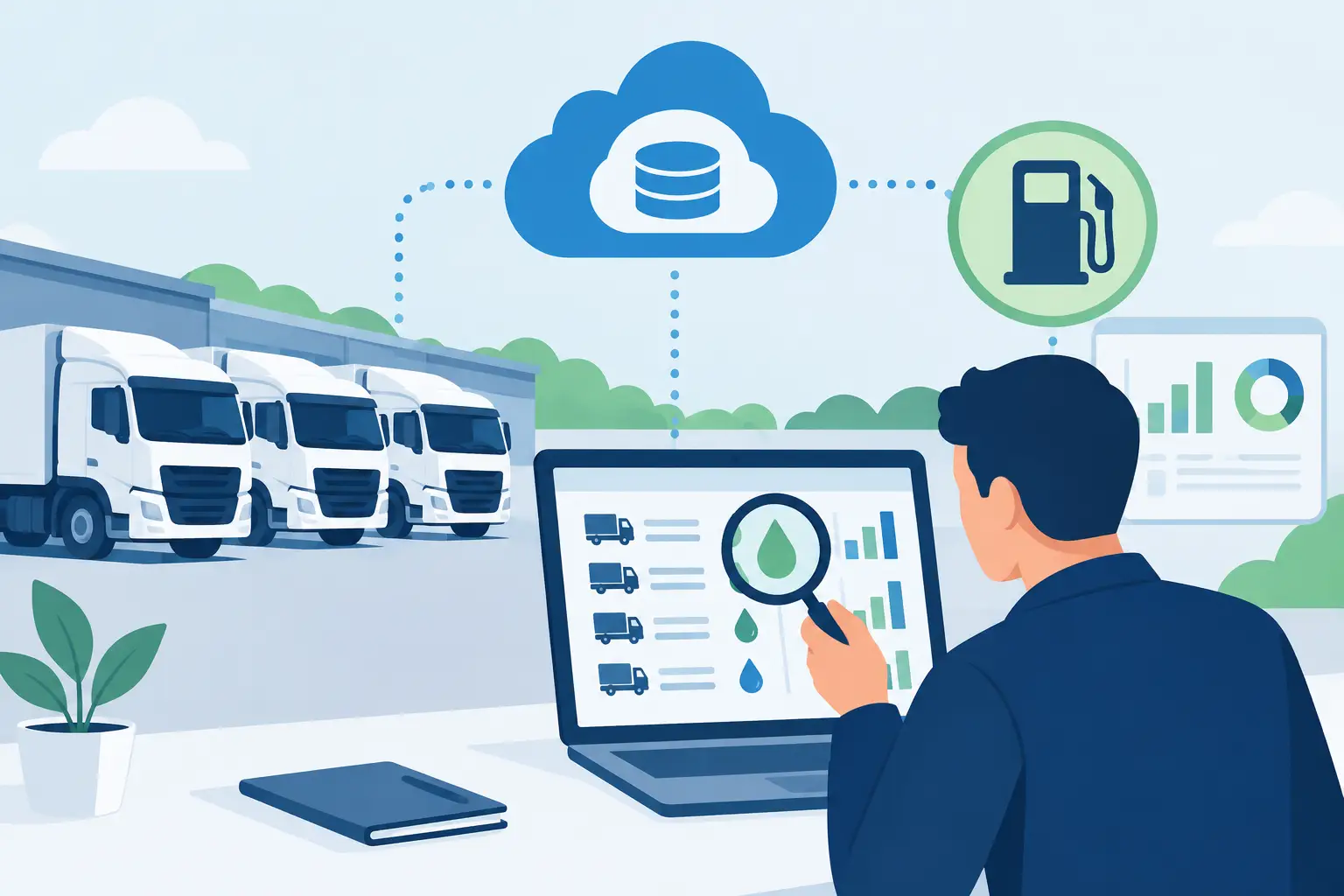
Cloud-based transaction records change the starting point. Each authorised dispense can be logged as it happens, with the user identity, date, time, location, pump, vehicle or asset reference, product and quantity. Instead of asking staff to reconstruct a week of activity at month-end, managers can investigate unusual events while the details are still fresh.
That matters across fixed depots and mobile refuelling operations. A single-site fleet may need tighter control over one bulk tank. A multi-site operator may need central visibility across depots, airport equipment, remote worksites and mobile fuel lorries. The audit principles are the same, but the level of reporting and approval required depends on the size of the operation, the value of fuel held and its internal controls.
What a complete cloud fuel record should show
A record is only useful when it answers practical questions without guesswork. If a transaction cannot be connected to an authorised person and a valid operational reason, it deserves review.
At minimum, a cloud record should make it possible to verify four areas:
- Who dispensed the fuel, using an individual authorisation rather than a shared credential.
- What asset, vehicle, tank or equipment item received the product.
- When and where the dispense occurred, including the relevant site or mobile unit.
- How much product was issued and whether that volume aligns with inventory and usage expectations.
Additional fields can add valuable context, particularly for mixed fleets. Odometer or engine-hour readings help identify consumption changes. Job, cost centre or customer references support allocation. Tank levels before and after delivery help reconcile bulk inventory. The aim is not to capture data for its own sake. It is to create records that can answer a real operational question quickly.
Identity must be specific
A shared PIN may appear convenient during a busy shift, but it weakens accountability immediately. If several people can use the same credential, no record can reliably establish who conducted a dispense. Individual smartphone-based authorisation gives managers the ability to grant, remove or amend access without replacing keys, reprogramming cards or waiting for a contractor to attend site.
This is especially useful when staff move between locations, seasonal personnel join the team, or a driver’s responsibilities change. Access should follow the person and their role, not remain attached to an old key fob or a note by the pump.
Timing reveals exceptions
Every fleet has legitimate exceptions. Emergency call-outs, overnight work, storms and remote site activity can all require dispensing outside normal hours. An audit should not treat every exception as wrongdoing. It should establish whether the event was authorised, documented and consistent with the work being done.
Cloud records make this review far more practical. A manager can filter activity by time, user, pump or location rather than manually scanning pages of logs. Repeated after-hours dispensing, unusually frequent small fills or transactions at an unexpected site can then be investigated on their facts.
A practical process to audit cloud records
The most effective audits are regular and focused. Waiting for an annual review allows small discrepancies to become normalised. Weekly checks catch operational issues early, while monthly reconciliation provides a fuller financial control.
Start with the physical fuel balance
Begin with what should be in the tank. Take a measured opening stock figure, add confirmed deliveries and subtract authorised dispenses recorded in the system. Compare the expected balance with the physical tank level.
A small variance is not automatically a loss. Temperature, tank calibration, meter accuracy and delivery measurement can all affect results. The key is to set a realistic tolerance, monitor it consistently and investigate changes beyond that threshold. A sudden shift is usually more meaningful than a stable, understood variance.
Match transactions to fleet activity
Next, compare dispensing records with vehicle movements, job schedules, engine hours or mileage. A refuse vehicle, generator or airport ground-support unit will each have a different normal consumption pattern. Your audit should reflect that reality rather than applying one blanket benchmark to every asset.
Look for volumes that do not fit the vehicle’s tank capacity, repeated fills within an implausibly short period, fuel assigned to idle assets, or dispensing against a vehicle that was not on site. These are prompts for a conversation and investigation, not automatic proof of misuse.
Review permissions as closely as transactions
Authorisation lists are part of the audit trail. Check that active users still need access, departed employees have been removed, and permission levels match current duties. It is good practice to review access after role changes, contractor offboarding and incidents involving lost devices.
With a cloud-connected system, deauthorisation can happen immediately rather than at the next site visit. That reduces the window in which a former employee or misplaced credential could be used to access fuel.
Investigate patterns, not isolated numbers
One unusual transaction may have a straightforward explanation. A pattern tells a more useful story. Review exceptions over several weeks and group them by person, vehicle, site, pump and time period. This shows whether a discrepancy is linked to a faulty meter, an inaccurate vehicle profile, poor process discipline or possible unauthorised use.
Keep notes against reviewed exceptions. A short explanation, supporting work order or manager approval prevents the same event being re-investigated later and gives finance a clearer audit trail.
Where cloud records improve reconciliation
Manual reconciliation usually fails at the handover points: between the person dispensing fuel and the person entering data, between delivery paperwork and tank readings, or between operations and finance. Cloud records reduce these handovers by creating the transaction at the pump.
This does not remove the need for controls. Physical dip checks, delivery verification and periodic meter checks still matter. But it gives those controls a reliable transaction history to compare against. Finance can reconcile spend more quickly. Operations can monitor site activity without chasing paper logs. Managers can identify loss drivers before they become an accepted cost of doing business.
For mobile fuel operations, the benefit is even more direct. A mobile bowser or refuelling lorry may serve multiple customer locations in a day. Capturing each dispense with the relevant user, asset and quantity creates a defensible record for billing, stock control and customer queries. It also helps operators account for product remaining on the vehicle at shift end.
Choosing a system built for auditability
Not every fuel management system creates the same quality of evidence. A low-cost app without controlled access may record activity but still allow unverified dispensing. A traditional pedestal system may provide control but add installation cost, hardware complexity and ongoing maintenance.
The strongest approach combines pump access control with real-time cloud transaction logging. Users should be authorised before a pump can dispense, records should be available centrally, and managers should be able to update permissions without visiting every site. Reporting also needs to be clear enough for an operations manager to act on, not just detailed enough for an IT team to export.
Manage Every Drop uses FluidSecure™ to bring those controls to fixed tanks and mobile fuelling units without the burden of a conventional pedestal-based system. The result is a direct connection between authorisation, dispensing and accountable records.
A useful cloud audit is not about creating more paperwork. It is about making every litre explainable. When your records can show who took fuel, where it went and why the volume makes sense, you can protect inventory, close the month faster and run each site with greater confidence.


Post a comment