
Stop Fuel Loss with Smartphone Pump Control
A fuel tank doesn’t leak on a spreadsheet. It leaks at 5:40 am when the yard is busy, the pump is left “open for the lads”, and the only record is a hand-scribbled note that never quite matches the delivery ticket. If you manage a fleet, you already know the pattern: small exceptions become normal, normal becomes invisible, and invisible becomes cost.
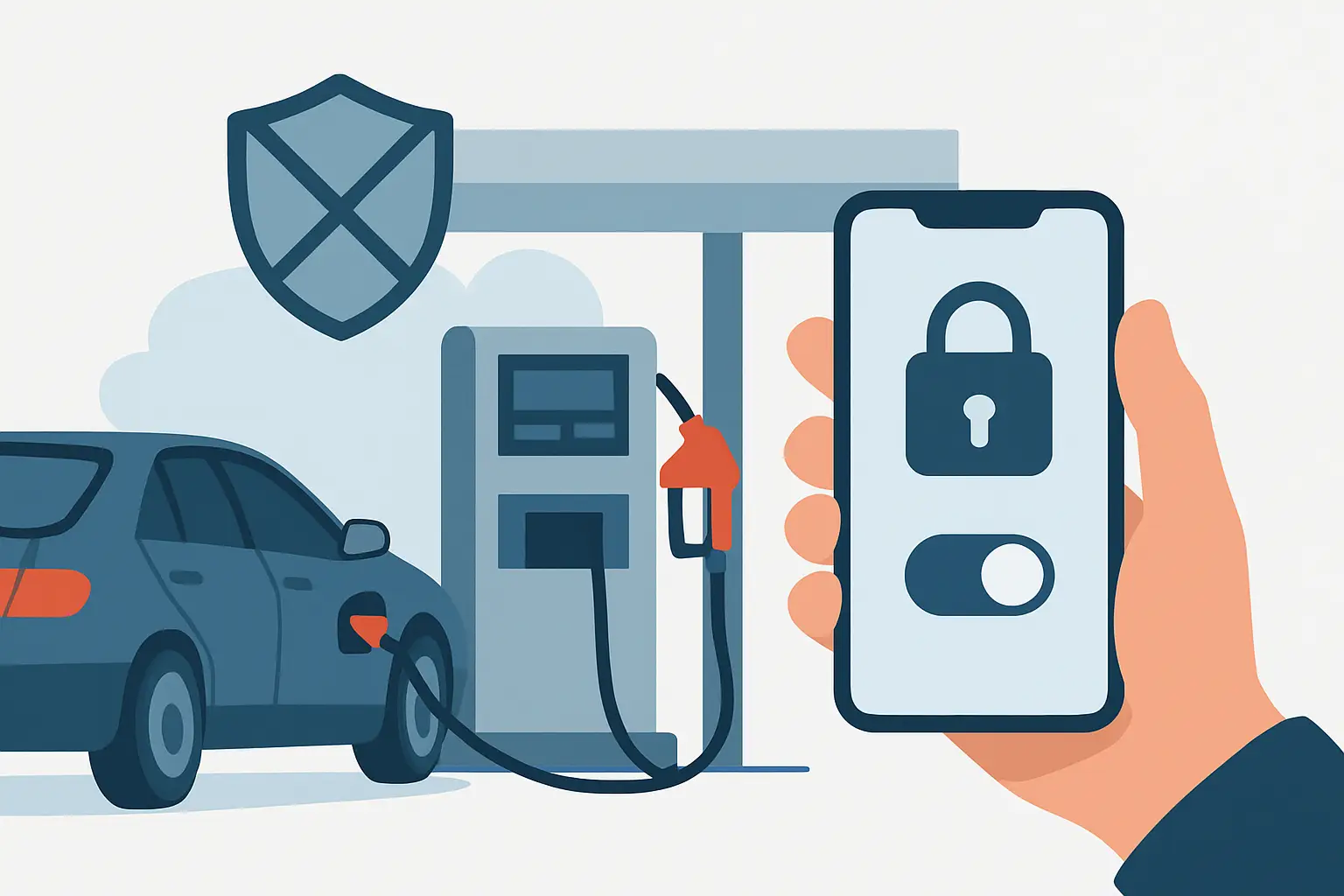
Smartphone authorised fuel dispensing is built to stop that drift. It replaces shared keys, PINs on a sticky label, and manual dip sheets with something more defensible: a dispense can only happen when a named, authorised person is physically there, using their mobile phone to request access, and the system records what happened as it happens.
What “smartphone authorised fuel dispensing” actually means
At its simplest, smartphone authorised fuel dispensing is access control for pumps, tied to a user identity on a mobile app. The pump stays locked until the user is validated. Once authorised, the system opens the pump for that transaction and logs the event automatically.
The practical difference is not the mobile phone itself. The difference is that authorisation, usage, and record-keeping become one connected workflow. Instead of chasing paperwork after the fact, you get a real-time transaction trail: who dispensed, when, at which asset or tank, how much, and often other key fields that matter to operations and finance.
This shifts fuel control from “we trust everyone and investigate later” to “we authorise only what we can reconcile”. That is a healthier default for any site with multiple drivers, multiple shifts, and multiple places where fuel can disappear.
Why fleets are moving away from pedestal-style systems
Traditional fuel management systems have done a job for years, but many are overbuilt for what modern fleet yards need day to day. Pedestal terminals, proprietary key fobs, and on-site software can work well – until they don’t. When a terminal fails, when a card reader becomes unreliable in bad weather, or when updates require a technician, you end up with the worst combination: high cost and operational fragility.
Smartphone-based authorisation changes the economics and the maintenance profile. With fewer fixed interfaces to break and more logic handled in the cloud, the system can be easier to deploy across multiple sites. It also removes a common “workaround culture” issue: if the pedestal is awkward, people bypass it. If authorisation sits on a mobile phone that’s already on the person, compliance tends to improve.
That said, it depends on your environment. If your yard has poor mobile coverage, you need an approach that can still authenticate reliably. And if you run very high-volume lanes with continuous dispensing, you may design the workflow differently to keep throughput high without sacrificing control.
The accountability chain: identity, permission, transaction
Fuel loss is rarely one dramatic incident. It is usually a long line of small gaps: shared credentials, unclear policies, missing odometer readings, delayed reconciliation, and no quick way to remove access when staff change.
Smartphone authorised fuel dispensing strengthens the chain in three places.
First is identity. A mobile phone-based login tied to an individual means the system can attribute each dispense to a named user. That alone changes behaviour. People are generally careful when they know the record is permanent and auditable.
Second is permission. Modern systems let you authorise and deauthorise instantly. If a driver leaves, access can be removed centrally without collecting keys, fobs, or changing codes. If a contractor needs temporary access, you can grant it with limits and revoke it when the job is done.
Third is the transaction log. Instead of relying on manual entries that get skipped under pressure, the dispense event is captured automatically and pushed to a dashboard or report set that finance can actually use. That creates a clean path from delivery to inventory to dispenses to cost allocation.
What you can control beyond “who can pump”
The best results come when authorisation is paired with controls that match your risk.
You might only need basic user validation if your biggest problem is casual, unrecorded dispensing. But many fleets go further, for good reasons.
Asset selection matters. If the workflow requires the user to choose a vehicle or asset, you can tie litres to that unit and spot anomalies. A sudden spike against one van, or repeated after-hours fuelling against the same asset, is easier to detect.
Site rules matter too. Time windows, location constraints, and user roles can reduce exposure. An operations manager may need access across sites; a driver may only need access at one yard. The point is not to make life difficult. The point is to align access with responsibility.
Then there is exception handling. No system removes the need for judgement. You will still have emergency fills, breakdowns, and unusual operating days. A good setup makes exceptions visible rather than invisible, so you can approve them knowingly rather than discovering them weeks later.
Reconciliation: where the savings usually show up first
Most fleets buy control systems because of theft and shrinkage. The first win, however, is often admin time.
Manual reconciliation is expensive because it is repetitive and uncertain. Someone is always chasing missing entries, fixing handwriting, and trying to map “Dave – 80 litres” to the right cost centre. When transactions are logged automatically, reconciliation becomes a matching exercise rather than an investigation.
It also speeds up internal conversations. When operations and finance are looking at the same transaction history, disputes are shorter and policy decisions are clearer. Instead of debating what happened, you can discuss what to change.
Security and compliance: designing for the real world
Security-first does not mean “more steps for drivers”. It means removing the weakest links without slowing down the yard.
Mobile phones can be lost. People share logins. Staff are rushed. So the system needs practical safeguards: strong authentication, central permission management, and a clear audit trail that stands up to scrutiny.
You should also consider environmental and safety responsibilities. Controlling dispensing reduces the likelihood of unplanned transfers and misfuelling, which can lead to spills, equipment damage, and reportable incidents. The more consistent your records, the more confident you can be when auditors, insurers, or internal governance teams ask for evidence.
If you operate mobile dispensing – for example, a fuel bowser or a mobile fuelling vehicle serving multiple sites – authorisation becomes even more important. Mobile assets are harder to supervise and easier to exploit. A smartphone-controlled workflow helps you keep the same standards on the road as you keep in the yard.
Implementation: what makes it succeed (and what can derail it)
Technology is only half the job. The other half is adoption.
A successful rollout starts with deciding what you are trying to control. Is the priority to stop unauthorised fills? To allocate fuel by vehicle? To reduce end-of-month workload? The configuration should reflect the outcome you want, not just what the system can do.
Next is policy clarity. Drivers and technicians need a simple rule: no authorisation, no fuel. If supervisors quietly allow exceptions, the system will be treated as optional. Consistency is what creates trust in the data.
Training should be short and practical. The best workflows take seconds: open app, authenticate, select asset if required, dispense, finish. If it takes longer than the old method, people will resist. The goal is controlled speed, not bureaucracy.
The main derailers are predictable: poor connectivity planning, unclear roles, and trying to capture too many fields at once. If your team is new to digital fuelling records, start with the essentials and add complexity once the habit is established.
Choosing a solution: the questions that reveal quality
Vendors will all say “real-time reporting” and “easy to use”. You need questions that uncover whether the system will hold up in your environment.
Ask how quickly you can remove access when someone leaves, and whether that change applies across all sites immediately. Ask what happens when the network is unstable. Ask what the audit trail includes, and whether you can export it for finance and compliance workflows.
Also ask about total cost of ownership. Some systems look affordable until you account for hardware repairs, technician visits, and the operational cost of downtime. A lower-maintenance approach, with cloud-based updates and fewer fixed touchpoints in harsh yards, often delivers savings that don’t show up on day one but matter over the life of the system.
If you want a reference point, Manage Every Drop Inc supplies FluidSecure in Canada as a smartphone-authorised, cloud-connected way to lock pumps and create auditable, real-time dispense records – aimed at fleets that want accountability without the overhead of traditional pedestal installations. If your operation spans fixed tanks and mobile fuelling, that “one approach everywhere” consistency is worth prioritising.
The real standard: can you explain every litre?
If you are responsible for fuel spend, you are responsible for a story: where it went, who used it, and why it makes sense. Smartphone authorised fuel dispensing is not about adding another tool. It is about making that story simple to tell, every day, without heroics at month-end.
A helpful next step is to walk your yard in your head: who touches the pump, when, and what can currently happen without a record. Whatever system you choose, aim for one outcome above all – a dispense that cannot occur without identity, permission, and a transaction you can stand behind.

Post a comment