
Fuel Reconciliation Software That Stops Loss
If your fuel figures only make sense at month-end, you are already behind. Fuel reconciliation software gives fleet operators a way to match every litre dispensed, every delivery received and every stock movement recorded – without relying on paper logs, delayed spreadsheets or guesswork from the yard.
For operations directors, fleet managers and finance teams, that matters because fuel is rarely lost in one dramatic event. It disappears in small gaps – unrecorded dispenses, tank variances, card misuse, manual entry errors, delayed reporting and poor controls around who can access pumps. The real cost is not just the fuel itself. It is the time spent investigating discrepancies, defending figures during audit and making decisions on incomplete information.
What fuel reconciliation software actually does
At its core, fuel reconciliation software compares what should have happened with what did happen. It brings together dispensing transactions, tank levels, deliveries, usage by vehicle or asset, and in some cases card data or mobile fuelling records. The goal is straightforward: every litre has an explanation.
That sounds simple, but the difference between basic reporting and true reconciliation is important. A reporting tool may tell you how much fuel was dispensed yesterday. Reconciliation software tells you whether that volume lines up with tank inventory, authorised users, specific vehicles and recorded receipts. If it does not, the system should show where the variance starts.
For fleets operating fixed depots, mobile bowsers or a mix of both, this becomes a control system as much as a reporting system. It reduces dependence on memory, handwritten notes and end-of-week data entry. Instead, the software creates a continuous record that can be checked in near real time.
Why manual fuel reconciliation breaks down
Manual reconciliation often looks workable when a business has one tank, a small number of drivers and a supervisor who knows the site inside out. As soon as the operation grows, the cracks show.
The first problem is delay. If delivery tickets are entered days later and pump activity is captured on paper, no one sees an issue until the variance is already embedded in the numbers. The second problem is inconsistency. Different sites record fuel differently, different managers apply different checks and different shifts leave different levels of detail. The third problem is accountability. When a discrepancy appears, it becomes difficult to identify whether the cause was theft, spillage, meter drift, duplicate data or a simple clerical error.
This is where many fleets underestimate the value of software. They think they need a better report. In reality, they need better transaction capture at the point of dispense.
Fuel reconciliation software is only as good as the data it receives
This is the point many vendors skip. Reconciliation software cannot fix weak controls upstream. If users can dispense fuel without identification, if transactions are keyed in afterwards, or if mobile fuelling activity is recorded inconsistently, the software ends up reconciling unreliable data faster.
The strongest results come from combining reconciliation with access control. When each dispense is tied to an authorised user, a vehicle or asset, a date, time, location and volume, the software has a dependable audit trail to work from. That changes the conversation from Why do we think fuel has gone missing? to Here is exactly where the exception occurred.
For that reason, the most effective systems tend to sit closer to the pump than older, office-based reconciliation methods. They capture clean data at the source, sync it to the cloud and make it available for immediate review. That is a very different operating model from chasing bits of paper at the end of the month.
What to look for in fuel reconciliation software
The right system depends on your operation, but some requirements are non-negotiable if the aim is tighter control and faster resolution of discrepancies.
User-based authorisation at the point of dispense
If anyone with physical access to a pump can draw fuel, reconciliation becomes detective work. Software should connect every dispense to a verified person and, ideally, to a specific vehicle, asset or job. Instant authorisation and deauthorisation also matter. If staff roles change, permissions should change immediately.
Real-time transaction logging
Delayed uploads create blind spots. A modern system should record transactions as they happen or sync them to the cloud as soon as connectivity allows. That gives operations and finance teams current data rather than historical approximations.
Multi-site visibility
Many fleets are not managing one tank in one yard. They are managing depots, temporary sites and mobile units across a region. Fuel reconciliation software should standardise reporting across all locations so variances can be compared consistently.
Inventory and delivery matching
Dispenses alone are not enough. The software should support tank inventory tracking and receipt logging so stock movements can be matched against actual usage. This is where hidden losses often surface.
Exception reporting that is useful
A long export is not the same as insight. Good exception reporting highlights unusual activity such as out-of-hours fuelling, repeated partial fills, mismatched vehicle usage, unexplained stock loss or sudden variance changes after a delivery.
Low maintenance in the field
This is easy to overlook during procurement. Traditional pedestal-based systems can bring added hardware complexity, more service calls and slower upgrades. For many operators, a simpler smartphone-authorised and cloud-connected model reduces both cost and operational friction.
The trade-off between simple systems and full control
Not every fleet needs the same depth of functionality. A small private depot with stable staffing may not need advanced integration on day one. A multi-site fleet with mobile fuelling almost certainly will.
The trade-off is usually between upfront simplicity and long-term control. A low-cost, lightly managed setup may seem attractive, but if it still relies on manual reconciliation, it often pushes hidden labour costs into operations and finance. On the other hand, a highly engineered legacy system may deliver control at the expense of installation complexity, support dependency and hardware maintenance.
The better question is not Which system has the most features? It is Which system gives us clean dispense data, clear accountability and a lower total cost of ownership over time?
Where fuel reconciliation software delivers the biggest return
The obvious return is reduced shrinkage, but that is only part of the picture. Fleets also see gains in administrative time, compliance readiness and decision quality.
Finance teams benefit because month-end close becomes faster when transactions are already logged, categorised and auditable. Fleet managers benefit because they can spot unusual consumption before it turns into a recurring cost. Maintenance teams benefit because fuel usage by asset becomes easier to compare against expected performance, which can reveal idling, misuse or developing mechanical issues.
There is also a governance advantage. When each dispense is documented and attributable, internal conversations become clearer. You are not asking staff to remember what happened three weeks ago. You are reviewing a transaction trail.
Why cloud-connected systems are changing fuel reconciliation
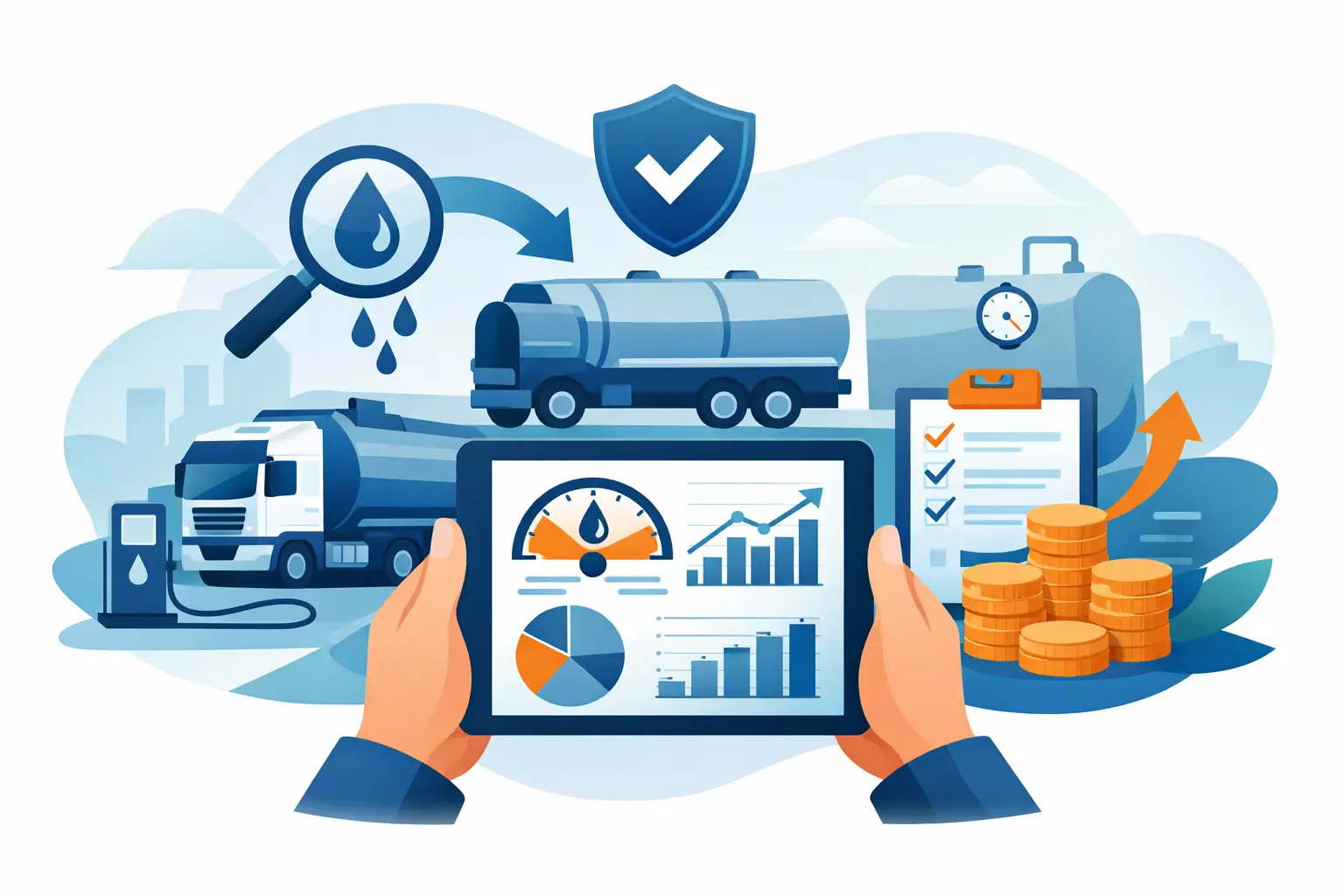
Cloud connectivity is not just a convenience feature. It changes how quickly a business can act on risk. Instead of waiting for local downloads or manual consolidation, authorised teams can review activity across sites from one dashboard, apply consistent controls and respond to anomalies the same day.
This is particularly useful for operators with mobile units or geographically dispersed fleets. It allows central oversight without forcing every site to maintain heavy local infrastructure. Updates can be managed centrally, reporting stays standardised and the business is less exposed to the patchwork systems that often develop over time.
That is one reason modern solutions are replacing older architectures. They remove unnecessary hardware, reduce maintenance burden and make reconciliation part of daily operations rather than a monthly recovery exercise.
A practical standard for fleets that want every litre accounted for
For organisations serious about control, fuel reconciliation software should not sit in isolation. It should work alongside secure pump access, real-time transaction capture and inventory visibility. That combination is what turns reconciliation from a reporting task into an operating discipline.
Manage Every Drop approaches this with a security-first model: authorised access at the pump, cloud-based transaction records and one view across fixed and mobile sites. For fleets trying to reduce loss, tighten audit trails and remove manual reconciliation, that is not an added extra. It is the standard the operation should expect.
The strongest fuel controls are usually the least dramatic. They simply make it harder for fuel to go untracked, unnoticed or unexplained – and that is where margin, trust and operational confidence are protected every day.


Post a comment