


How Does Fuel Pump Access Control Work?
A missing 40 litres here, an unlogged fill there, and suddenly your fuel report no longer matches your tank levels. For fleet operators, that gap is rarely just an admin issue. It is lost margin, weak accountability, and extra time spent chasing paperwork. That is why so many operators ask the same question: how does fuel pump access control work, and what actually changes once it is in place?
At its core, fuel pump access control is a gatekeeper. It prevents a pump from dispensing unless the person, vehicle, and transaction meet rules you have set in advance. Instead of relying on keys, shared PINs, hand-written logs, or staff memory, the system authorises fuelling digitally and records what happened in real time.
For organisations managing on-site tanks, airport fuelling points, depots, or mobile fuel lorries, that changes the job from reactive to controlled. You are no longer trying to reconstruct events after the fuel is gone. You are deciding who can dispense, when they can dispense, and what data is captured every time.
How does fuel pump access control work in practice?
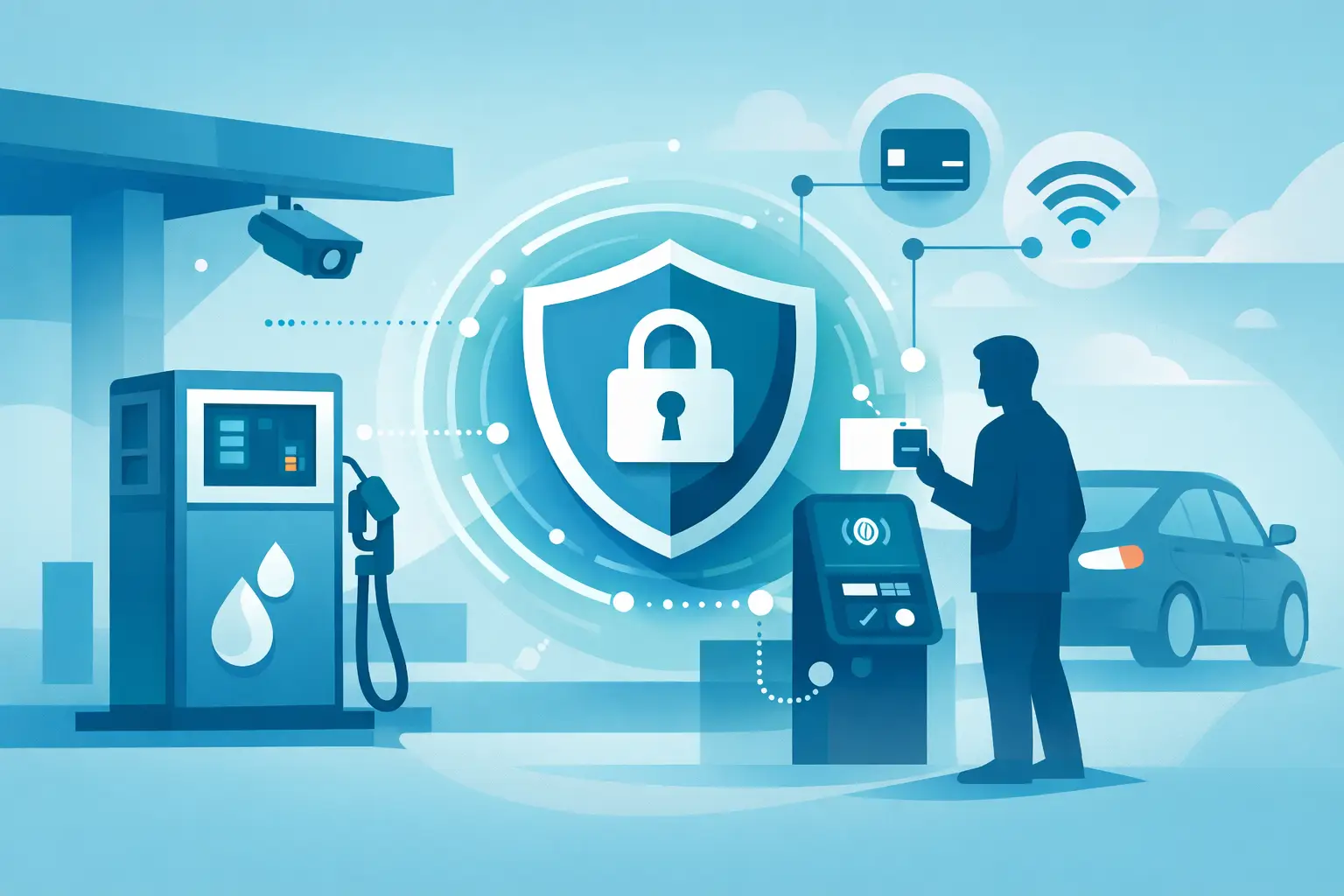
A modern fuel pump access control system sits between the user and the pump. The pump stays locked until an approved user completes an authorisation step. That approval may happen through a smartphone app, RFID tag, driver ID, vehicle ID, PIN, or a mix of methods depending on the setup.
Once the user requests fuel, the system checks the permissions attached to that person, asset, or site. If the user is authorised, the pump is enabled. If not, the dispense does not begin. That sounds simple, but it solves one of the most expensive problems in fleet fuelling: open access.
The better systems do more than switch a pump on and off. They create a transaction record at the same time. That record can include the user identity, vehicle or asset, time, date, location, product type, and volume dispensed. In some configurations, odometer or hour meter readings are captured as well. Instead of a paper log that may be incomplete or inaccurate, you get an auditable digital record tied to a specific event.
This is where the difference between basic restriction and true control becomes clear. Restricting access limits who can use the pump. Controlling access also creates accountability, because every dispense is documented against a named user or asset.
The key components behind the system
Most fuel pump access control setups rely on three connected parts: authorisation hardware at the pump, a method of user identification, and cloud-based transaction reporting.
The hardware acts as the physical lock. It connects to the dispenser and prevents operation until a valid authorisation is received. In older systems, this often meant a pedestal terminal, swipe cards, and more infrastructure on site. Those systems can work, but they tend to be more expensive to install and maintain, especially across multiple sites or mobile units.
The identification layer is where the user proves they have permission to dispense. Smartphone-based authorisation has become attractive because it removes much of the extra hardware while giving managers tighter control. Permissions can be issued, changed, or revoked quickly, without waiting for a new card or key. If a driver leaves, changes role, or moves depots, access can be updated immediately.
The cloud layer stores and presents transaction data. That matters because access control alone only answers one question: was this user allowed to dispense? Fleet managers, finance teams, and operations leads usually need more than that. They want to know how much fuel was taken, by whom, from which tank, into which asset, and whether it matches inventory and expected usage.
A cloud-connected system closes that loop. It gives authorised staff access to near real-time data, which makes reconciliation faster and exceptions easier to spot.
Why authorisation method matters
Not all authorisation methods offer the same level of control. A physical key is simple, but it can be copied, shared, or never returned. A shared PIN is better than nothing, yet once several people know it, accountability weakens. Swipe cards improve tracking, but cards still get swapped between staff and can be lost or damaged.
Smartphone authorisation changes that equation because the device is tied to an individual user account and can be managed centrally. That does not make it foolproof. Phones can be forgotten, batteries can die, and some sites may have operational preferences for tags or dual authentication. But for many fleets, smartphone-based access offers a practical balance of security, cost, and ease of deployment.
It also supports one of the biggest operational needs in multi-site fleets: instant control. If you need to authorise a contractor for a limited period, restrict a user to one location, or remove access without delay, digital permissions are far more efficient than collecting keys or replacing cards.
What happens during a typical dispense event?
A driver arrives at the tank or mobile unit and opens the authorisation app or presents an approved credential. The system identifies the user and may also ask for vehicle selection, odometer entry, or another transaction detail. The request is checked against the permissions set by management.
If the rules are met, the pump is enabled. Fuel is dispensed. As the transaction happens, the system records the details and sends them to the cloud platform, either instantly or once connectivity is available. When the dispense ends, the record is available for review and reporting.
That process removes a surprising amount of manual effort. Staff no longer have to decipher handwritten entries, chase missing ticket numbers, or try to remember who fuelled an asset two days ago. It also reduces the grey area that often surrounds after-hours fuelling, mobile fuelling, and shared depot activity.
Where fuel pump access control delivers the biggest value
The first benefit is straightforward: less unauthorised dispensing. If the pump stays locked until approved, casual misuse becomes much harder. That alone can reduce shrinkage, but the larger gain usually comes from visibility.
Once every transaction is recorded, patterns emerge. You can spot fuelling outside approved hours, repeated top-ups that do not match asset usage, or sites where inventory loss is consistently higher than expected. Access control does not eliminate every fuel issue by itself, but it gives you evidence rather than suspicion.
It also improves reconciliation. Finance and operations teams can compare dispensed volumes against tank levels, supplier deliveries, and asset consumption with far less manual handling. For regulated environments or safety-conscious operations, the audit trail is just as valuable. Knowing exactly who dispensed what and when supports internal control, incident review, and compliance reporting.
For organisations running mobile fuel lorries, the value can be even greater. Mobile operations often carry higher risk because fuelling happens across multiple locations, with changing staff and less direct supervision. A connected access control system gives those operations the same accountability expected at a fixed depot.
It depends on your operation
The right setup depends on how and where you dispense. A single depot with a small fleet may only need straightforward user control and basic reporting. A larger operation with several tanks, multiple products, and round-the-clock activity will usually need tighter permissions, live dashboards, and standardised reporting across sites.
Connectivity also matters. Some locations have reliable coverage and can support immediate syncing. Others may need systems that continue working locally and upload records once a connection returns. The same goes for user workflow. If drivers wear gloves, work in poor weather, or fuel in fast-moving airside environments, the authorisation method has to be practical as well as secure.
That is why the best access control systems are not just secure on paper. They are designed for field use, simple enough for staff to adopt, and detailed enough for management to trust.
Why modern systems are replacing legacy fuel control
Legacy pedestal-based systems were built for control, but they often brought extra complexity with them. More hardware, more maintenance, more site work, and slower changes to users and permissions. For many fleets, that model no longer makes financial or operational sense.
Modern platforms reduce that burden by combining rugged pump-side hardware with cloud software and mobile authorisation. The result is less infrastructure, faster rollout, and easier scaling across both fixed and mobile sites. For operators who want stronger control without building a complicated fuelling IT project, that matters.
This is exactly why solutions such as FluidSecure, supplied in Canada by Manage Every Drop, have gained traction with fleets that want to secure every dispense while lowering total system complexity. The value is not only in stopping the wrong person from fuelling. It is in creating a clean, auditable transaction record every time fuel moves.
When fuel is one of your largest controllable costs, access control should do more than lock a pump. It should give you confidence that every litre is authorised, attributed, and accounted for before it ever leaves the tank.


Post a comment