
Why Use Cloud Based Fuel Controls?
A missing 200 litres here, a hand-written log there, and a month-end fuel reconciliation that takes far longer than it should – this is usually where the question starts: why use cloud based fuel controls? For fleet operators, airports, depots and mobile fuelling teams, the answer is not about chasing the latest technology. It is about putting control back at the pump, tying every dispense to a real person, and seeing transactions as they happen rather than weeks later.
Traditional fuel control methods often leave too much room for doubt. Keys get shared. PINs get passed around. Paper records are incomplete. Standalone systems hold data locally, which means someone still has to pull it, piece it together and work out what happened. If you are responsible for fuel spend, compliance or asset uptime, that delay is expensive.
Why use cloud based fuel controls instead of older systems?
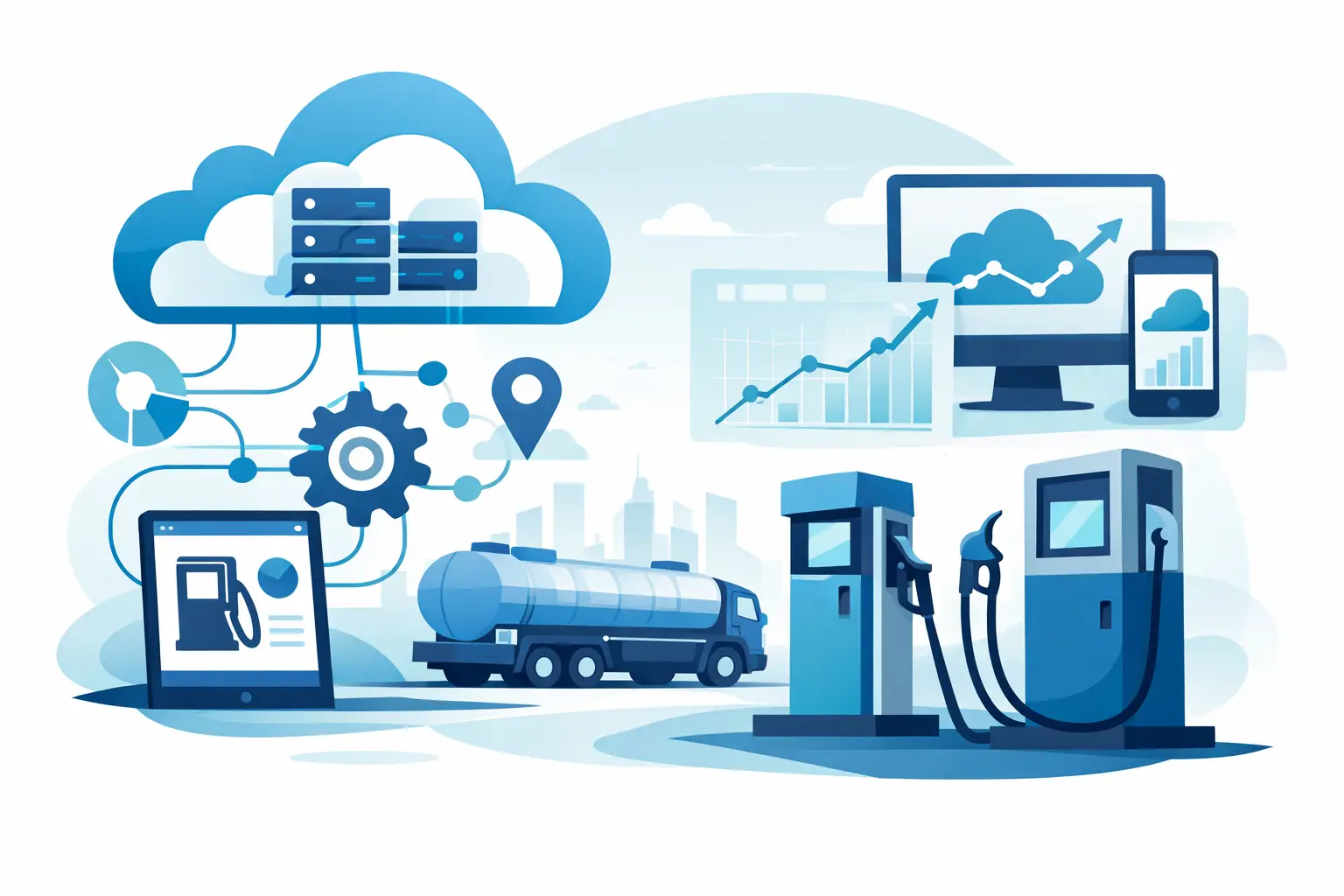
The biggest difference is visibility. A cloud-based system records dispense activity in real time and stores it centrally, so managers are not waiting on site visits, manual downloads or end-of-week spreadsheets. When a driver, operator or technician is authorised to dispense, that event is logged immediately with the details that matter – who took the fuel, when they took it, where it was dispensed and how much was issued.
That matters because fuel loss rarely announces itself. It tends to hide inside weak processes, scattered data and delayed reporting. By the time a discrepancy appears in a monthly total, the opportunity to investigate it properly may already be gone. Cloud controls shorten that gap. They give operations and finance teams a live record instead of a historical guess.
There is also a practical advantage for multi-site operations. If you are managing more than one tank, depot or mobile fuel vehicle, a cloud platform gives you one place to control permissions and review transactions. You are not maintaining separate systems at each site or relying on local staff to keep records consistent. Standards become easier to enforce because the system itself applies them.
Security at the pump, not just in the office
Most organisations do not lose fuel because they lack a policy. They lose fuel because access control is weak where the product is actually dispensed. Cloud based fuel controls address that problem at the source.
Instead of leaving pumps open or relying on shared credentials, access can be tied to an identified user and an approved asset. That means only authorised personnel can activate a dispense, and permissions can be changed immediately when staffing, contractors or operational needs change. If someone leaves the business or changes role, access does not need to wait for a key return or a site visit. It can be removed straight away.
This level of control is especially valuable for businesses with shift work, subcontractors or multiple fuelling points. The more people involved, the greater the chance that older methods become difficult to police. A cloud-connected approach gives managers a cleaner chain of accountability because each transaction is linked to an identity, not just a pump.
Of course, no system fixes poor operational discipline on its own. If your tank readings are inaccurate or site procedures are inconsistent, technology will expose that just as quickly as it exposes theft or misuse. That is a benefit, but it can be uncomfortable at first. Better visibility tends to reveal where process changes are overdue.
Why use cloud based fuel controls for reconciliation?
Ask any finance lead or fleet manager where time disappears, and fuel reconciliation will be near the top of the list. Manual entry, mismatched records and delayed reporting create avoidable admin. Cloud based fuel controls reduce that burden by creating an auditable transaction automatically at the point of dispense.
That changes the entire workflow. Instead of reconstructing activity from handwritten logs, site notes and meter readings, teams can work from one source of truth. Dispense records are already captured and stored centrally. Exceptions stand out faster. Inventory checks become more meaningful because the issue is not whether a transaction was recorded, but whether stock movement matches the data.
For many operators, this is where the savings become obvious. Fuel shrinkage matters, but so does the labour cost of chasing paperwork, correcting errors and answering internal queries. A system that records transactions properly the first time reduces both.
There is a compliance angle as well. Auditable records are not just useful for management reporting. They help support internal controls, environmental accountability and investigations when something does not line up. If you need to understand exactly what happened at a site, cloud records make that task far more straightforward.
Lower hardware complexity, lower maintenance burden
Older pedestal-based systems have a reputation for being expensive to buy, difficult to maintain and awkward to update. They often require more hardware on site, more specialised support and more disruption when changes are needed.
Cloud-connected fuel controls take a different route. By shifting intelligence, reporting and management into the cloud, the field hardware can be simpler and easier to deploy. For operators, that usually means faster installation, fewer points of failure and less time spent maintaining ageing site infrastructure.
That does not mean every operation should expect identical savings. A single-site yard with limited usage may calculate value differently from a large fleet with mobile fuelling assets across several regions. But in most cases, lower hardware complexity improves total cost of ownership because it reduces both upfront installation demands and ongoing service requirements.
This is one reason many organisations now view cloud systems as the modern standard rather than a niche upgrade. They are not adding complexity for the sake of sophistication. They are stripping out unnecessary components while improving control.
Better control across fixed and mobile fuelling
The question of why use cloud based fuel controls becomes even more pressing when fuel is dispensed from both stationary tanks and mobile units. Mobile fuelling introduces more moving parts, more risk and more opportunity for documentation gaps.
If your business operates service vehicles, bowsers or mobile fuel lorries, local-only systems create blind spots. Data may stay with the vehicle until someone returns, uploads records or manually reports usage. During that delay, management is working with incomplete information.
A cloud-connected approach helps standardise control across both fixed and mobile operations. Authorisation, transaction capture and reporting follow the same logic whether fuel is issued from a depot tank or a remote unit. That consistency is valuable. It reduces training friction, simplifies reporting and makes it easier to compare usage patterns across the business.
For operations leaders, this is often the difference between managing by assumption and managing by evidence. You can spot anomalies sooner, review trends across locations and act before small losses turn into larger ones.
The operational case: faster decisions, fewer surprises
Real-time data is only useful if it helps you make better decisions. In fuel management, it usually does. When transactions are visible quickly, you can respond to unusual usage, investigate out-of-hours dispensing, and monitor site activity without waiting for someone to send a report.
That speed supports day-to-day operations as much as loss prevention. Managers can confirm whether an asset was fuelled, check whether stock is moving as expected and plan replenishment with greater confidence. Over time, those small advantages add up to less downtime and fewer unpleasant surprises.
It also improves conversations between operations, finance and procurement. When everyone is working from the same transaction record, disputes shrink. The focus moves from arguing over data quality to improving performance.
Where cloud fuel controls make the strongest business case
Not every business has the same level of risk or complexity. A very small operation with one secure tank and tightly controlled staff access may cope with simpler processes for a time. But once you have multiple users, multiple assets, remote sites, subcontractors or mobile fuelling, the case for cloud control becomes much stronger.
That is where accountability starts to slip in manual or legacy environments. The more moving parts you add, the more expensive weak controls become. Cloud-based systems are not just about convenience. They are about building a reliable operating standard that scales with the business.
For companies looking to reduce loss, improve auditability and lower the maintenance burden of older infrastructure, that standard is already proving its value. Solutions such as those delivered by Manage Every Drop are designed around a simple principle: lock up the pump, authorise the right user, and document every dispense automatically.
If fuel matters to your operation, control cannot begin at month-end. It has to begin at the point of issue, with clear permissions, immediate records and data you can trust. That is the real reason to move to the cloud – not because it sounds modern, but because every litre is easier to protect when accountability is built into the dispense itself.


Post a comment