



Which Fleets Need Fuel Controls and Why?
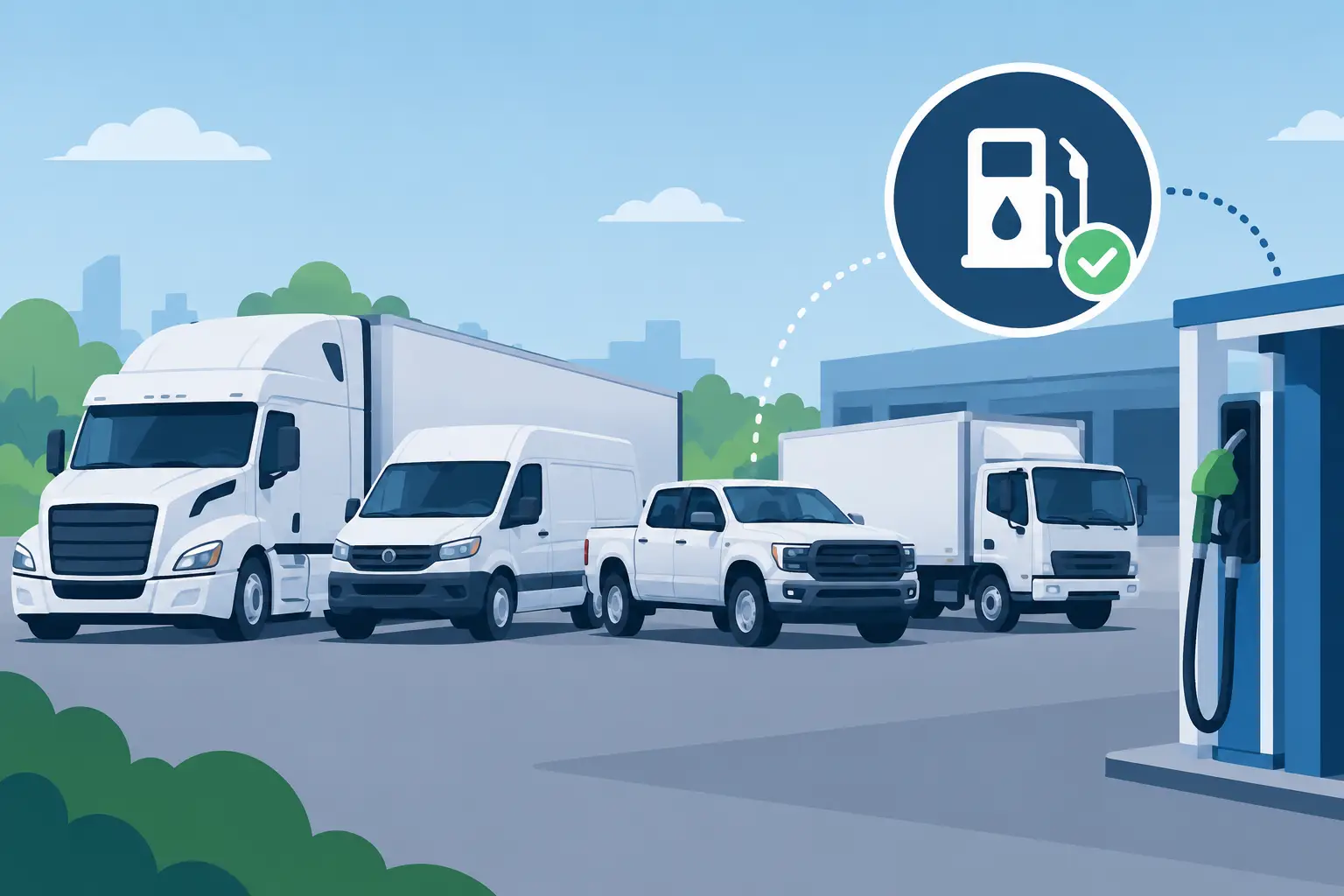
A pump that is available to everyone is not a convenience. It is an unmonitored cost centre. For operators asking which fleets need fuel controls, the practical answer is simple: any fleet that stores, dispenses or transports fuel and cannot confidently connect every litre issued to an authorised person, vehicle, asset and purpose.
Fuel is one of the largest controllable operating costs in a fleet. Yet many organisations still rely on keys, shared PINs, handwritten logs or a member of staff remembering who filled up. These methods make dispensing easy, but they make accountability difficult. When the numbers do not reconcile, managers are left investigating after the fuel has gone.
Fuel controls change that sequence. They put authorisation before dispensing and create an auditable transaction as the fuel leaves the tank.
Which fleets need fuel controls most?
The need is strongest wherever fuel is held on site or delivered through a mobile bowser, but size alone is not the deciding factor. A small council depot with one tank can have a greater exposure than a large, tightly managed haulage operation. The real question is whether access, usage and inventory are controlled in a way that stands up to scrutiny.
Fleets with on-site tanks and shared equipment
Construction contractors, municipal operations, utilities, waste collection teams, agricultural businesses and plant hire firms often run mixed fleets. Vans, lorries, generators, excavators, mowers and other equipment may all draw from the same tank.
This creates a familiar problem: fuel is issued, but the record may identify only a cost code or a handwritten vehicle number. If the handwriting is unclear, the form goes missing, or staff fill in details later, the organisation loses its ability to verify the transaction. A fuel control system records who dispensed, when it happened, what asset was selected and how much was issued. That makes it far easier to identify unusual consumption before it becomes a recurring loss.
Haulage and delivery fleets
Lorry fleets operating from depots need accurate fuel data to understand vehicle performance and control spend. Driver behaviour, idling, route changes, maintenance issues and unauthorised dispensing can all affect consumption. Without dependable dispensing records, fleet managers may see a fuel variance but have no clean way to investigate it.
Controls are particularly valuable when several shifts use the same vehicles or when agency drivers are involved. Permission can be assigned by user rather than relying on a physical key that can be copied, passed around or never returned. When a driver leaves or changes role, access can be removed immediately rather than waiting for keys, fobs or cards to be recovered.
Mobile fuel lorries and remote operations
Mobile fuelling introduces another layer of exposure. The fuel is not behind a depot gate, and transactions may happen across several sites in a single day. Operators need to know where fuel was dispensed, who received it, which vehicle or asset it went into and how the delivery affects inventory.
This applies to mobile fuel suppliers, airport ground operations, mining and quarrying teams, forestry contractors and emergency-response fleets. In these environments, a paper ticket or verbal confirmation is rarely enough. A cloud-connected record gives operations and finance teams visibility without waiting for paperwork to return to base.
Airports, ports and regulated sites
High-security environments have an obvious need to restrict access, but the requirement goes beyond security. Fuels and fluids are high-value, potentially hazardous materials. A controlled system supports internal policy, investigation procedures and environmental responsibility by creating a reliable record of every dispense event.
For airports, ports, public works yards and similar sites, the ability to set access by person, asset or location can also reduce operational friction. Approved staff can get the fuel they need without a supervisor having to unlock a cabinet or manually record each transaction.
The warning signs that controls are overdue
Many fleets do not realise they have a fuel-control problem until a stocktake reveals a large discrepancy. By then, the loss may be impossible to explain with confidence. The earlier signs are usually less dramatic but just as meaningful.
If your team spends hours matching fuel dockets to vehicle logs and invoices, the process is already costing time. If shared keys or PINs are in circulation, access is not truly traceable. If tank levels are checked manually and variances are accepted as normal, fuel shrinkage may be hidden among ordinary operational noise.
Other warning signs include frequent disputes over who fuelled what, unexplained changes in vehicle consumption, drivers using different assets during one shift, and managers who cannot see dispensing activity until days later. None of these automatically proves theft or misuse. They do show that the organisation lacks timely evidence to separate normal usage from a genuine exception.
What effective fuel controls should do
Fuel control is not just a lock on a pump. A padlock may prevent casual access, but it does not create an accurate record or make reconciliation easier. Effective controls combine secure authorisation with transaction data that operations, maintenance and finance teams can use.
At a minimum, the system should verify the person requesting fuel before the pump is enabled. It should record the date, time, location, volume and the vehicle or asset receiving the fuel. The transaction should be available promptly, not trapped in a paper logbook or stored in a device that needs to be downloaded at the end of the month.
The most useful systems also make administration straightforward. Fleet managers should be able to add, amend or remove users without calling out a technician. Multi-site businesses need central visibility while retaining the ability to apply different permissions at each depot or mobile unit. When access controls are difficult to maintain, teams work around them. That defeats the purpose.
Fuel controls are not only for large fleets
A common assumption is that fuel management technology is justified only when a business has dozens of vehicles or multiple bulk tanks. In reality, the return often begins with a much smaller operation. One unexplained tank variance, repeated manual reconciliation task or unauthorised use of a fuel key can outweigh the cost of putting control at the pump.
Smaller fleets may benefit even more because they have fewer layers of administration to absorb errors. The owner, operations manager or finance lead is often the person chasing receipts and investigating missing litres. Automated transaction records give that person an immediate, defensible view of usage without adding another administrative task for drivers.
That said, controls should match the operation. A fleet that buys all fuel from retail forecourts may get more value from fleet-card controls and exception reporting than from an on-site pump system. A business with a single secure tank used by two known operators has lower risk than a 24-hour depot with rotating shifts. The point is not to add technology for its own sake. It is to close the specific gaps that create cost, delay and uncertainty.
Moving from fuel records to fuel accountability
The strongest fuel-management programmes connect dispensing data to daily operating decisions. Maintenance teams can investigate a sudden increase in consumption. Finance can reconcile tank movement against authorised transactions. Operations can confirm whether a vehicle, generator or mobile unit received the fuel needed for the job.
This is where a smartphone-authorised, cloud-connected approach can be especially practical. Rather than installing a costly, maintenance-heavy pedestal system, platforms such as FluidSecure can lock up existing pumps, authorise approved users through an app and send transaction data to a central dashboard. The result is less hardware complexity at the point of dispense and more useful information for the people accountable for fuel spend.
The trade-off is that process discipline still matters. Asset lists need to be kept current, users need the right permissions, and managers need to review exceptions rather than merely collect data. Technology makes those tasks faster and more reliable, but it cannot replace a clear fuel policy.
Start with the question your current process cannot answer
Before choosing a system, ask a direct question: can we prove who dispensed every litre from every tank or mobile unit? If the answer depends on memory, a paper sheet or a shared key, the fleet needs stronger fuel controls.
The objective is not to make refuelling harder for authorised staff. It is to make every dispense event visible, defensible and easy to reconcile. When fuel access is controlled at the pump, managers spend less time looking for explanations and more time acting on the information in front of them.


Post a comment