



How to Set Dispensing Limits for Fleet Control
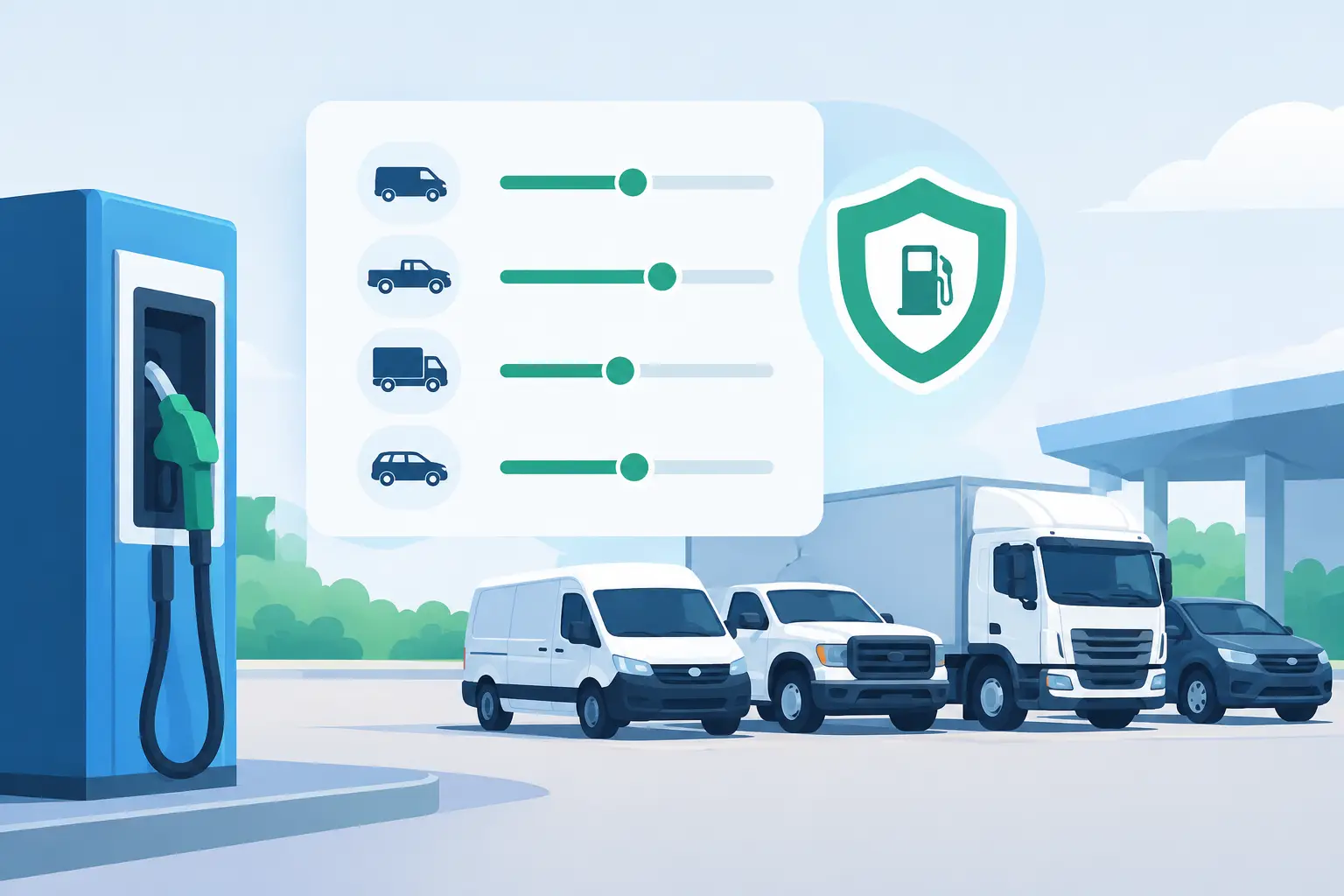
A fuel tank can be full, the pump can be working, and the numbers can still be wrong. When any driver, operator or contractor can draw any volume at any time, fuel becomes difficult to control before it ever reaches the vehicle. To set dispensing limits is to put practical rules around every transaction: who can dispense, what they can take, where they can take it and when access is permitted.
For fleet managers, this is not about making legitimate work harder. It is about ensuring that each litre has a clear purpose, a named user and a transaction record that stands up to scrutiny. Well-designed limits protect stock, reduce avoidable exceptions and give operations teams the information to act quickly.
Why set dispensing limits at all?
Fuel and fluid losses rarely arrive as one obvious, dramatic event. More often, they appear as small unexplained variances: an unusually large fill, an after-hours transaction, repeated top-ups, product drawn against the wrong asset, or a hose used by someone who should not have had access. Paper logs and shared keys make these incidents hard to investigate because the record is incomplete from the start.
Dispensing limits create accountability at the point of issue. Instead of asking a manager to reconcile a questionable transaction days or weeks later, the system applies the rule before product leaves the tank. That shift matters. It turns fuel control from a retrospective administrative task into an operational safeguard.
The right rules also improve planning. When managers can see authorised usage by person, vehicle, site and product, they can compare actual consumption with expected activity. A lorry that consistently draws more diesel than similar vehicles, for example, deserves attention. The cause may be theft, an incorrect odometer entry, idling, a mechanical fault or a route change. Clear data does not assume the answer, but it makes the question impossible to miss.
The limits that matter most
A useful dispensing policy is specific enough to prevent misuse without creating queues, workarounds or unnecessary calls to a supervisor. Start with the limits that reflect how your operation actually works.
User and role permissions
Every authorised person should have their own identity within the system. Shared PINs, keys and fobs defeat accountability because they tell you that somebody used the pump, not who did it. Assign access by role and responsibility, then remove it immediately when a worker changes role, leaves the business or no longer needs dispensing authority.
Permissions can be different for drivers, workshop technicians, supervisors, mobile fuel operators and contractors. A technician may need access to selected fluids for maintenance, while a driver only needs diesel for an allocated vehicle. The principle is simple: access should match the job, not the broadest possible convenience.
Volume, frequency and time limits
Set a realistic maximum volume per transaction, then consider a daily, weekly or shift-based maximum where appropriate. These controls should reflect tank sizes, typical duty cycles and operational conditions. A rigid cap that blocks a legitimate long-haul vehicle is not good control. A limit that is so high it never flags unusual use is equally ineffective.
Time restrictions are often just as valuable. If your yard normally operates between 06:00 and 22:00, after-hours dispensing should either be blocked or restricted to approved emergency users. This reduces exposure when sites are lightly staffed and gives managers a clear exception to review.
Vehicle, asset and product restrictions
Where possible, tie dispensing to a recognised vehicle or asset. A driver should not be able to fuel any vehicle in the yard merely because they are authorised to use the pump. Matching the user, vehicle and product creates a stronger record and reduces errors such as putting the wrong fuel into a machine.
Product restrictions matter beyond diesel and petrol. Fleets may dispense AdBlue, lubricants, hydraulic oil, coolant or other controlled fluids. Each product has a different risk profile, cost and intended use. Applying separate rules prevents a broad fuel permission from becoming unrestricted access to every fluid on site.
Location-based controls
Multi-site fleets need central standards with local flexibility. A depot, airport facility, construction compound and mobile fuelling vehicle do not operate in exactly the same way. Set site-specific permissions where they are needed, while keeping the underlying reporting structure consistent.
This is particularly important for mobile fuelling. A user may be authorised to dispense from a mobile unit only during a scheduled service window, within a defined customer location or against selected assets. The goal is not to add bureaucracy. It is to preserve an auditable chain of custody when fuel is moving between locations.
Build limits around real operating data
The quickest way to create unhelpful restrictions is to guess. Review recent transaction history before deciding what normal looks like. Look at typical volumes by vehicle class, operating hours, shift patterns, locations and fluid type. Separate routine work from genuine exceptions, such as storm response, seasonal demand or equipment hired for a short-term project.
Then start with rules that address your clearest risks. If unexplained after-hours draws are the concern, time-based permissions may deliver the fastest improvement. If the issue is inconsistent vehicle consumption, user-to-vehicle matching and transaction volume limits may be more relevant. There is no single setting that suits every fleet.
A practical approach is to set sensible thresholds, monitor exceptions for several weeks and adjust where the data shows a legitimate need. This avoids the common mistake of treating every exception as misuse. A good system should make exceptions visible and controlled, not force staff to find informal ways around the process.
Make authorisation immediate and auditable
Limits only work when they are applied at the pump and supported by records that managers can trust. Traditional pedestal-based systems can be costly to install, difficult to update and fragmented across locations. They may leave teams relying on manual updates, paper records or delayed downloads when access needs to change.
Cloud-connected smartphone authorisation offers a more direct model. A manager can authorise or deauthorise a user quickly, while each dispense transaction is logged against the relevant identity, asset, time and location. The pump remains locked until the right credentials are presented, so the control is active before the hose is used.
For operations teams, the benefit is not simply technology for its own sake. It is the ability to investigate an exception with evidence. Finance can reconcile purchases and on-site inventory with greater confidence. Maintenance can spot unusual consumption. Managers can prove that access was restricted when an incident occurred. That is the difference between a record of activity and a reliable audit trail.
Avoid limits that create operational friction
Security-first control must still support the people doing the work. If drivers regularly need supervisor approval for ordinary fills, the policy is probably too tight or poorly aligned to operations. If a contractor needs temporary access, there should be a defined process to grant it for the required period rather than sharing another worker’s credentials.
Keep responsibilities clear. Operations should define normal working patterns and asset requirements. Finance should identify reconciliation and reporting needs. Fleet or maintenance teams should validate vehicle capacities and fluid specifications. Senior management should decide who can approve overrides and how exceptions are reviewed.
The most effective policies also include a response plan. When a limit is exceeded or an unauthorised attempt occurs, decide who receives the alert, how quickly it is reviewed and what evidence is required before access is restored. Consistency matters. Staff are more likely to respect controls when they understand that the rules are applied fairly to everyone.
Review controls as the fleet changes
Dispensing limits are not a one-time configuration exercise. Fleet composition changes, contracts begin and end, depots open, duty patterns shift and seasonal work alters fuel demand. Review permissions and thresholds regularly, especially after incidents, staff changes or significant changes in fuel usage.
Manage Every Drop helps fleet operators apply these controls through smartphone-authorised dispensing and cloud-based transaction records, without the cost and maintenance burden associated with many legacy systems. The practical advantage is central visibility with control at the point of dispense, whether fuel is issued from a fixed tank or a mobile fuelling unit.
The best time to tighten access is before a discrepancy becomes a write-off. Start with the transactions that currently leave you asking questions, set limits that reflect legitimate work, and give every litre a clear, accountable route from tank to asset.



Post a comment