



What Causes Fuel Stock Discrepancies in Fleets?
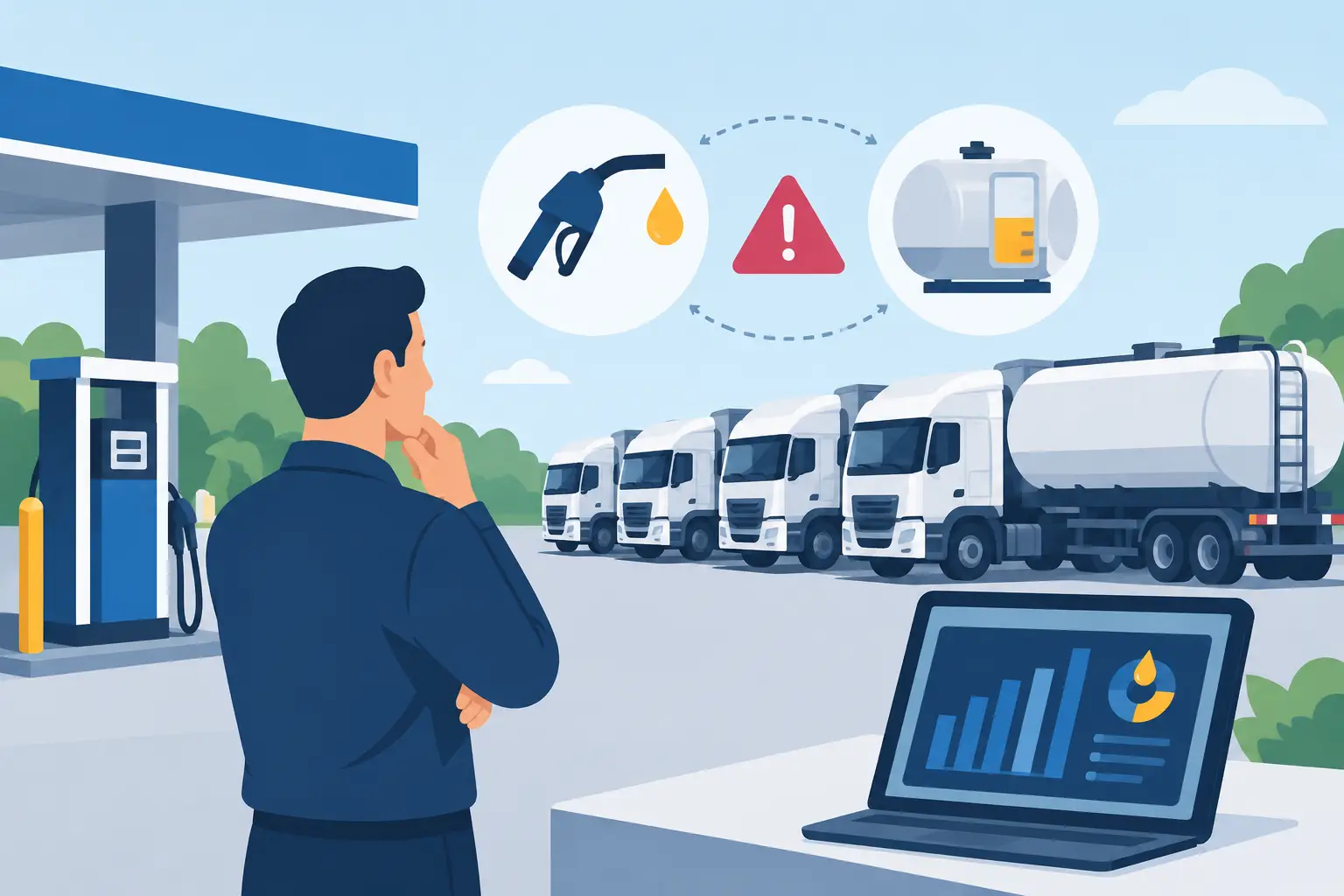
A fuel variance is rarely just a number on a monthly report. When the tank gauge, delivery paperwork and dispense records do not agree, the gap can conceal lost product, weak controls, equipment problems or unreliable data. For fleet operators asking what causes fuel stock discrepancies, the useful answer is not simply “theft”. It is a disciplined review of every point where fuel is received, stored, measured and issued.
Fuel is a high-value operating cost that moves quickly through a depot. A small unexplained variance repeated across several sites, shifts or mobile fuelling vehicles can become a material financial and compliance issue. The objective is not to expect a perfect zero variance every day. Temperature, measurement tolerances and operational timing all matter. The objective is to understand what is normal for your operation, investigate exceptions quickly and maintain an auditable record for every litre.
What causes fuel stock discrepancies at fleet sites?
A stock discrepancy occurs when the book stock does not match the physical stock. Book stock is the calculated balance: opening inventory, plus deliveries, minus recorded dispenses and approved adjustments. Physical stock is the quantity actually measured in the tank.
The difference may be caused by one event or several smaller failures occurring at the same time. For example, a delivery may be entered incorrectly, a driver may dispense without recording the transaction, and the site may use an inaccurate tank measurement. Looking only at the final variance makes all three problems harder to find.
Delivery quantity and receiving errors
The reconciliation process starts before fuel enters your tank. If the quantity on the supplier’s delivery note is accepted without verification, an incorrect starting balance can carry forward for weeks.
Common issues include recording the ordered volume rather than the delivered volume, receiving fuel into the wrong tank, entering litres twice, or missing a delivery entirely. A delivery may also arrive when the tank has not been measured before and after receipt, leaving no independent check against the paperwork.
Temperature can affect volume, particularly where a delivery and a tank reading are taken at different temperatures. This does not excuse a large unexplained gap, but it can create a legitimate variance. Your team needs a consistent method for recording deliveries and a clear rule for when a difference requires escalation.
Unauthorised or unrecorded dispensing
Fuel can leave the site without appearing in the records when pumps are accessible to unauthorised people, shared keys are used, PINs are passed around or manual logs are skipped during a busy shift. This is one of the most serious causes because it removes both the product and the evidence trail.
Unrecorded use is not always deliberate theft. A supervisor may approve an emergency fill for a contractor, a workshop may top up plant from a bulk tank, or a driver may use a fuel card and onsite fuel for the same vehicle without clear allocation. The financial effect is the same until the transaction can be identified and assigned.
A secure dispensing process should require each user to identify themselves before the pump is enabled. It should also capture the date, time, location, vehicle or asset, product and quantity automatically. That creates accountability at the moment fuel changes hands, rather than relying on someone to remember a paper entry later.
Meter calibration, worn equipment and leaks
A dispenser meter that is out of calibration can report more or less fuel than it actually delivers. Hoses, nozzles, filters and pump components also wear over time. If a meter has drifted, the gap between issued volume and tank drawdown can grow gradually, which makes it easy to dismiss as normal shrinkage.
Leaks deserve immediate attention for financial, environmental and safety reasons. Above-ground leaks may be visible around fittings, hoses, vents or fill points. Underground tank and line issues can be less obvious and demand prompt investigation through the appropriate testing and monitoring processes.
Do not assume every variance is a security problem before checking equipment. Equally, do not let an equipment explanation become a reason to postpone investigation. Compare meter totals, dispenser test results and tank readings over a defined period. A repeatable pattern around one pump, tank or mobile fuelling unit is valuable evidence.
Inconsistent tank measurement
Physical inventory is only as reliable as the method used to measure it. Manual dipping can produce different results depending on the operator, the stick and paste used, tank geometry, settling time and whether the tank is level. Automatic tank gauges provide faster visibility, but they also need correct configuration, maintenance and periodic validation.
Timing matters as much as the measuring tool. A tank should not be measured immediately after a delivery or major dispense event if the fuel has not settled. Comparing a morning reading with transactions posted at midnight can also create an apparent shortage that disappears once the reporting cut-off is aligned.
For multi-site fleets, standardisation is essential. Define who takes readings, when they are taken, how results are recorded and what tolerance applies to each tank. Without that discipline, a reconciliation report can look precise while being built on inconsistent inputs.
Poor data entry and delayed records
Paper fuel logs, handwritten vehicle numbers and spreadsheets maintained after the fact introduce avoidable risk. A single transposed digit can assign 500 litres to the wrong asset. A missed decimal point can distort an entire day’s stock movement. Delayed entries make it difficult to distinguish a genuine loss from a transaction that simply has not been posted.
The risks increase when different departments own different parts of the process. Operations may know fuel was issued, accounts may hold the supplier invoice, and maintenance may know a pump was repaired, but none of that information helps a reconciliation if it is not connected promptly.
Cloud-based transaction records reduce this delay by putting authorised dispenses into a shared system as they happen. The benefit is not merely less administration. It is the ability to question an exception while the people, vehicles and evidence are still available.
Mobile fuelling and transfer activity
Mobile fuel bowsers and fuelling lorries add flexibility, but they create another chain of custody. Product may be loaded from a bulk tank, transferred between compartments, delivered to equipment in the field and returned with residual stock. Each movement needs to be captured.
Discrepancies often arise when the load quantity, meter-issued quantity and end-of-shift physical balance are not reconciled together. Fuel used for auxiliary equipment, test runs or site generators can also be overlooked. The answer is not more paperwork. It is a clear transaction process that identifies the operator, source tank, destination asset and quantity at every transfer point.
How to investigate a fuel variance without losing time
Start with the period in question and avoid changing records to force a match. Confirm the opening tank balance, then verify deliveries against supplier documents and pre- and post-delivery readings. Compare recorded dispenses with pump meter totals and inspect any adjustments made during the period.
Next, narrow the variance. Is it tied to one tank, pump, shift, vehicle class or site? Does it occur after deliveries, at weekends or when a particular mobile unit is deployed? Patterns turn a broad stock issue into a manageable operational question.
A practical investigation should examine four areas together:
- receiving records and tank measurement timing;
- user authorisation and dispense transaction history;
- dispenser meter performance, maintenance and possible leaks;
- data-entry exceptions, manual overrides and unallocated fuel use.
Set a realistic tolerance based on tank size, product, throughput and your measurement method. Small variances may be expected, especially where manual readings are used. Repeated variances, growing variances or sudden changes are not normal simply because they are small individually.
Preventing recurring stock discrepancies
The strongest control is a closed fuel accountability loop. Every delivery should be verified, every dispense should be linked to an authorised person and asset, and every tank should be reconciled on a consistent schedule. Exceptions should be visible to the people who can act on them, not buried in an end-of-month spreadsheet.
This approach also protects legitimate staff. When each transaction is recorded automatically, operators do not need to defend incomplete handwriting or remember every emergency issue at the end of a long shift. Managers gain a clear audit trail, while finance can allocate fuel costs with greater confidence.
Manage Every Drop helps fleets create that control at the pump through smartphone-authorised access and cloud-connected transaction logging. By locking dispensing to approved users and recording activity in real time, fleet teams can investigate discrepancies earlier and remove much of the uncertainty created by manual processes.
Fuel reconciliation will always require judgement because operating conditions differ between sites. But unexplained stock loss should never be accepted as a routine cost of doing business. When every litre has a documented route from delivery to dispense, a discrepancy becomes an actionable exception rather than an expensive mystery.



Post a comment