
Fuel Software vs Pedestal Systems Compared
A fuel pump that anyone can activate is not simply an equipment issue. It is a gap in cost control, stock accuracy and operational accountability. In the fuel software vs pedestal systems decision, the real question is whether every litre dispensed can be tied to a verified person, vehicle and transaction without creating another maintenance burden for your team.
For fleets operating from depots, yards, airports or mobile fuelling vehicles, legacy pedestal systems can appear familiar and dependable. But familiarity is not the same as visibility. Modern cloud-connected fuel software takes a different approach: secure the pump, authorise the user at the point of dispense, and send the record directly to a central dashboard.
Fuel software vs pedestal systems: the practical difference
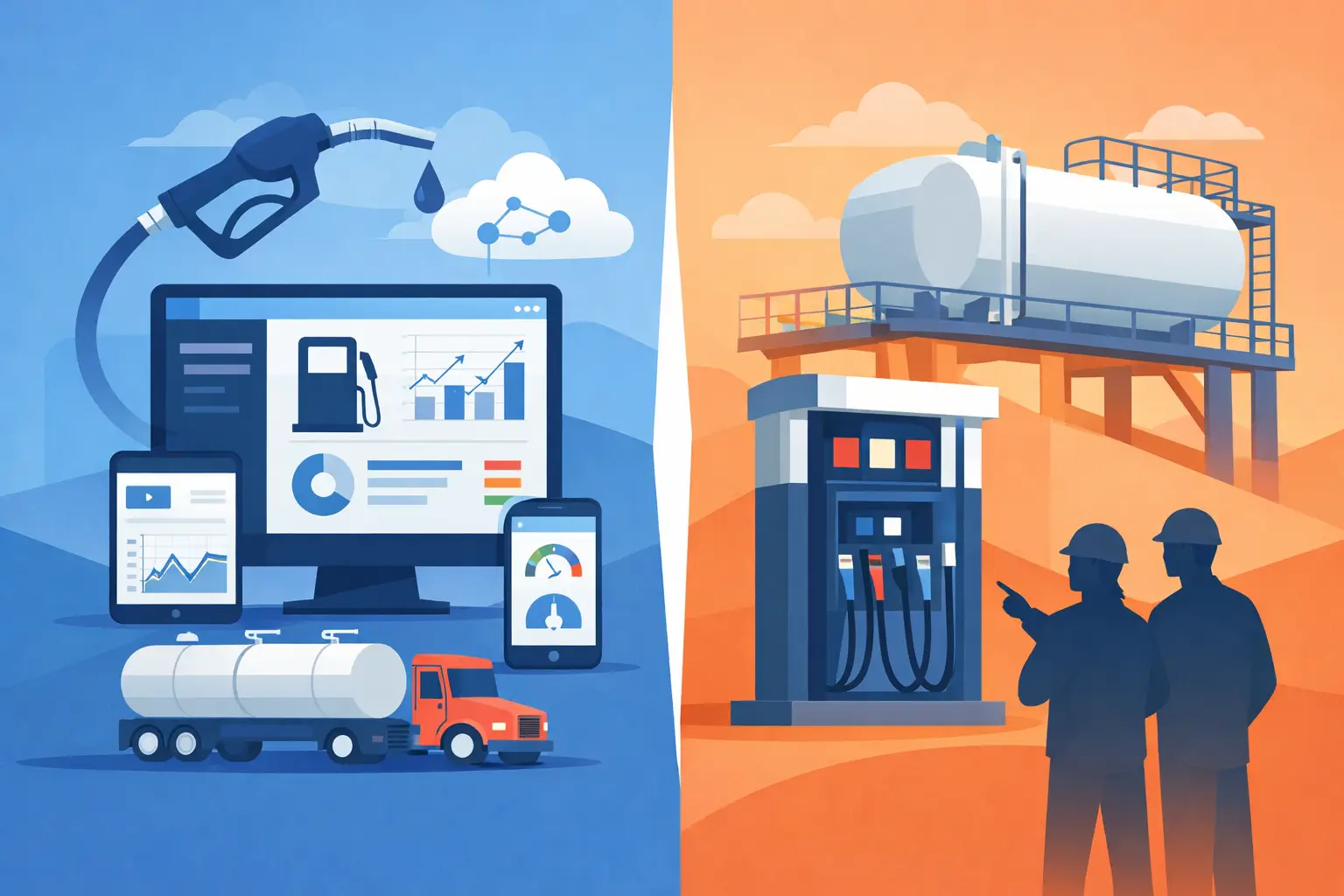
A traditional pedestal system is usually a fixed terminal installed beside the tank or pump. Drivers enter a PIN, use a fob or card, and the terminal passes information to a local controller or back-office system. These systems can deliver basic access control, but they often require dedicated infrastructure, specialist installation and regular attention when hardware, user permissions or reporting requirements change.
Fuel software, paired with smartphone-authorised pump access hardware, shifts much of that work to the cloud. A driver or authorised operator uses an app to identify themselves and start a transaction. The system records the dispense event immediately, including the user, vehicle or asset, fuel type, volume, date, time and location where configured. Managers can review activity from one dashboard rather than collect information from each site.
The distinction is not merely a different way to start a pump. It changes how quickly your business can add users, remove access, investigate exceptions and reconcile fuel inventory.
Security starts at the nozzle, not in a spreadsheet
Manual logs and end-of-month fuel reports reveal problems after the fuel has left the tank. Effective control prevents unauthorised dispensing before it happens.
Pedestal systems can restrict access, but their security model may depend on PINs, cards or tags that can be shared, lost or left active when an employee changes roles. Updating permissions may also involve a site visit, a local administrator or a delayed data sync. That creates unnecessary exposure for organisations with seasonal staff, multiple depots or mobile operations.
Cloud-connected fuel software gives managers central control over authorisation. Access can be granted or withdrawn quickly, without changing locks, collecting physical cards or visiting every location. A smartphone-based workflow also provides a clearer link between the individual and the transaction than a shared site code.
That does not mean software removes the need for sound operating procedures. Staff still need clear rules for vehicle selection, odometer entry, fuel handling and exception reporting. The advantage is that the system makes compliance easier to verify. Every dispense has a digital trail, rather than relying on handwritten records that may be incomplete or entered later.
Installation and maintenance can change the business case
A pedestal installation often involves concrete work, trenching, wiring, terminal mounting, communications setup and coordination between several contractors. For a permanent, high-volume depot with an existing system architecture, that investment may be justified. It can be particularly relevant where a site has highly specific legacy integrations or policies that require a physical terminal.
For many fleets, however, the fixed infrastructure is the cost they did not plan for. A pedestal can become a single point of failure: if its screen, reader, keypad, communications link or controller fails, access to fuel may be interrupted until a technician attends the site.
Fuel software systems generally reduce on-site complexity. The access control unit is installed to secure the pump, while the intelligence sits in a cloud platform and authorised users interact through a smartphone app. That can reduce installation time and avoid the expense of dedicated pedestals at every dispensing point.
The lower hardware footprint matters even more for mobile fuelling vehicles. A mobile fuelling operation needs the same level of control as a fixed tank, but a large fixed terminal is rarely practical. One system that works across stationary tanks and mobile units gives fleet managers consistent rules, records and reporting wherever fuel is dispensed.
Reporting that supports reconciliation, not hindsight
The value of a fuel management system is proved when finance, operations and maintenance can use the same information without rebuilding it in a spreadsheet.
With a pedestal system, transaction data may be stored locally, transferred on a schedule or require manual extraction. A site manager might know what was dispensed, while the finance team waits for a report and the fleet manager has no easy way to compare litres against vehicle use. That delay makes it harder to spot unusual consumption, repeated top-ups or inventory losses.
Cloud fuel software is designed for timely transaction visibility. Managers can review dispensing activity as it occurs, filter records by user, vehicle, asset or location, and compare issued fuel with tank stock and expected consumption. Where an entry is missing or a transaction looks unusual, the team can investigate while the details are still fresh.
This supports stronger reconciliation, but it also improves everyday decisions. A lorry showing a sudden rise in fuel use may need maintenance attention. A site with unexplained stock variance may need a process review. A mobile fuelling crew can provide an auditable record to the customer without reconstructing the day from paper tickets.
Comparing total cost, not purchase price
The purchase price of a pedestal is only one part of its cost. Decision-makers should also account for site preparation, electrical and communications work, installation labour, replacement parts, service call-outs, software upgrades and the internal time spent managing separate user lists and reports.
A lower-cost system is not automatically the right system. If it cannot operate reliably in your environment, cannot secure every pump or cannot provide the reports required for audit and reconciliation, apparent savings disappear quickly. Equally, a premium fixed system may be excessive if it forces a small or mid-sized fleet to pay for hardware and maintenance they do not need.
The most useful comparison is total cost of ownership over several years. Ask how many physical components must be installed at each site, how access is changed, what happens when connectivity is interrupted, how data reaches the cloud, and who is responsible when a component fails. Also ask whether the same platform can support future locations and mobile fuelling assets.
Manage Every Drop’s FluidSecure™ approach is built around this reality: secure the pump, keep the transaction record in the cloud and avoid unnecessary pedestal hardware. For many operators, that means less complexity, faster deployment and a clearer path to controlling every litre.
When a pedestal system may still make sense
Pedestal systems are not obsolete in every situation. An organisation with an established network of working terminals, dedicated technical support and a single permanent site may reasonably choose to retain them. Replacement should be based on serviceability, reporting needs, security gaps and expansion plans, not change for its own sake.
The case for software becomes stronger when a fleet has several locations, frequent user changes, mobile assets, recurring reconciliation issues or limited appetite for site construction and ongoing terminal maintenance. It is also compelling when management needs immediate visibility rather than a report after the fact.
Before selecting either model, map the journey of one litre from delivery to vehicle. Identify who can access it, what information is captured, how quickly exceptions are visible and how the records are reconciled against inventory. Any blank space in that process is where loss, disputed usage and wasted administration tend to grow.
Choose the system that gives your team practical control at the pump and dependable evidence afterwards. A short demonstration using your own dispensing workflow will show quickly whether the solution fits your sites, vehicles and accountability requirements.


Post a comment