
Cloud Fuel Software vs Pedestal Systems Compared
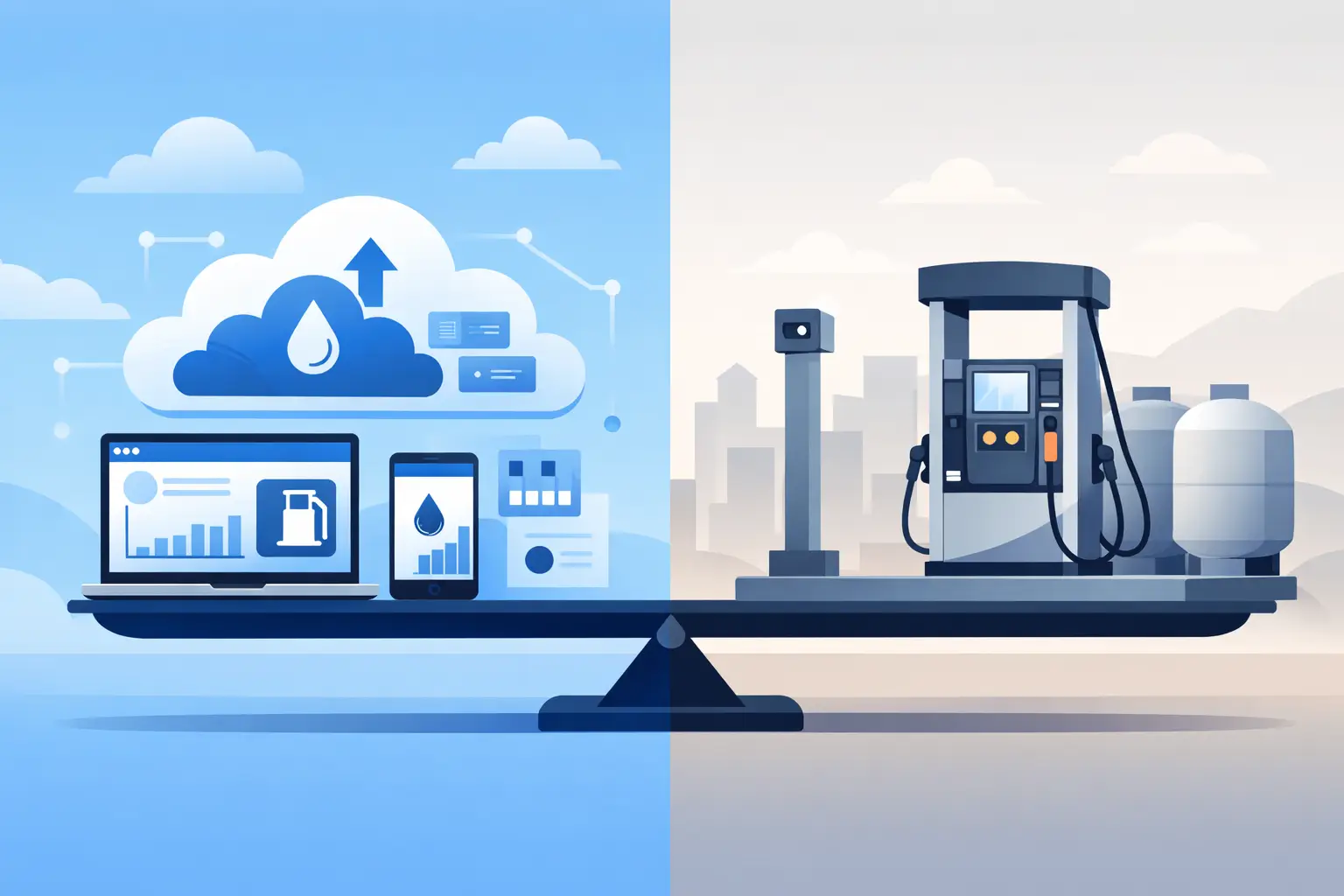
A pump that dispenses fuel without confirming who is using it, which vehicle is being fuelled, or how much inventory remains creates a costly blind spot. The choice between cloud fuel software vs pedestal systems determines how effectively your organisation closes that gap. Both approaches can restrict access and record transactions, but they differ sharply in cost, maintenance, speed of deployment and the level of control available to fleet teams.
For fleet operators, airport operations, maintenance depots and mobile fuelling businesses, this is not simply a technology decision. It is a decision about whether every litre can be tied to a person, vehicle and purpose before it leaves the tank.
What is a traditional pedestal system?
A pedestal system is the conventional approach to fuel access control. It generally places a dedicated terminal beside the dispensing point, often using RFID cards, PINs, keys or key fobs to authorise a transaction. The unit is physically substantial, typically requires specialist installation, and may rely on local controllers, cabling and proprietary hardware.
Pedestals have served many fleets well, particularly at fixed depots with established infrastructure. They provide a visible, purpose-built access point and can be configured for basic driver identification and transaction capture. For organisations with a single permanent site and a system that is already functioning reliably, retaining a pedestal can seem like the lowest-disruption option.
The trade-off is that traditional architecture can become expensive and restrictive over time. Each location may need its own hardware, local configuration and support process. Changing access permissions, adding a dispensing point or troubleshooting a fault can involve site visits, specialist technicians and delays that affect operations.
How cloud fuel software changes the model
Cloud fuel software moves the intelligence away from a fixed pedestal and into a connected platform. Instead of making the pedestal the centre of the system, authorised users identify themselves through a smartphone app or other connected authorisation method. The system validates the user, releases the pump when approved, and sends the transaction record to a central dashboard.
This model is especially valuable when fuel is dispensed across multiple depots, temporary sites, mobile tanks or fuel lorries. Managers can review transactions without waiting for somebody to retrieve data from a local device. Authorisations can be granted or removed centrally, rather than relying on a physical key, card collection or site-by-site programming.
With a cloud-connected system, a dispense event can create a time-stamped record that identifies the user, location, volume and asset details. That gives finance, operations and maintenance teams a common source of information for reconciliation, investigation and reporting.
Cloud fuel software vs pedestal systems: the practical differences
The most meaningful comparison is not about whether a pump can be switched on. Both systems can do that. It is about how much effort is required to maintain control as your fleet, sites and reporting requirements grow.
Installation and infrastructure
Pedestal systems often require concrete work, trenching, dedicated power and data connections, plus installation of the terminal itself. At a fixed, newly built depot, that work may be practical. At an operating site, it can introduce disruption, cost and a longer route to commissioning.
Cloud-based access control is designed to reduce this hardware burden. A rugged connected unit can be fitted to control the pump while users authorise dispensing from their phones. Fewer large, site-specific components generally means quicker deployment and less infrastructure to maintain. That is particularly relevant for operators who need to protect mobile fuel tanks or add accountability to a remote site without building a full pedestal installation.
User access and offboarding
A physical card or key is only secure while it remains in the right hands. Lost cards, shared PINs and former employees retaining access are common weaknesses in fuel control. Pedestal systems can manage users, but changes may depend on local administration or manual updates.
Cloud software gives managers the ability to add, suspend or remove users from a central dashboard. When a driver changes role or leaves the business, their authorisation can be removed immediately. When a contractor needs temporary access, permissions can be managed without handing over a permanent physical credential.
That level of control reduces the chance that fuel access outlasts employment, assignment or approval.
Visibility and reconciliation
Manual fuel logs make reconciliation slow and unreliable. Even when a pedestal captures data, records may be trapped locally, downloaded on a schedule or dependent on someone producing a report. By the time an unexplained variance is spotted, the evidence may be days or weeks old.
Cloud fuel software is built around timely transaction visibility. Managers can see dispensing activity through a central dashboard, compare usage with vehicle activity and investigate exceptions while the details are still fresh. This is not only about detecting theft. It also exposes incorrect allocations, unauthorised fuelling, unusual consumption and process gaps that quietly inflate fuel costs.
For controllers, the benefit is clear: fewer handwritten records, less end-of-month chasing and a stronger audit trail for every dispense.
Maintenance and total cost of ownership
A pedestal is a piece of field hardware exposed to weather, impact, wear and changing technology. The more functions housed in the pedestal, the more that physical unit can become a maintenance dependency. Repairs may require specialised parts and a technician at the site.
Cloud-based systems still require reliable, industrial-grade hardware at the pump. No honest comparison should suggest otherwise. However, a simpler field setup can mean fewer components to fail, while software updates and user administration are handled centrally. This often produces a substantially lower total cost of ownership than a traditional pedestal-led installation.
The right comparison should include more than purchase price. Account for civil works, installation, cards or fobs, support call-outs, upgrades, staff time spent reconciling records and the financial impact of fuel that cannot be explained.
Where pedestal systems may still fit
Pedestal systems are not automatically the wrong choice. A fixed facility with existing compatible hardware, stable user groups and limited reporting needs may have little reason to replace its system immediately. Some sites also have operational rules or connectivity constraints that require a carefully designed local solution.
The question is whether the system meets the control standard your organisation needs now. If permissions are difficult to change, records arrive late, transactions cannot be easily linked to a user, or adding a new site means another large capital project, the pedestal model may be holding the operation back.
Cloud systems also depend on thoughtful implementation. Connectivity needs to be assessed, user processes need to be clear, and the pump control hardware must be suitable for the environment. A weak installation does not become secure merely because it has an app. Choose a provider that understands both fuel dispensing equipment and the day-to-day realities of fleet operations.
What a stronger fuel-control process looks like
The best system creates accountability before fuel moves, not after a variance appears in a spreadsheet. Each user should have a clear identity. Access should reflect current job responsibilities. Every transaction should be recorded automatically, and managers should be able to review activity across sites without relying on manual logs.
Manage Every Drop applies this approach through FluidSecure, combining smartphone authorisation, pump control and cloud-based transaction records for stationary tanks and mobile fuelling operations. The objective is straightforward: lock up the pump, approve the right people and document every dispense event in real time.
This is particularly valuable for businesses that operate across more than one location. A fleet manager can standardise access rules, a controller can review consistent records, and operations teams can act quickly when a transaction does not match expected usage. Instead of treating every tank as an isolated site, the business gains one accountable fuel-control process.
Choose for the operation you are building
When weighing cloud fuel software against pedestal systems, start with your operational risk rather than the equipment you have always used. Consider how quickly you need to remove a user’s access, how long reconciliation currently takes, how often fuel variances go unresolved and whether your reporting process can scale to another depot or mobile tank.
A traditional pedestal may remain suitable for a simple, fixed installation. But organisations seeking lower hardware complexity, central control and real-time accountability will usually find that cloud fuel software is better aligned with modern fleet operations. The most useful next step is to review one dispensing point, one month of fuel records and one unresolved variance. That small exercise often shows exactly where better control will pay for itself.


Post a comment