



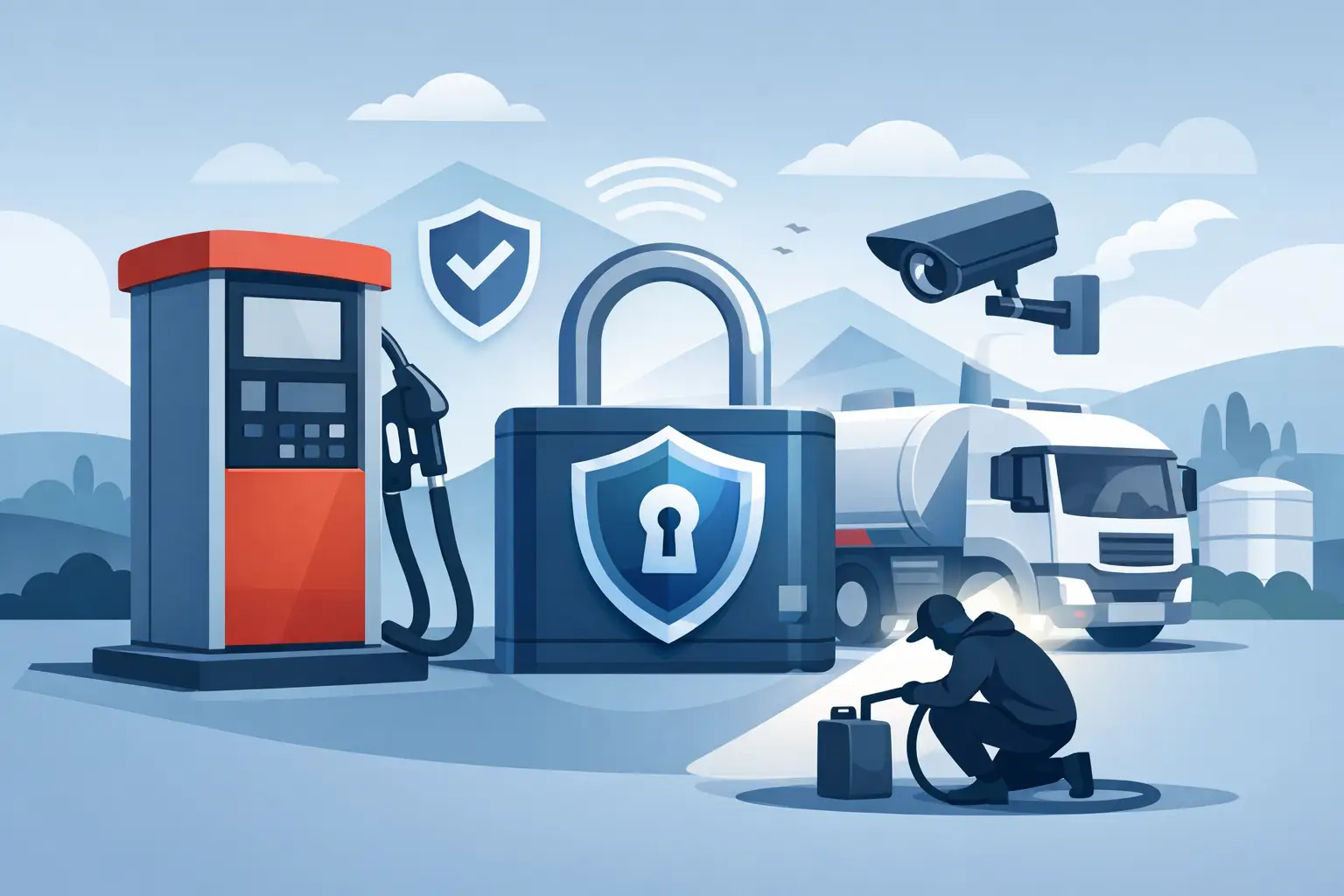
Diesel Pump Security That Stops Fuel Loss
Fuel rarely goes missing in dramatic amounts. More often, it disappears a few litres at a time – after hours, between shifts, at remote yards, or through loose access rules that nobody meant to leave in place. That is why diesel pump security matters so much for fleets, depots, airports and mobile fuelling operations. If you cannot control who dispenses, when they dispense and where each litre goes, you are not managing fuel – you are hoping it balances out at month end.
For most operators, hope is expensive. Unauthorised fuelling, shared PINs, handwritten logs and delayed reconciliation create the same result: uncertainty. Finance sees unexplained variance, operations sees interruptions, and management is left chasing answers after the fuel is already gone. Good security is not simply about putting a lock on a pump. It is about tying every dispense event to an authorised person, a time, a location and a record that can be reviewed immediately.
What diesel pump security should actually do
There is a common mistake in this category. Businesses often think of pump security as a hardware problem when it is really a control problem. A padlock, cabinet or gated yard may deter casual access, but none of that proves who took fuel, whether the dispense was authorised, or how much was drawn against a vehicle, asset or job.
Effective diesel pump security has to do three things at once. First, it must prevent unauthorised dispensing in real time. Secondly, it must document authorised dispensing automatically. Thirdly, it must make that information visible fast enough for someone to act on it.
If one of those elements is missing, the system leaves a gap. A pump can be physically secure but still impossible to audit. A transaction log can exist but be entered manually and therefore be unreliable. A site can have reports, but only after someone exports spreadsheets days later. Security without accountability is only partial control.
Why traditional controls often fall short
Many fleets still rely on keys, shared access cards, keypad codes or standalone pedestal systems. These approaches can look adequate on paper, especially at a single site with a small number of users. The problem starts when the operation grows, users change, or fuel is dispensed from both fixed tanks and mobile units.
Keys are easy to lose and hard to track. Shared codes spread quickly and are rarely changed often enough. Legacy pedestal systems can add cost, maintenance and complexity that no one wants to manage across multiple locations. And where authorisation is disconnected from cloud reporting, teams are forced back into manual reconciliation.
That creates a familiar headache. The maintenance manager wants control over who can access a pump. The finance team wants confidence in the numbers. The operations lead wants a fast fuelling process that does not slow drivers down. Traditional systems tend to satisfy one of those needs at the expense of another.
A modern approach should not force that trade-off. It should tighten access while making dispensing faster and records easier to trust.
The operational cost of weak pump security
The obvious cost is fuel theft, but that is only one part of the picture. Weak security also drives admin hours, disputes and downtime.
When transactions are not captured automatically, someone has to match deliveries, tank levels and usage records by hand. When a discrepancy appears, the investigation starts late and with incomplete information. Was it theft, a meter issue, a delivery error, an after-hours dispense, or poor data entry? Without a clean audit trail, you are left with assumptions.
That uncertainty affects more than the fuel account. It makes budgeting harder, maintenance planning less accurate and driver accountability more difficult to enforce. It can also expose compliance and environmental risk if dispensing activity is not clearly documented.
For mobile fuelling operations, the stakes are even higher. A fuel lorry servicing multiple assets across different sites needs the same level of control as a fixed installation. If mobile dispensing is handled with separate tools, separate records or no real-time oversight, shrinkage and reporting gaps become much harder to contain.
What better diesel pump security looks like in practice
The strongest systems remove discretion from access control. Instead of relying on a remembered code or a key passed between staff, the pump stays locked until an authorised user is validated. That validation should be instant, easy to manage and simple to revoke when roles change.
This is where smartphone-authorised and cloud-connected control changes the standard. A modern system can grant or remove user permissions immediately, capture each dispense transaction automatically and push records to the cloud in real time. That means the authorisation event and the transaction record are linked from the start rather than pieced together later.
For fleet operators, that changes daily management. You can control access by user, site or equipment type. You can review dispensing activity without waiting for paper logs. You can spot unusual usage patterns early, before they become recurring loss. And because the system is digital rather than hardware-heavy, installation and upkeep are typically simpler than older pedestal-based setups.
There is also a practical benefit that matters on busy yards: authorised fuelling does not have to be slow. If the user experience is clumsy, staff will work around it. Good security should fit the pace of the operation, not fight it.
Matching the system to the risk
Not every site needs the same level of control, and that is where a consultative approach matters. A small depot with one tank and a tight user group may be dealing mainly with basic access control and reconciliation. A multi-site fleet with remote locations, changing crews and mobile refuelling may need centralised permissions, standardised reporting and instant visibility across the estate.
The right question is not simply, “How do we secure the pump?” It is, “Where are we exposed?” Sometimes the answer is after-hours access. Sometimes it is contractor fuelling, shared credentials or delays in spotting discrepancies. In other cases, the issue is that the business has outgrown manual processes that once seemed manageable.
That is why the best diesel pump security strategy combines physical control, user authorisation and transaction intelligence. If you address only one layer, the operation remains vulnerable somewhere else.
Why auditability matters as much as prevention
Stopping unauthorised access is the first job. Proving what happened is the second. Fleet managers, finance teams and procurement leaders all need reliable records, but they need them for different reasons.
Operations needs a clear view of site activity and exceptions. Finance needs confidence that fuel spend matches usage. Leadership needs a defensible record when investigating loss, managing policy or planning inventory. In each case, the value comes from having a trusted transaction history rather than a patchwork of notes and assumptions.
Auditable records also strengthen everyday accountability. When staff know each dispense is tied to their identity and visible in the system, behaviour changes. That does not mean treating every team member like a suspect. It means setting a clear standard where access is controlled, usage is documented and exceptions are easier to resolve fairly.
A lower-maintenance path to tighter control
One reason some operators delay upgrading is the assumption that better security must come with more hardware, more disruption and more training. In reality, older architectures often create the bigger maintenance burden. More components mean more points of failure, more site work and more support demands.
A simpler, cloud-managed setup can reduce that overhead while improving control. Updates can be handled centrally. Permissions can be changed without site visits. Fixed and mobile fuelling can sit under one approach instead of being managed as separate problems.
That matters for cost as much as convenience. The cheapest system to buy is not always the cheapest system to run. If it leaves you with manual reconciliation, inconsistent reporting and recurring fuel loss, the real price is far higher than the initial equipment cost.
For organisations looking to modernise, Manage Every Drop offers a practical route forward through smartphone-authorised, cloud-connected pump control designed to secure dispensing and document every transaction as it happens.
The strongest diesel pump security does not just stop the wrong person from pumping fuel. It gives the right people complete confidence in every litre that leaves the tank.



Post a comment