
How to Stop Fleet Fuel Theft for Good
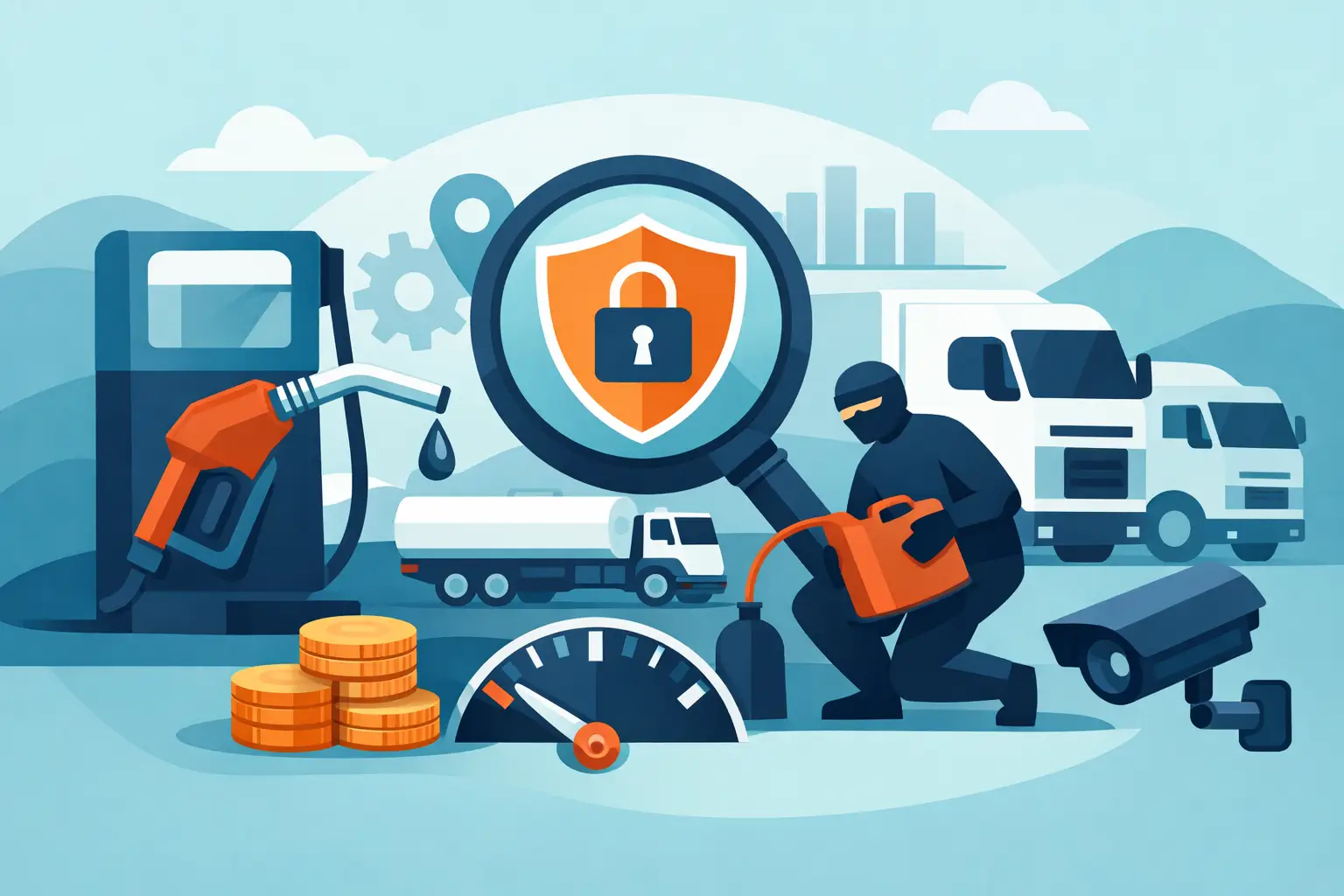
Fuel theft rarely starts with a dramatic incident. More often, it shows up as a slow, expensive drift. A few unexplained litres here, a tank that needs refilling sooner than expected there, and before long your fuel spend no longer matches your fleet activity. If you are asking how to stop fleet fuel theft, the answer is not one policy or one piece of hardware. It is control at the point of dispense, backed by real-time accountability.
For fleet operators, airports, maintenance yards and mobile refuelling teams, fuel is both a vital asset and an easy target. It is high value, often stored on site, and in many operations it is still dispensed with too much trust and too little proof. That combination creates loss. It also creates admin headaches, disputes, delayed month-end reconciliation and pressure on margins.
How to stop fleet fuel theft starts at the pump
Most fuel theft happens because access is too broad and records are too weak. Keys get shared. PINs are passed around. Handwritten logs are filled in after the fact, if they are filled in at all. Even where a site has cameras, footage rarely tells you exactly who dispensed fuel, into which asset, at what time and in what quantity.
That is why the first step in how to stop fleet fuel theft is to remove anonymous dispensing. If a pump can be activated without a verified user, theft and misuse become much harder to detect and far easier to deny.
A secure system should require user authorisation before fuel flows. Ideally, that authorisation is tied to an individual and captured automatically in the cloud, along with the date, time, location, product, volume and asset details. That changes the conversation immediately. You are no longer chasing handwritten records and assumptions. You have an auditable transaction trail.
This is where modern smartphone-authorised dispensing has a clear advantage over older pedestal-style systems. It reduces hardware complexity at the pump while giving managers centralised control over who can dispense, where, and when. If a driver leaves the business or a contractor should no longer have access, permissions can be removed straight away instead of waiting for keys, cards or local reprogramming.
Why theft keeps slipping through traditional controls
Many fleets assume theft is a driver problem. Sometimes it is. Just as often, it is a systems problem.
If your site relies on padlocks, shared fobs, paper sheets or separate spreadsheets, you are creating gaps between the fuel, the person and the record. Those gaps are where shrinkage hides. A manager may know the site used more diesel this month, but without timely transaction data, there is no quick way to prove whether the issue is theft, overfilling, poor routing, idling, equipment faults or inaccurate stock handling.
That distinction matters. If you treat every variance as theft, you can end up chasing the wrong problem. If you treat every variance as operational noise, you risk normalising losses that are entirely preventable.
A better approach is to build a control environment where fuel transactions and inventory movement can be reconciled routinely, not just investigated after a major discrepancy. In practice, that means recording every authorised dispense automatically, matching it against tank levels and delivery records, and reviewing exceptions early.
The signs your current process is too exposed
You likely need tighter controls if multiple employees use the same PIN, if fuel can be drawn outside planned working hours, if tank dips are inconsistent with usage, or if month-end reconciliation depends on manual data entry from several locations. The same is true if mobile fuelling vehicles operate with limited oversight once they leave the yard.
Mobile operations deserve special attention because they often sit outside the controls used at fixed sites. If your bowser or fuel lorry can dispense in the field without real-time transaction capture, you have simply moved the risk rather than solved it.
Build accountability into every dispense event
Stopping theft is not about making honest staff jump through hoops. It is about making every transaction attributable.
When each dispense is tied to a verified user and recorded instantly, behaviour changes. Staff know that fuel access is controlled, exceptions are visible and records are not open to editing after the event. That alone can reduce opportunistic misuse.
But accountability should go further than user identity. The strongest systems connect the user, vehicle or asset, location, time and quantity in a single record. That gives operations, maintenance and finance teams one version of the truth. It also speeds up internal reviews because the evidence is already there.
For example, if one van regularly takes far more fuel than comparable units on the same route, you can investigate whether the issue is theft, poor vehicle condition or driver behaviour. If a site dispenses fuel at 2 am with no scheduled shift, that exception can be flagged immediately. If a contractor accesses fuel after a project has ended, access can be cut off without delay.
How to stop fleet fuel theft with better reconciliation
Security at the nozzle matters, but it only works properly when paired with disciplined stock control. If you cannot reconcile what came into the tank, what went out through authorised transactions and what remains on site, theft can still hide in the margins.
Good reconciliation should not be a quarterly exercise. It should be part of normal operations. Delivery volumes, tank readings and dispensing records need to sit in one reporting view so variances stand out quickly. The longer you wait, the harder it becomes to identify root causes and recover losses.
Cloud-connected systems are especially useful here because they allow multi-site operators to standardise reporting across depots, yards and mobile fuelling assets. That matters for growing fleets. A process that feels manageable at one location often breaks down across five or ten sites, especially if each site handles authorisations differently.
The practical benefit is not only loss prevention. It is lower admin time, faster month-end close, stronger audit readiness and fewer disputes between operations and finance.
Policy still matters, but policy is not enough
Clear rules around fuelling hours, approved assets, supervisor approvals and exception handling are essential. So is training. Staff should know exactly how fuel access works, what is being recorded and why the process protects the business as well as honest employees.
Still, policy without enforcement becomes a suggestion. If your system allows workarounds, those workarounds will be used. The right technology supports the policy by making the approved process the easiest process.
What to look for in a fuel theft prevention system
If you are reviewing options, focus on control, visibility and total cost of ownership.
First, the system should restrict dispensing to authorised users only and let you add or remove permissions instantly. Second, it should create automatic, time-stamped transaction records in the cloud. Third, it should support both fixed and mobile fuelling so you are not managing separate control methods across your operation. Fourth, it should be rugged enough for real working environments without the maintenance burden of legacy hardware-heavy setups.
It is also worth looking at reporting quality. A system that collects data but makes it difficult to use will not solve much. Managers need dashboards and reports that show usage by driver, asset, site and time period, with enough detail to investigate anomalies without exporting data into endless spreadsheets.
This is where a modern access-control approach can deliver measurable value. Manage Every Drop helps fleets lock down on-site and mobile dispensing with smartphone-authorised access and real-time cloud transaction logging, giving operators the evidence and control needed to reduce shrinkage and simplify reconciliation.
The real trade-off: trust-based fuelling or controlled fuelling
Some operators worry that tighter controls will slow the yard down. That can happen if the system is clunky or overbuilt. But in most cases, the real drag on efficiency comes from fixing mistakes later – chasing missing records, disputing usage, investigating losses and manually reconciling fuel activity.
Controlled fuelling does ask for a shift in mindset. It replaces informal access with verified access. It makes exceptions visible. It may expose habits that have gone unchallenged for years. But for organisations serious about cost control, compliance and operational discipline, that visibility is not a burden. It is the point.
If you want to stop fleet fuel theft, start by asking a simple question: can you prove who dispensed every litre, into what asset, at what time, and under whose authority? If the answer is no, your fuel is still too easy to take. The good news is that fixing that is far more achievable than most fleets think.


Post a comment