

Mobile Fuelling vs Fixed Fuelling
A fleet can lose control of fuel in two places – at the tank and on the move. That is why mobile fuelling vs fixed fuelling is not just a logistics decision. It is a control decision, a cost decision and, for many operators, a compliance decision.
For fleet managers, operations directors and finance teams, the real question is not which model sounds more modern. It is which model gives you reliable access control, clean transaction data and less time spent chasing paper records, driver queries and unexplained losses. In some businesses, the answer is clearly one or the other. In many, it is a mix.
Mobile fuelling vs fixed fuelling – what changes operationally?
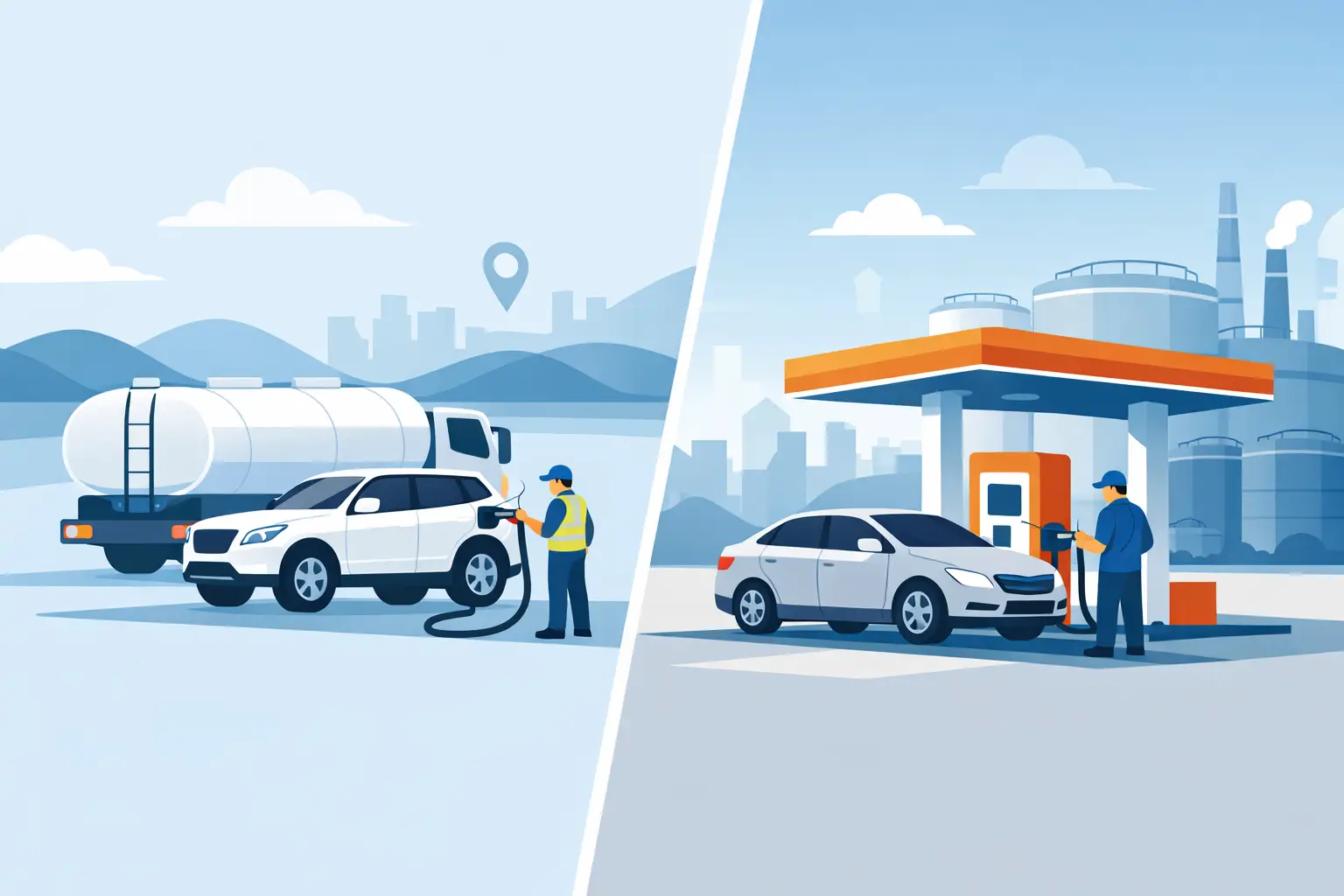
Fixed fuelling is built around a permanent dispensing point. Fuel is stored on-site in a tank and vehicles come to it. Mobile fuelling brings the fuel to the asset, whether through a bowser, service vehicle or mobile fuel lorry moving between sites, yards or parked fleet units.
On paper, both models achieve the same outcome: fuel gets into the vehicle or equipment. In practice, they create very different operating conditions. Fixed fuelling usually gives you a more controlled environment. The tank location is known, access can be restricted physically, and fuel usage is easier to tie to one site. Mobile fuelling offers flexibility and can cut non-productive vehicle movement, but it also introduces more variables: changing locations, different operators, inconsistent connectivity and a higher risk of manual workarounds if controls are weak.
That distinction matters. Fuel theft, unauthorised dispensing and poor reconciliation rarely happen because a business lacks a pump. They happen because the process around the pump is loose.
Where fixed fuelling works best
Fixed fuelling suits operations with a stable base, repeatable routes and a predictable fuelling pattern. If your fleet returns to the same depot each day, a fixed system often makes sense. Drivers know where to fuel, maintenance teams can monitor tank levels centrally, and procurement teams can plan bulk deliveries with more confidence.
There are cost advantages too. A permanent fuelling point can be efficient when volumes are high and site traffic is consistent. Over time, on-site storage may reduce dependence on retail forecourts and improve oversight of fuel purchasing.
But fixed fuelling is not automatically simple. Traditional set-ups can become expensive and cumbersome when they rely on pedestal hardware, swipe cards, PIN sharing or separate software layers that do not talk to each other properly. If authorisation is weak, a fixed site can still leak money. If reconciliation depends on paper dockets or spreadsheet matching, the depot may look controlled while finance is still doing manual detective work at month end.
That is the trade-off. Fixed fuelling can provide structure, but only if the technology and process around it are built for accountability.
The hidden risk in a “controlled” yard
A fenced site does not equal secure dispensing. If multiple staff share credentials, if the pump stays effectively open, or if transactions are not logged in real time against a named user, losses can hide in plain sight. Many businesses assume their issue is fuel price when the real issue is poor visibility.
For that reason, fixed fuelling works best when every dispense event is authorised, recorded and available for audit without delay. Anything less creates a false sense of control.
Where mobile fuelling comes into its own
Mobile fuelling is attractive when vehicle movement is expensive, sites are dispersed or assets cannot easily come back to base. This is common in construction, aviation support, remote operations, municipal fleets and service fleets working across large territories.
The operational upside is clear. You reduce dead mileage, keep drivers and machines where they are needed, and can fuel during off-hours to improve uptime. A mobile fuel lorry can serve multiple assets in sequence without disrupting the working day. For equipment that burns through fuel on-site, that convenience quickly turns into real productivity.
Yet mobility creates exposure. Once fuel leaves a permanent site, the need for secure user authorisation and transaction logging becomes even more urgent. Who dispensed the fuel? To which vehicle or asset? At what time, at which location, and in what volume? If that chain of accountability is not automatic, mobile fuelling can become harder to govern than it is to justify.
This is where some operators struggle. They adopt mobile fuelling for efficiency, then discover their records are fragmented across handwritten notes, driver messages and delayed uploads. The result is weaker stock control, slower billing and more uncertainty around exceptions.
Mobile fuelling needs more than a pump on wheels
A mobile unit should not operate like a moving blind spot. It needs the same discipline as a fixed installation, and arguably more. Secure access, immediate deauthorisation when staff change, cloud-based transaction records and central reporting are no longer nice to have. They are the basis of trust.
Without that, the flexibility of mobile fuelling can be outweighed by audit risk and loss.
Cost is not just about equipment
When businesses compare mobile fuelling vs fixed fuelling, they often start with capital cost. That is understandable, but incomplete. The better comparison is total cost of ownership.
Fixed fuelling may involve site preparation, tank infrastructure, hardware, maintenance and ongoing administration. Mobile fuelling adds vehicle costs, staffing, route planning and field servicing. Neither model is universally cheaper. It depends on your fleet pattern, volume, geography and reporting requirements.
The more useful question is this: what is the cost of poor control? A lower headline set-up cost means very little if the system allows unauthorised fuel use, requires manual reconciliation or creates delays in identifying stock variance.
That is why modern operators are moving away from hardware-heavy, high-maintenance systems that create cost and complexity without improving accountability. A simpler, cloud-connected set-up can often reduce both direct system costs and the hidden labour cost of chasing fuel data.
Security, auditability and compliance decide the winner
For most serious fleet operators, the choice comes down to control. Can you restrict dispensing to authorised users only? Can you revoke access instantly? Can you see every transaction in one place across both fixed and mobile assets? Can you produce an audit trail without spending hours assembling it?
If the answer is yes, either fuelling model can be effective. If the answer is no, both models are vulnerable, just in different ways.
Fixed fuelling tends to concentrate risk at one site. Mobile fuelling spreads risk across many locations. That means mobile operations need especially disciplined controls, but fixed depots cannot afford to be casual either. In both cases, the winning model is the one that ties each dispense to a verified user, records it automatically and makes the data available in real time.
This is exactly why many operators now standardise control across both environments instead of treating them as separate systems. Manage Every Drop approaches the problem that way: one accountability framework for permanent tanks and mobile fuel assets, without the cost and maintenance burden of legacy pedestal-based architecture.
Should you choose one or both?
For some fleets, the answer is straightforward. A single depot fleet with predictable daily returns may be best served by fixed fuelling with strong access control and reporting. A dispersed operation supporting remote assets may see immediate value from mobile fuelling.
But many organisations should not think in either-or terms. A blended model is often the practical choice. Fixed fuelling can handle depot activity and bulk storage, while mobile fuelling covers remote work, after-hours servicing or high-value equipment that should stay productive in the field.
What matters is consistency. If your fixed site uses one authorisation method and your mobile unit uses another, reporting fractures. If one side is digital and the other depends on paper, reconciliation slows down and confidence drops. Standardised controls across both models give operations, finance and compliance teams a shared version of the truth.
The better question to ask before you invest
Instead of asking whether mobile fuelling or fixed fuelling is better, ask where your business loses visibility now. Is the issue wasted driver time, poor site control, delayed reconciliation, disputed usage or unexplained stock loss? Once that is clear, the fuelling model becomes easier to choose.
The strongest operations do not chase fuel management trends. They build a system where every litre is authorised, recorded and easy to account for, whether it is dispensed in the yard or on the road.
If your current set-up cannot tell you who took fuel, when they took it and where it went without delay, that is the real problem to fix first. The right fuelling model is the one that gives you control you can prove, not just convenience you hope will hold up under pressure.



Post a comment