
Best Mobile Fuel Truck Software: What Matters
When a mobile fuel lorry leaves the yard, you are sending out product, risk and responsibility in one vehicle. That is why choosing the best mobile fuel lorry software is not really a software decision alone. It is an operational control decision. If your team still relies on paper tickets, manual meter reads or disconnected apps, the cost shows up fast – in lost litres, delayed invoicing, weak audit trails and too much time spent proving what happened.
The strongest systems do more than log transactions. They control who can dispense, tie each event to a named user, sync records to the cloud, and give finance and operations a shared version of the truth. For fleet operators, airports, contractors and mobile fuelling businesses, that is the difference between running fuel and managing it.
What the best mobile fuel lorry software should actually solve
Most buyers start with visibility. They want to know who dispensed what, when, where and into which asset. That matters, but it is only the start. A worthwhile platform should also reduce fuel loss, simplify reconciliation, support compliance and remove friction for the people using it in the field.
If a system gives you reports but cannot control access at the point of dispense, it leaves the door open to the very losses you are trying to prevent. If it locks things down but makes drivers jump through awkward steps, adoption suffers. The best balance is software that is secure at the nozzle and straightforward in daily use.
That balance is especially important for mobile operations. A fixed site can tolerate more hardware and more manual intervention. A fuel lorry on the road cannot. The environment is harsher, connectivity varies, and drivers need a process that works quickly every time.
Best mobile fuel lorry software features to prioritise
The first priority is user-based authorisation. You should be able to approve or remove access instantly, without changing keys, fobs or local hardware settings one by one. Smartphone-based authorisation stands out here because it reduces hardware complexity and gives managers tighter control over permissions across multiple vehicles and sites.
Real-time transaction capture is next. Every dispense should create an auditable record automatically, including user identity, vehicle or asset details, date, time and volume. If your software depends on a driver remembering to enter data later, you do not have clean records. You have a preventable gap.
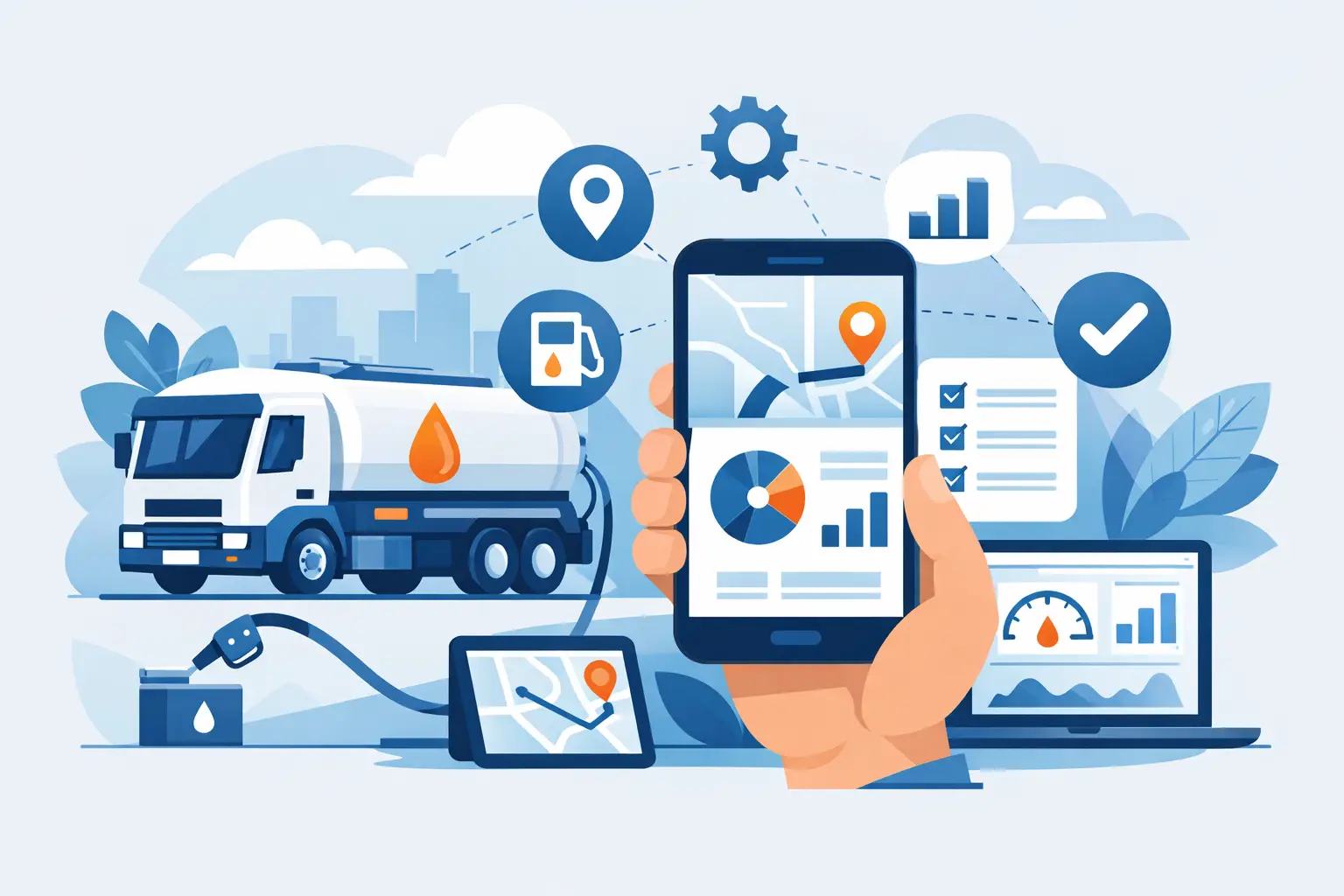
Cloud visibility also matters. Mobile fuel operations often involve more than one lorry, more than one depot and more than one person checking the numbers. Operations needs live activity. Finance needs accurate reconciliation. Leadership wants exception reporting. Cloud-connected software gives each group access to the same transaction data without waiting for paperwork to catch up.
The hardware model behind the software deserves just as much attention. Traditional pedestal-style systems can be expensive, harder to maintain and awkward to standardise across mobile and fixed assets. A lighter, ruggedised approach with central software updates usually gives a lower total cost of ownership and fewer points of failure.
Finally, look closely at reporting. Good reporting does not just show totals. It highlights anomalies, tracks consumption by asset or driver, and helps you investigate variance before it becomes normal. A dashboard should support decisions, not create another admin task.
Where many mobile fuel software platforms fall short
A lot of systems look capable in a demo because they show a neat dashboard. The problems appear in the field. Some platforms are built around after-the-fact data entry rather than point-of-dispense control. Others work well at a fixed tank but become clumsy in a mobile fuelling environment where every extra step slows the driver down.
Another common weakness is fragmented architecture. One tool handles authorisation, another manages transactions, and a separate process deals with reconciliation. That usually leads to duplicate data, delayed reporting and too many workarounds. If you need three systems and a spreadsheet to understand your fuel activity, the software is not solving the right problem.
There is also the issue of support. Fuel management is operationally critical. If a device fails or access permissions need updating, a slow vendor response is not a minor inconvenience. It affects service delivery, asset uptime and customer confidence. Buyers should weigh aftercare and responsiveness just as heavily as feature lists.
How to compare the best mobile fuel lorry software fairly
Start with your actual operating model. A municipal fleet, an airport, a construction contractor and a commercial mobile fuelling operator do not all need the same setup. Some need strict driver authorisation across dozens of vehicles. Others need simple control over a smaller fleet with minimal maintenance overhead. The right fit depends on how many users, vehicles, sites and dispense events you manage.
Then test the software against five practical questions. Can it stop unauthorised dispensing at the moment it might happen? Can it create a reliable transaction record automatically? Can managers see activity without waiting for end-of-day uploads? Can it work across both mobile and fixed fuelling environments? Can your team adopt it without weeks of training and constant support calls?
If the answer to any of those is no, the savings promised elsewhere may not materialise. Lower upfront pricing can be attractive, but if the system still leaves manual reconciliation in place or requires frequent hardware attention, the long-term cost rises quickly.
It is also worth asking how quickly you can deploy and scale the system. Many operators do not have the appetite for a long, infrastructure-heavy implementation. Software tied to simpler, rugged hardware and central cloud management is usually easier to roll out, especially if you need standard controls across several locations.
Why security and accountability matter more than extra features
In this category, buyers can get distracted by long feature lists. Route tools, inventory views and custom reports all have value, but the core question is simpler: does the software give you control over every dispense event?
Without that control, everything else is secondary. You can have attractive reporting, but if unauthorised users can still access fuel, you are measuring loss rather than preventing it. You can have a broad platform, but if transaction records are incomplete, finance still struggles to reconcile usage confidently.
The best mobile fuel lorry software treats every dispense as an auditable event tied to identity. That creates accountability at the driver level, the vehicle level and the management level. It also changes behaviour. When teams know access is controlled and activity is recorded automatically, disputes fall, shrinkage becomes easier to investigate, and internal controls become much stronger.
For many organisations, that accountability is as valuable as the direct fuel savings. It protects margins, strengthens compliance and gives leadership confidence in the numbers.
A practical standard for modern mobile fuelling
The market is moving away from bulky, maintenance-heavy systems and towards mobile-first control, cloud-connected records and simpler administration. That shift makes sense. Fuel operations need speed in the field, visibility in the office and consistency across every asset.
A modern platform should let you authorise from a smartphone, capture transactions automatically, monitor activity centrally and manage both mobile and fixed dispensing with one approach. That is the standard more operators are now expecting because it closes common control gaps without adding unnecessary complexity.
This is where a solution like FluidSecure, delivered by Manage Every Drop, fits naturally for many fleets. It focuses on the fundamentals that matter most: locking down access, documenting every dispense in real time, reducing hardware complexity and giving operators one accountable view of fuel activity across sites and mobile units.
That does not mean every buyer should choose the same configuration. A smaller operation may prioritise fast installation and affordability. A larger multi-site fleet may care more about standardisation, central permissions and reporting depth. But both are usually looking for the same outcome – less loss, cleaner reconciliation and better control.
Choosing software that your team will still trust in 12 months
The best buying decisions in this category are rarely about the flashiest interface. They are about whether the system stands up to daily use, supports your control model and keeps delivering clean data month after month.
Ask to see how permissions are managed. Ask what happens when connectivity drops. Ask how quickly records sync, how updates are handled and what support looks like after installation. Those answers will tell you more than a polished dashboard ever will.
If you are evaluating options now, keep your focus on accountability at the point of dispense. The right software will not just help you see where fuel went. It will help you control where it can go in the first place, and that is where real savings begin.


Post a comment